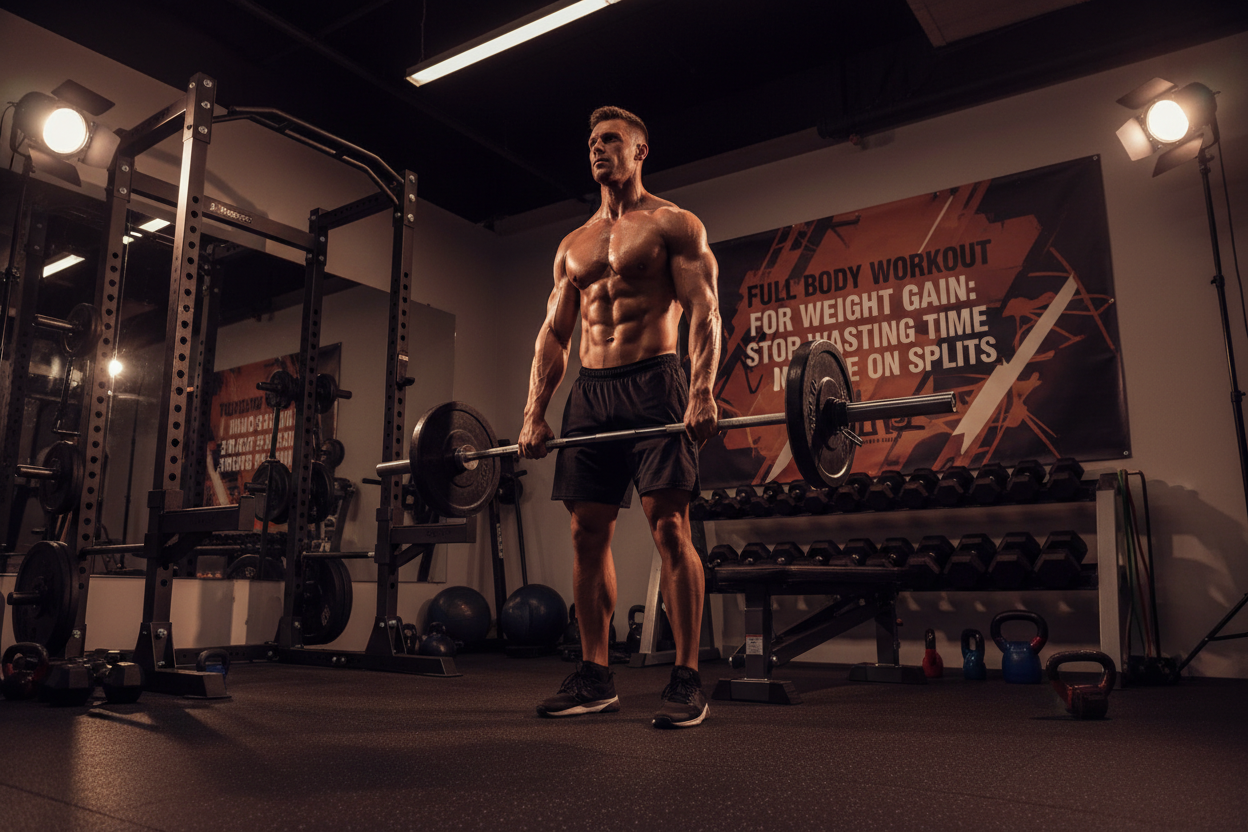
Full Body Workout for Weight Gain: Stop Wasting Time on Splits
Struggling to pack on size despite eating everything in sight? You aren't alone. One of the most common frustrations we see from home gym owners is hitting a mass-building plateau. When you are putting in the effort in the kitchen, your training needs to provide the ultimate stimulus for growth.
That is exactly where a properly programmed full body workout for weight gain comes into play. By hitting major muscle groups multiple times a week, you maximize protein synthesis and trigger serious hypertrophy. In this guide, we will break down how to structure your routine, what equipment you actually need, and how to turn your home gym into a mass-building machine.
Key Takeaways
- Focus on compound movements like squats, deadlifts, and presses to stimulate maximum muscle growth.
- Train 3 to 4 days a week to balance heavy lifting with crucial recovery time.
- A power rack, a quality barbell, and plenty of weight plates are your best investments for a mass-building home gym.
- Pair your training with a caloric surplus; you cannot build new tissue without adequate fuel.
The Mechanics of Building Mass at Home
Why Full Body Beats Body-Part Splits
For most natural lifters, the traditional 'bro split' (training one body part per day) leaves gains on the table. A full body approach hits your chest, back, and legs every 48 to 72 hours. This frequency keeps muscle protein synthesis elevated throughout the entire week, which is exactly what you want when trying to pack on dense muscle.
The Role of Progressive Overload
You can have the best equipment in the world, but if you aren't adding weight to the bar or increasing your reps over time, you won't grow. Your home gym setup needs to accommodate micro-loading. Having a set of fractional plates (1.25 lbs to 2.5 lbs) is a game-changer for pushing past plateaus on strict movements like the overhead press.
Essential Home Gym Equipment for Growth
The Big Three: Rack, Barbell, and Bench
To safely execute a heavy full body routine, you need a stable foundation. A heavy-duty power rack with safety pins is non-negotiable for pushing your squats and bench presses to near-failure without a spotter. Pair this with a 20kg Olympic barbell featuring moderate knurling—enough grip for heavy deadlifts, but not so aggressive that it tears your hands up during high-frequency training.
Space Planning for Heavy Lifting
Before you buy, measure your space. A standard power rack requires an 8-foot by 8-foot footprint to comfortably load a 7-foot barbell. If you are lifting in a low-ceiling basement, look for a short rack (typically around 72 inches tall) so you still have room for pull-ups and overhead work.
Structuring Your Routine
Compound Movements to Prioritize
Your workouts should be anchored by multi-joint exercises. A standard session might include back squats, barbell rows, flat bench presses, and overhead presses. These movements recruit the maximum amount of muscle fibers and trigger the hormonal response necessary for weight gain.
Volume, Frequency, and Recovery
More is not always better. Hitting a full body routine three days a week (e.g., Monday, Wednesday, Friday) provides the perfect balance. Aim for 3 to 5 sets of 6 to 12 reps per exercise. Use your off days to eat, rest, and let your body repair the tissue you broke down in the gym.
From Our Gym: Honest Take
When I first committed to a strict mass-building phase in my garage gym, I thought I needed isolation machines to get big. I was wrong. I spent six months doing exclusively barbell and dumbbell full body routines. One specific detail I noticed: the wear and tear on my equipment changed. Because I was squatting and deadlifting heavy three times a week, my cheap starter barbell quickly developed a permanent bend. Upgrading to a 28.5mm multi-purpose bar with a 190k PSI tensile strength was the best move I made. It handled the constant heavy loads without warping. The hardest part wasn't the training—it was recovering from heavy squats on Monday and having to deadlift on Wednesday. If you are going to run this program, invest in a quality sleep setup and eat more than you think you need.
Frequently Asked Questions
How many days a week should I do a full body workout for weight gain?
Three days a week is the sweet spot for most lifters. This allows for intense, heavy sessions while providing 48 hours of recovery between workouts, which is essential for muscle repair and growth.
Do I need a commercial gym membership to build mass?
Not at all. With a power rack, an adjustable bench, a barbell, and sufficient weight plates, you can perform every compound movement necessary to stimulate massive weight gain right in your garage or spare room.
Can I build muscle with just dumbbells?
Yes, especially if you are a beginner. However, as you get stronger, you will eventually max out standard adjustable dumbbells. Transitioning to a barbell setup makes progressive overload much easier and more practical for heavy lower-body lifts like squats and deadlifts.