The Best Beginner Workout Schedule Doesn't Demand Perfection
We have all been there. It is late Sunday night, you are scrolling through social media, and you see a '30-Day Shred' challenge that promises a total body overhaul. You download the PDF, buy a gallon of water, and swear that this is the week you become a gym rat. Then Tuesday hits. A meeting runs late, the traffic is a nightmare, and you miss your window. By Wednesday, you feel like a failure, so you scrap the whole thing and wait for next Monday to 'start fresh.'
The truth is that the best beginner workout schedule is the one that survives your worst day, not your best one. You do not need a drill sergeant or a rigid calendar that treats a missed Tuesday like a moral failing. You need a system that assumes life will get in the way because it always does.
Quick Takeaways
- Ditch fixed days (Mon/Wed/Fri) for a rolling A/B/C rotation.
- Prioritize movement quality over heavy weight in the first six weeks.
- Focus on a 'Never Miss Twice' rule to maintain long-term momentum.
- Start with minimal equipment to reduce the friction of getting started.
Why the Typical Beginner Exercise Calendar Sets You Up to Fail
The problem with a standard beginner exercise calendar is that it is built on the 'streak' mentality. Apps and influencers love streaks because they are addictive, but for a novice, they are a trap. When your schedule says 'Leg Day' is strictly on Tuesday and you miss it, the psychological momentum breaks. You feel like the entire week is 'ruined,' leading to a 'might as well eat pizza and try again next month' attitude. I have seen more people quit because of a missed Thursday than because of the actual difficulty of the lifting.
Traditional fitness media often compounds this by pushing high-volume routines that are physically impossible for a deconditioned body to recover from. These magazine routines risk early injury by demanding six days a week of intense activity. Your central nervous system and your joints need time to adapt to new stressors. Jumping into a pro-bodybuilder split when you have been sitting at a desk for five years is a recipe for tendonitis and burnout. A resilient beginner workout schedule should be built on flexibility, not a rigid 30-day countdown that leaves no room for reality.
Ditching the Days of the Week for a 'Rolling Block'
If you want to actually stay consistent, stop assigning workouts to specific days of the week. Forget 'International Chest Day' Mondays. Instead, use a rolling block. In this system, you have Workout A, Workout B, and a Rest Day. You simply do the next workout in the sequence whenever you have the time. If you hit Workout A on Monday and life explodes on Tuesday, you just do Workout B on Wednesday. No guilt, no 'starting over,' and no missed sessions.
This makes your beginner workout calendar immune to the chaos of a normal life. I have used this method with dozens of people who struggled with consistency. When you stop viewing the calendar as a pass/fail test, you stop quitting. A rolling block ensures that you are hitting every muscle group with the same frequency over time, regardless of whether your gym session happens at 6 AM on a Friday or 2 PM on a Sunday. It turns your fitness into a recurring loop rather than a linear path with a finish line.
Think of it like a playlist on shuffle. The order matters, but the time you hit 'play' does not. If you manage to train three times in a week, great. If you only manage two because of a family emergency, you just pick up the next session in the block the following week. This removes the 'all-or-nothing' mindset that kills most New Year's resolutions by February 1st. It is about total volume over a month, not a perfect streak over a week.
The Anatomy of the Best Beginner Workout Schedule
A solid beginner workout schedule should focus on big, compound movements that give you the most bang for your buck. You do not need twenty different isolation exercises for your triceps. You need to learn how to push, pull, and hinge. A simple A/B rotation works best here. Workout A could focus on a squat pattern, a horizontal push (like a floor press), and a row. Workout B could focus on a hinge (like a kettlebell deadlift), an overhead press, and a core stability move like a plank.
You can browse our complete Workout Hub to find specific exercise tutorials that fit into these categories. The goal is to perform these movements with control. In the beginning, your brain is learning how to fire your muscles in the right order just as much as your muscles are getting stronger. This is why a 3-day rotating template is the sweet spot. It provides enough frequency to learn the skill of the lift but enough rest that you are not constantly sore.
I recommend starting with 2 to 3 sets of 8 to 12 repetitions for each move. This rep range is high enough to build some muscle and learn the form, but low enough that you can stay focused on every single rep. Do not worry about 'maxing out' or seeing how much you can lift for a single rep. That comes much later. Right now, your only job is to make the last rep of every set look exactly like the first one. If your form breaks down, the set is over, regardless of what the paper says.
Keeping Your Setup as Simple as Your Schedule
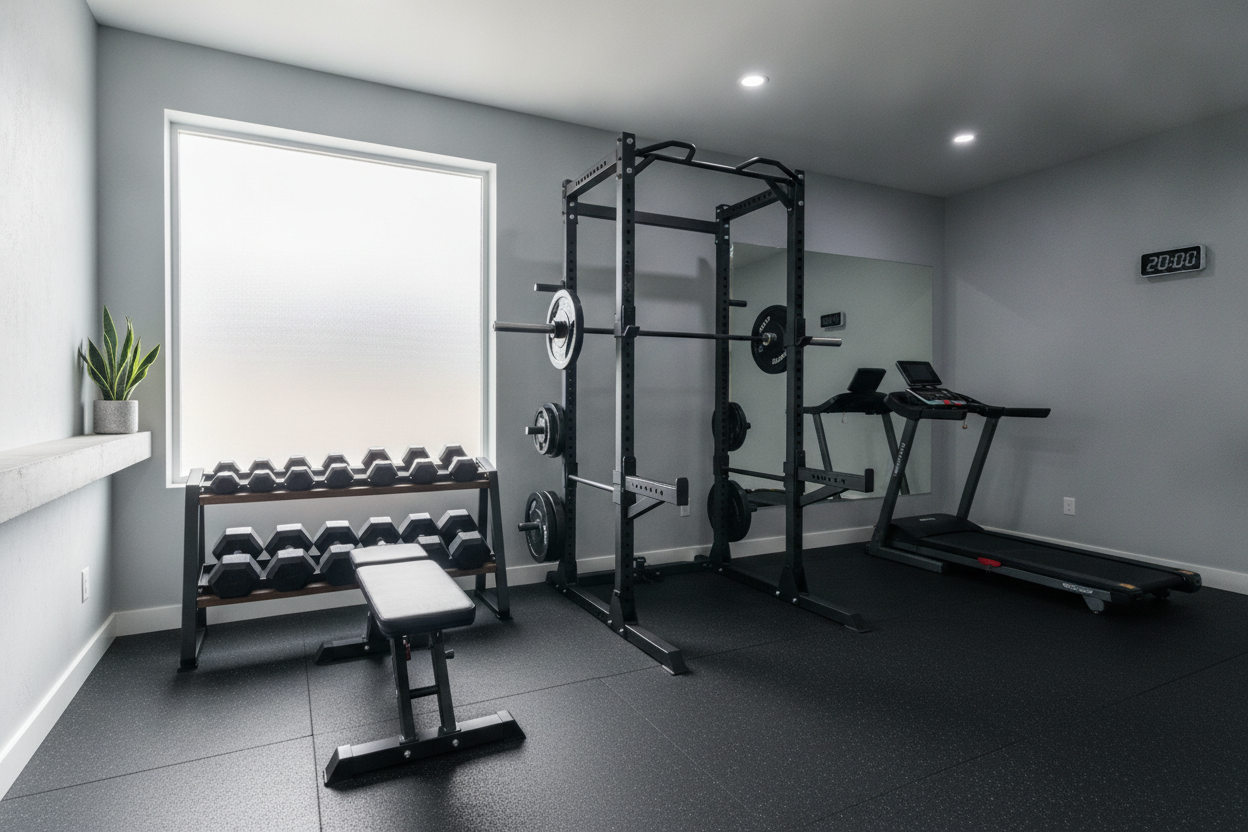
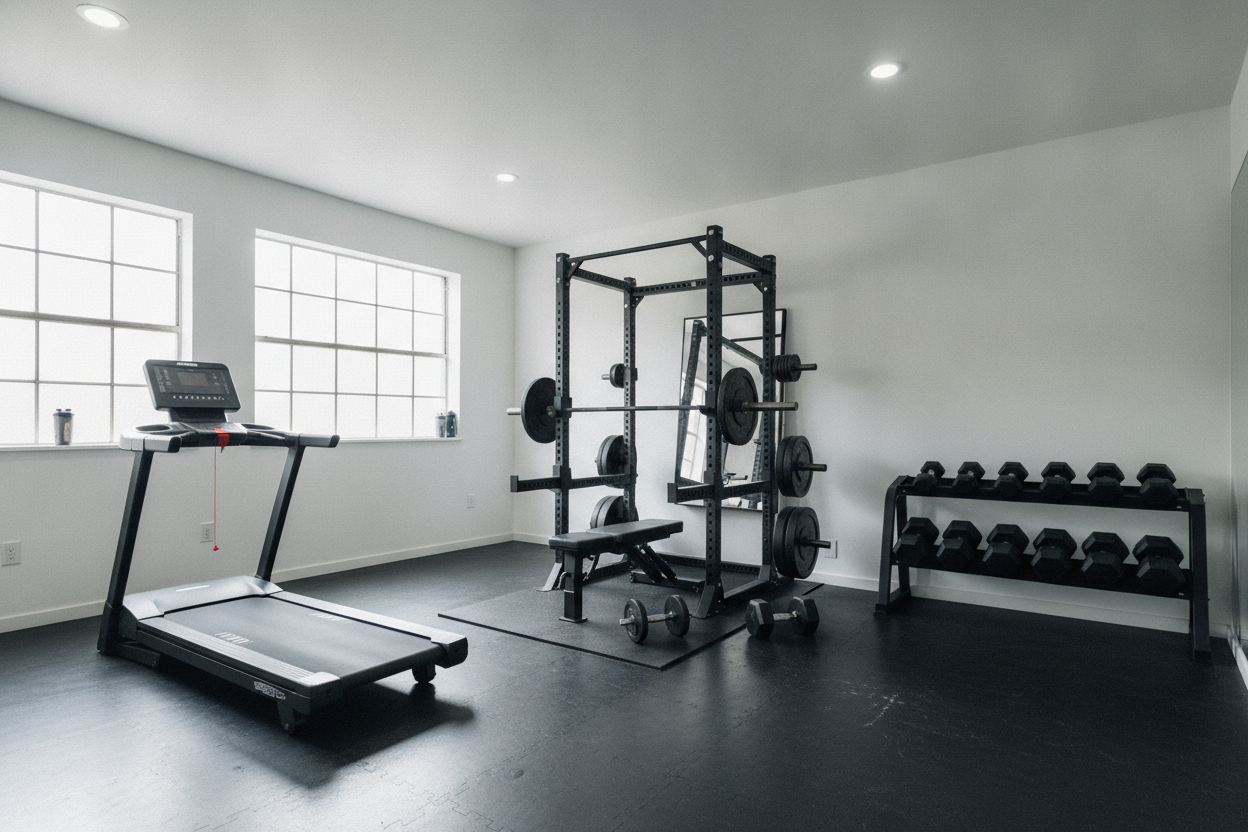
One of the biggest hurdles to starting a beginner exercise calendar is the 'gear trap.' People think they need a $3,000 power rack and a full set of urethane dumbbells before they can do a single lunge. This is a mistake. Complexity creates friction, and friction kills consistency. If you have to drive twenty minutes to a gym or spend thirty minutes moving boxes in your garage just to clear a space, you are less likely to do the work.
I am a huge advocate for starting with zero weights at home if it means you actually start today. You can get a massive amount of work done with just your body weight and a bit of floor space. If you want to invest in one thing, get a large 6x8ft home exercise mat. Having a dedicated, grippy surface that stays put makes a world of difference for your joints and your floor. It defines your 'gym' area, making it a mental trigger that when you are on the mat, you are working.
Once you have a consistent habit of using that mat three times a week for a month, then you can think about adding iron. But don't let the lack of a barbell be the reason you don't start. A simple pair of adjustable dumbbells or even just a single kettlebell can take you through the first six months of training. Keep the barrier to entry as low as possible so that 'getting ready' takes less than two minutes.
The 'Never Miss Twice' Rule for Your Fitness Calendar for Beginners
The 'Never Miss Twice' rule is the secret sauce for any workout calendar for beginners. It is a simple psychological contract: you are allowed to miss a workout. Life happens. You get sick, you have to travel, or you just have a day where your energy is at zero. That is fine. But you never, ever miss two sessions in a row. This rule allows for human error while preventing a single slip-up from turning into a total collapse.
If you miss your scheduled session on a Wednesday, your only goal for Thursday or Friday is to get back on that mat. Even if it is just for ten minutes. Even if you only do one set of squats. The act of returning to the schedule is more important than the intensity of the workout itself. This builds the 'consistency muscle,' which is far more important for a beginner than your actual biceps. By picking up right where you left off in your rolling block, you preserve your momentum and prove to yourself that you are the kind of person who finishes what they start.
My Personal Experience
I remember when I first started training seriously, I tried to follow a professional powerlifting program I found online. It was five days a week, two hours a day, with zero flexibility. I made it three weeks before I caught a cold. Because I missed two days, I felt like the 'math' of the program was broken. I quit for two months. It took me years to realize that the program wasn't the problem—my rigid mindset was. Once I switched to a 3-day rolling schedule, I stopped worrying about the calendar and started focusing on the work. I have been training consistently for a decade now, and I still use a version of this flexible block today.
FAQ
What if I miss an entire week?
Don't panic and don't try to 'make up' the missed volume by doing a three-hour workout. Just pick up with the very next session in your rotation. Your body won't lose its progress in seven days, but your mind might lose the habit if you make it too hard to come back.
Do I need to do cardio on my rest days?
You don't have to, but a 20-minute walk is great for recovery. Don't turn your rest days into another high-intensity ordeal. Keep it simple: move your body, get some fresh air, and let your muscles repair themselves for the next lifting session.
How do I know when to move from bodyweight to weights?
When you can perform 3 sets of 15 reps of a movement (like a push-up or a squat) with perfect form and no struggle, it is time to add resistance. This ensures you have the structural integrity to handle the extra load without hurting yourself.