The 20-Minute Limit: How Long Should a Beginner Workout at Home?
I remember staring at the clock in my garage about six years ago, five minutes into a bodyweight circuit, already wanting to quit because I thought I had 55 minutes left. We have been conditioned to believe that a workout only counts if it lasts as long as a feature film. If you are sitting on your couch wondering how long should a beginner workout at home, the answer is probably half of what you think it is.
Quick Takeaways
- 20 to 30 minutes is the 'sweet spot' for most beginners to build consistency.
- Training 3 days a week is superior to daily sessions for long-term muscle growth.
- Quality of movement matters more than the total time spent sweating.
- Rest days are when your body actually builds the muscle you're working for.
Why the 60-Minute Gym Myth Is Ruining Your Progress
The 60-minute workout is a relic of the golden era of bodybuilding. It was designed for people whose entire job was to look good and who had the recovery capacity of a comic book hero. For a normal person starting out in their living room, trying to survive an hour-long session is the fastest way to burn out. You start strong, but by minute 40, your form is trash, your motivation is gone, and you're just going through the motions to check a box.
When you focus on duration over intensity, you end up doing what I call 'junk volume.' These are the reps that don't actually stimulate muscle growth but do increase your risk of injury. I’ve seen countless people quit their resolutions by week three because they couldn't find a spare hour every day. The truth is, you don't need an hour. You need a focused window where you actually work.
Consistency is the only metric that matters for a novice. A 20-minute workout you actually do three times a week will always beat a 60-minute workout you do once and then avoid for a month because it felt like a chore. Stop trying to train like a pro athlete before you've even mastered the basic air squat.
The Magic Number: How Much Should a Beginner Workout?
So, how much should a beginner workout to see actual results? The science of the 'minimum effective dose' suggests that 20 to 30 minutes of focused resistance training is plenty. In this window, your central nervous system is primed, your glycogen stores are ready, and your mental focus is sharp. Once you cross that 30-minute mark, cortisol levels start to climb, and for a beginner, the return on investment drops off a cliff.
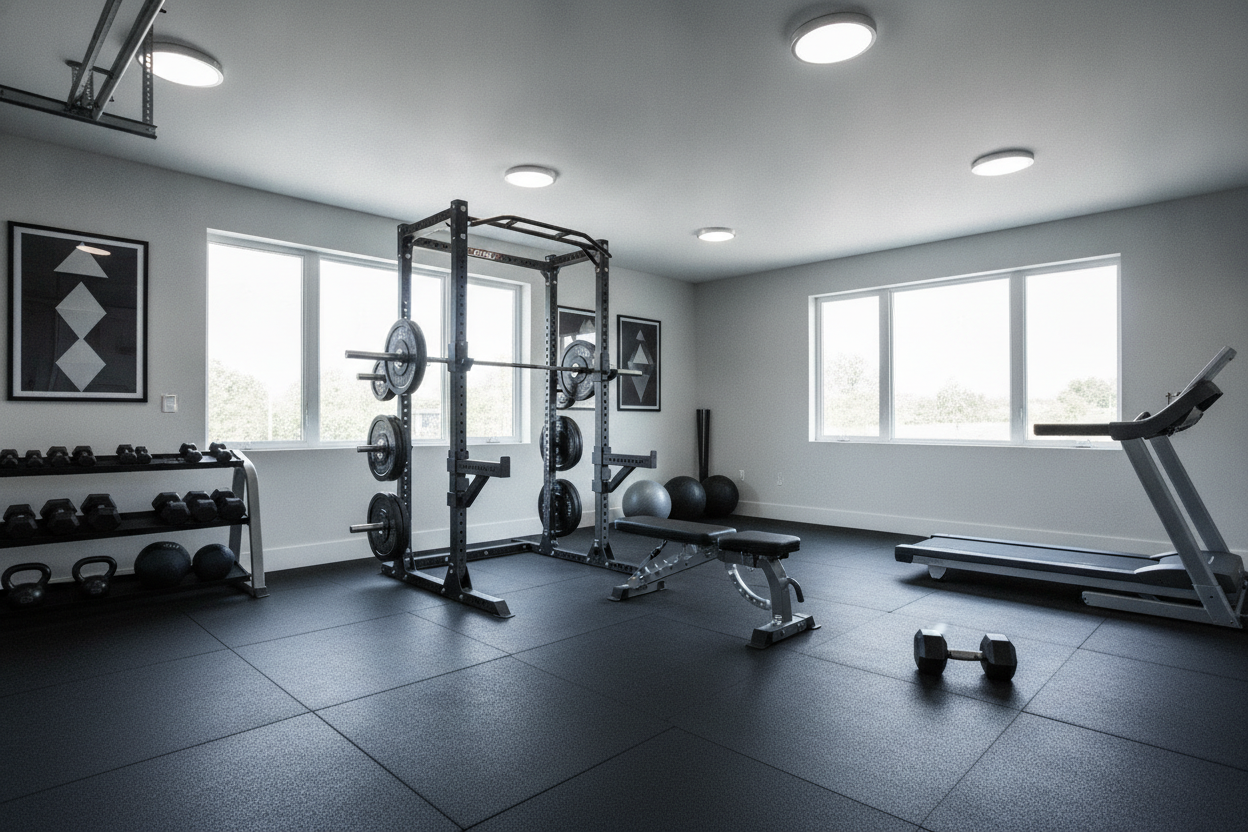
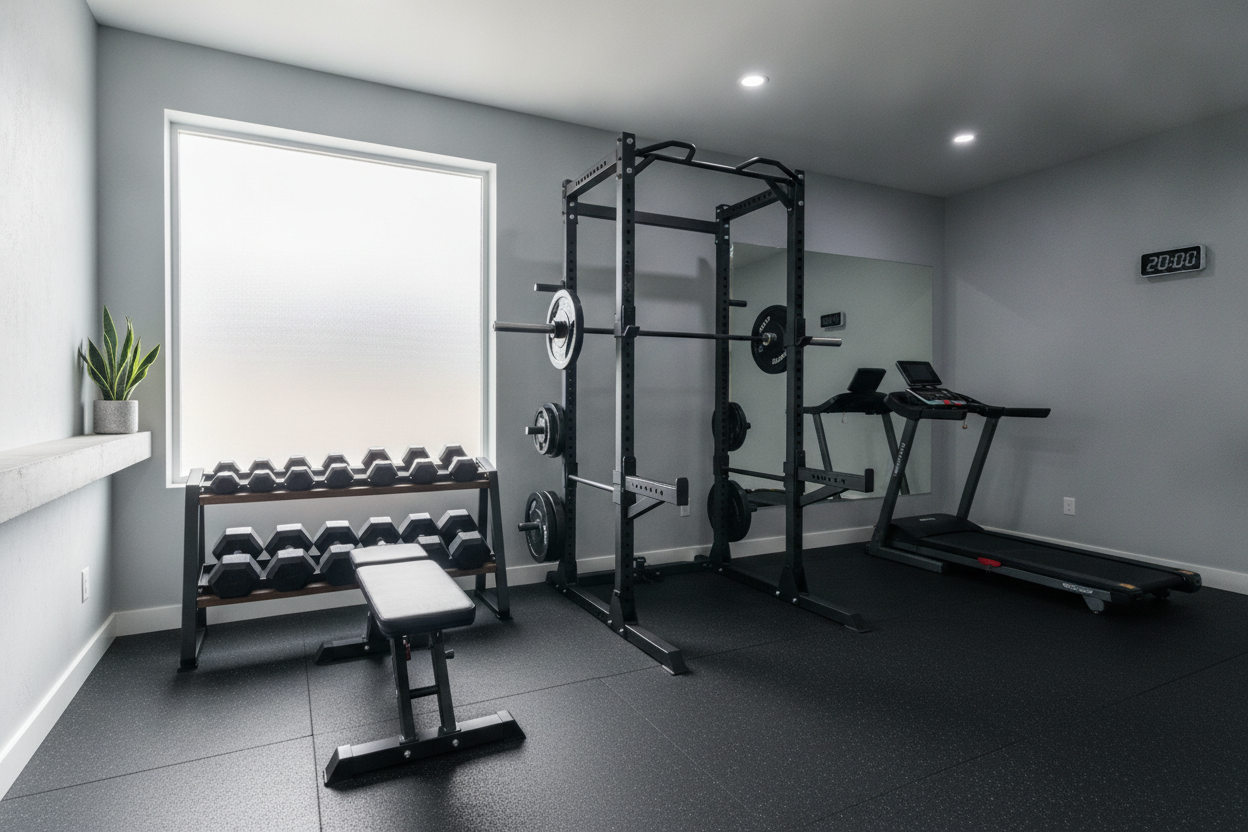
Your home setup plays a huge role in this efficiency. If you have to spend ten minutes moving the coffee table and another five minutes hunting for your sneakers, you've already lost your window of opportunity. I always recommend having a dedicated, permanent floor space. Laying down a large exercise mat for home gym use transforms a corner of a room into a 'no-excuses' zone. When the mat is always there, you can transition from your desk to your first set in sixty seconds.
In those 20 minutes, focus on compound movements. Think squats, lunges, push-ups, and rows. These movements recruit multiple muscle groups at once, giving you the biggest bang for your buck. If you spend 20 minutes doing bicep curls, you’re wasting time. If you spend 20 minutes doing a circuit of goblet squats and push-ups, you’re building a foundation that will actually change your physique.
Rest Days Are Mandatory: How Often Should I Workout as a Beginner?
The most common mistake I see is the 'all-or-nothing' mentality. People ask how often should i workout as a beginner and then try to hit the weights seven days a week. This is a recipe for joint pain and tendonitis. Your muscles don't grow while you're lifting; they grow while you're sleeping and resting. If you never give them a break, you're just tearing down tissue without ever letting the repair crew move in.
For a beginner, a 'one day on, one day off' schedule is the gold standard. This usually works out to three or four sessions per week. This frequency allows your joints—which take longer to adapt than your muscles—to get used to the new stress you're putting on them. If you’re feeling restless on your off days, go for a walk or do some light stretching. Don't pick up the weights.
Why 3 Days a Week Beats 6 Days Every Time
When you train three days a week, you can bring 100% intensity to every session. If you’re training six days a week, you’re likely sandbagging your efforts because you’re subconsciously saving energy for tomorrow. I’d much rather see you do three brutal 20-minute sessions than six mediocre ones. Your central nervous system needs that downtime to recalibrate. Overreaching too early leads to 'gym dread,' that feeling where the sight of your dumbbells makes you want to take a nap.
Intensity Over Time: Are You Working Out or Just Sweating?
There is a massive difference between being tired and being productive. You can jump up and down for 40 minutes and get very sweaty, but that doesn't mean you've built any strength. When asking how long should you workout for beginners, you have to look at the quality of the minutes. Five slow, controlled, perfect-form push-ups are worth more than fifty sloppy ones done for the sake of the clock.
This logic applies even when you start specializing. For example, people often overcomplicate upper body days, but how long should a chest workout really last for best gains is usually just a matter of 3 or 4 high-quality sets of two different movements. You don't need eight different angles of cable flyes. You need to get strong at the basics. Focus on the tension in the muscle, not the timer on your phone. If you can finish your routine and honestly say every rep was a challenge, you’ve done enough.
Scaling Up: How Long Should You Workout for Beginners Once You're Stronger?
Eventually, 20 minutes won't be enough to fatigue your muscles. This is a good problem to have. You’ll know it’s time to scale up when you’re finishing your 20-minute circuit and feeling like you could go through it two more times without breaking a sweat. At this point, you can gradually increase your time to 40 or 45 minutes.
Don't just add more exercises for the sake of it. Increase the weight, slow down the tempo, or decrease the rest periods. If you’re using adjustable dumbbells, this is when you start clicking them up to the next bracket. If you’re doing bodyweight stuff, this is when you move from regular push-ups to decline push-ups. The goal is to keep the intensity high, even as the duration creeps up.
Graduating the Living Room: How Often Should Beginners Go to the Gym?
There comes a day when the living room feels small and your 25-lb dumbbells feel like toys. When you reach that point, you might start asking how often should beginners go to the gym to take things to the next level. The answer remains surprisingly similar: 3 to 4 days a week is still the sweet spot for most people for the first year of serious lifting.
The gym offers equipment you just can't fit in a standard apartment—squat racks, cable machines, and leg presses. If you're nervous about making the jump, I recommend checking out a how to workout at a gym the complete beginner blueprint to help you navigate the transition. The environment is different, but the principles of short, intense sessions remain the same. You don't need to live at the gym to look like you do.
Personal Experience: My 90-Minute Mistake
When I first started training, I followed an old-school bodybuilding split I found on a forum. It called for 90 minutes of lifting, six days a week. I bought a cheap bench and a set of plastic-coated weights that leaked sand. I lasted exactly eight days. My elbows felt like they were on fire, I was constantly exhausted, and I hated every second of it. It wasn't until I scaled back to 25-minute sessions three times a week that I actually started seeing muscle definition and, more importantly, actually enjoyed training. The best equipment in the world won't help you if your program is unsustainable.
FAQ
Is 15 minutes too short for a workout?
No. If you're doing high-intensity interval training (HIIT) or heavy compound lifts with minimal rest, 15 minutes is plenty to trigger a physiological response. It's infinitely better than doing nothing.
Should I do cardio or weights first?
If your goal is strength or muscle tone, do weights first. You want your energy and focus at their peak for the movements that require the most technique and effort. Save the cardio for the end or a separate day.
What if I miss a scheduled workout?
Don't double up the next day. Just pick up where you left off. The 'all-or-nothing' trap is what kills most beginner routines. One missed session won't ruin your progress, but quitting because you feel guilty will.