Your Gym Workout Fitness Plan Fails Because You Don't Practice
I remember standing in front of a squat rack at 5:30 PM on a Monday, surrounded by the smell of stale pre-workout and the sound of crashing plates. I was trying to figure out why my left hip felt like it was pinching every time I hit the hole, but there were three people waiting for the rack and the music was blaring at 90 decibels. I realized right then that I wasn't there to improve; I was just there to survive the session. Most people approach their gym workout fitness this way, and it is exactly why they plateau.
- Practice is for technical mastery; training is for physical exertion.
- Commercial gyms are high-pressure environments that discourage slow, methodical form work.
- A dedicated home movement space reduces the 'ego' factor in your lifting.
- High-density flooring is the most underrated piece of equipment you can buy.
The Difference Between Training and Practicing
In the strength world, we often conflate training and practice. Training is what you do at the commercial gym. You load the bar, you push the intensity, and you tax your central nervous system. It is a performance. Practice, however, is low-stakes. It is doing 50 air squats while focusing entirely on your big toe's connection to the floor. It is 'greasing the groove' so that the movement becomes an involuntary reflex.
The problem with trying to practice at a big box gym is the friction. You are paying for the access to heavy iron, so you feel obligated to use it. You won't spend 20 minutes perfecting a hip hinge with a broomstick when there is a line for the deadlift platform. By moving your technical practice to your home, you remove the pressure to 'perform' and actually start to learn how your body moves.
Why I Built a Barebones Movement Lab at Home
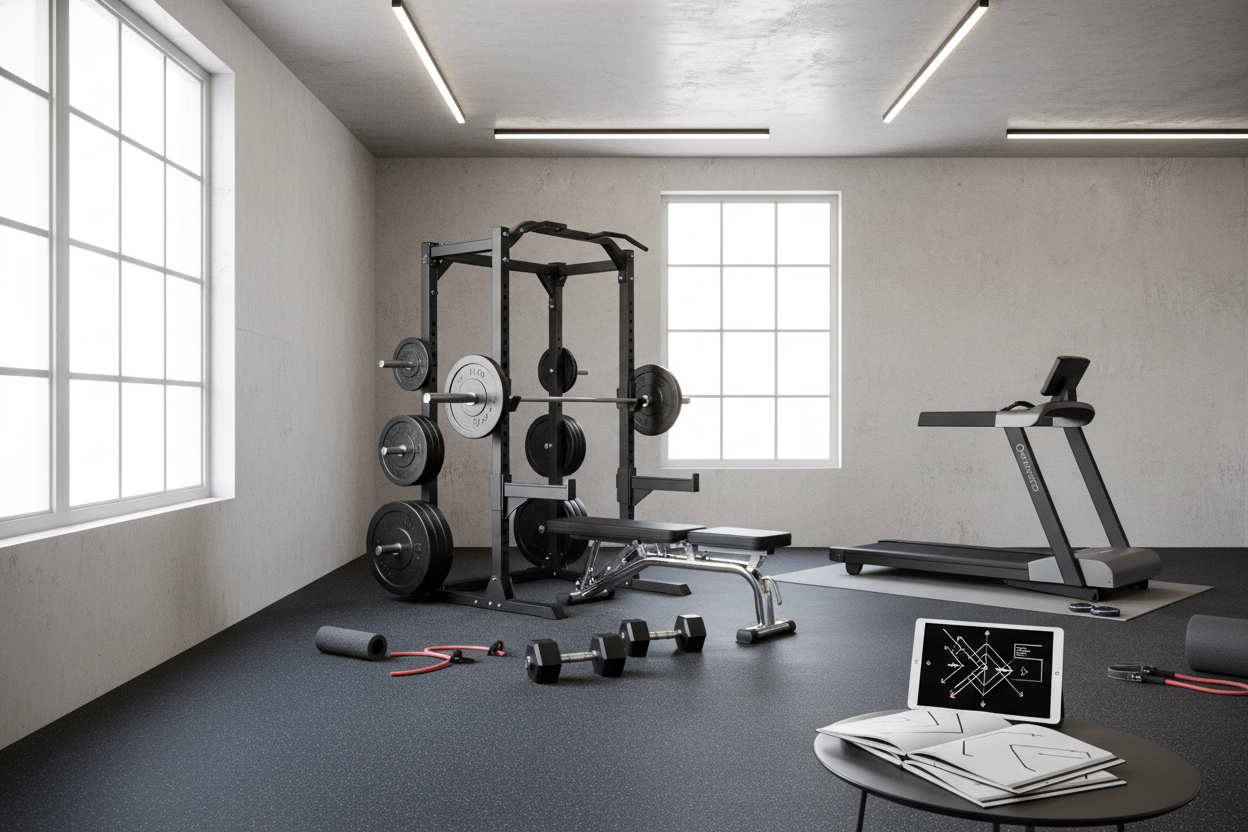
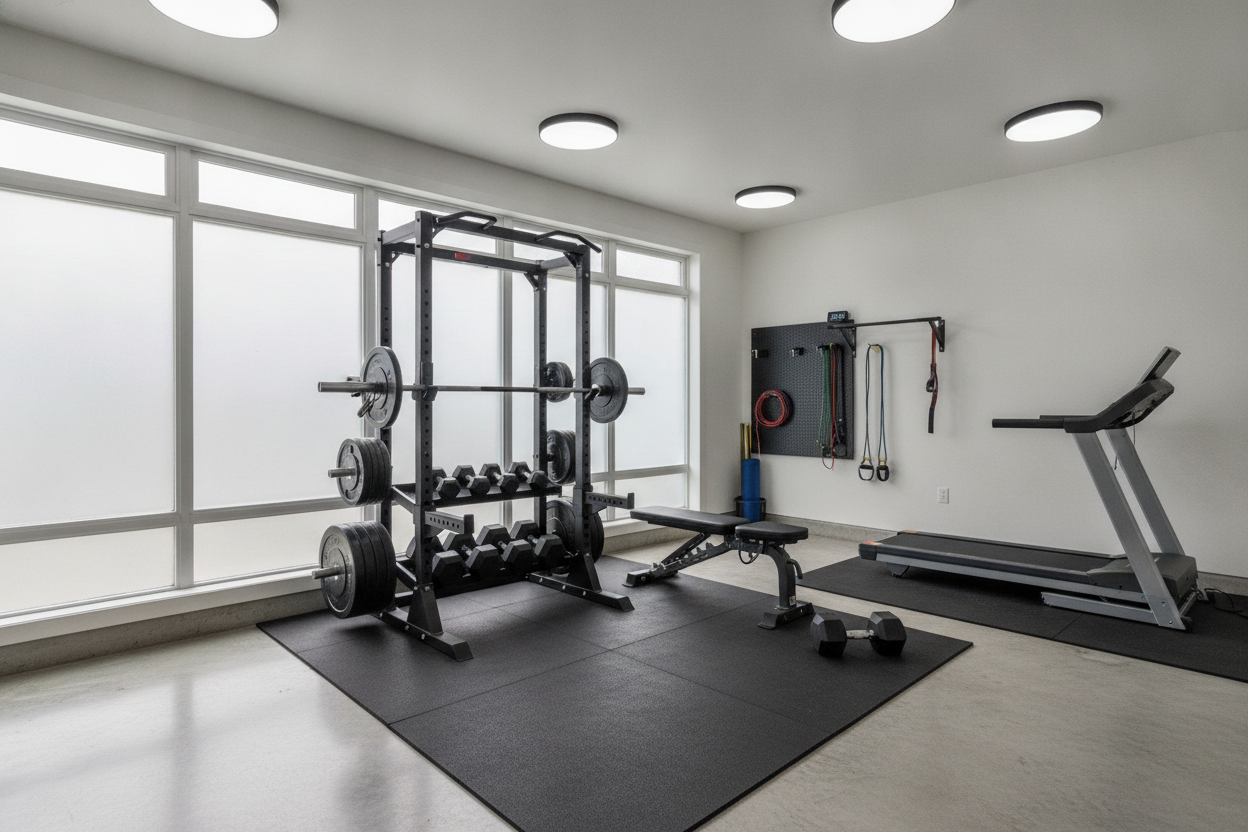
You do not need a $5,000 power rack or a full set of calibrated plates to fix your squat. I realized that my biggest gains didn't come from a new supplement or a complex program, but from clearing out a 6x8 foot corner of my garage. I didn't need a squat cage; I needed a distraction-free zone where I could fail at a movement pattern without an audience.
The foundation of this space isn't a machine; it's the floor. I invested in a large exercise mat for home gym use because it defined the boundary of my 'lab.' Having that dedicated surface meant I could drop down for a mobility flow or a set of prying squats the second I got home from work. It turns a spare room into a functional tool for longevity.
Ditching the Slippery Living Room Rug
I learned the hard way that practicing on the wrong surface is worse than not practicing at all. I used to try to do my lunges and lateral shifts on a standard living room rug over hardwood. During a particularly aggressive session of Cossack squats, the rug slid, my lead foot caught the floor, and I tweaked my MCL. It was a stupid, avoidable injury that cost me six weeks of heavy lifting.
That was the day I swapped the rug for a dedicated 6x8ft exercise mat. The difference in stability is night and day. When you aren't worried about your feet sliding out from under you, you can actually produce force and find your balance. A 7mm high-density mat provides enough cushion for your joints but enough firmness that you don't feel like you're standing on a marshmallow.
Translating Living Room Prep to Gym Floor Power
When you spend 15 minutes a day at home working on your ankle dorsiflexion or thoracic spine rotation, something magical happens when you get back to the commercial gym. You no longer need a 30-minute warmup just to feel 'okay' under the bar. Your nervous system is already primed. You've done the work in a low-stress environment, so the movement pattern is locked in.
This allows you to execute a basic gym workout plan with incredible efficiency. Instead of fussing with your setup for every set, you just walk up and pull. You aren't thinking about your cues because you already practiced them in your living room the night before. This is how you bridge the gap between 'working out' and actually building elite-level strength.
Small investments in your home environment pay the biggest dividends in your physical performance. When you elevate your home gym setup to include a space for movement practice, you're not just buying gear; you're buying the ability to train smarter. Stop winging it at the gym and start practicing at home.
Personal Experience: The 405-lb Plateau
I spent three years stuck at a 405-lb deadlift. I tried every program under the sun, but my back always felt 'off' after heavy sets. I finally started filming my setup on my home mat with a PVC pipe. I realized my hips were about three inches too low, causing them to shoot up before the bar even left the floor. I spent a month practicing that specific hinge at home for 10 minutes a night. Two months later, I pulled 455 for a double. The strength was there; the practice wasn't.
FAQ
Do I need heavy weights for home practice?
Absolutely not. Practice is about biomechanics. Using a broomstick, a light resistance band, or just your own bodyweight is usually better because it allows you to focus on the 'feel' of the movement rather than the struggle of the load.
Can I just use a standard yoga mat?
Yoga mats are usually too thin (3-5mm) and too narrow for dynamic movement. If you're doing lunges or rolling around for mobility, you'll constantly find yourself stepping off the edges. A larger, thicker mat is a much better investment for strength athletes.
How often should I do this?
Consistency beats intensity here. 10 to 15 minutes of movement practice 5 days a week is significantly better than a single 90-minute session. Think of it like brushing your teeth—it's just daily maintenance for your joints.