World's Greatest Stretch: How to Do It and Why It Works
Quick answer: The world's greatest stretch is a dynamic stretch that combines a deep lunge, a hip flexor stretch and thoracic rotation in one move. Start in a high plank. Step your right foot forward outside your right hand into a deep lunge, back knee off the floor or resting down. Drop your right elbow toward the inside of your right foot. Then rotate your chest open and reach your right hand toward the ceiling, following it with your eyes. Bring the hand back down, shift your hips back to straighten the front leg for a hamstring stretch, then return to plank and switch sides. Do 3–5 reps per side as a warm up. It hits the hip flexors, inner thigh, hamstrings and upper back in one efficient full body mobility drill.
Key takeaways
- Many stretches in one move: lunge, hip flexors, groin, thoracic spine and hamstrings.
- Move slowly and breathe through each position.
- Back knee can rest down if the lunge is too deep.
- Rotate from the upper back, not just the arm.
- Perfect warm up before lifting, running or home workouts.
Muscles stretched and mobilized
| Area | Effect |
|---|---|
| Hip flexors (back leg) | Stretched in the deep lunge |
| Glutes and inner thigh (front leg) | Stretched as the elbow drops |
| Thoracic spine and chest | Spinal rotation as you reach up |
| Hamstrings and calves | Stretched when you straighten the front leg |
| Core and shoulders | Stability in the plank and lunge |
Benefits of the world's greatest stretch
- Efficient: so many areas in one move, ideal when time is short.
- Hip mobility for squats, lunges and deadlifts.
- Thoracic rotation that can help better posture after sitting.
- Movement quality: prepares the body to move through full ranges.
- Reduces stiffness in the morning or after long periods at a desk.
How to do the world's greatest stretch
- Plank: start in a high plank, hands under the shoulders.
- Right foot forward: step the right foot outside the right hand into a deep lunge. Keep the back leg straight or lower the back knee.
- Elbow drop: lower the right elbow toward the inside of the right foot. Keep the chest tall and feel the stretch in the left hip flexors and right inner thigh.
- Rotate: place the right hand back down, then rotate the chest to the right and reach the right hand toward the ceiling. Eyes follow the hand.
- Return: bring the right hand down inside the front foot.
- Hamstring stretch: shift the hips back and straighten the front leg, toes up.
- Back to plank: step the foot back and repeat on the other side.
Common mistakes
| Mistake | Fix |
|---|---|
| Rushing through the positions | Pause 2–3 seconds in each |
| Front foot not far enough forward | Step all the way outside the hand |
| Rotating only the arm | Turn the chest and upper back toward the ceiling |
| Hips sagging in the lunge | Squeeze the back glute; lower the back knee if needed |
| Holding the breath | Breathe out as you reach and rotate |
Modifications
- Back knee down on a pad for an easier lunge.
- Hands on blocks if the floor is far away.
- Skip the elbow drop and just do lunge plus rotation.
- Standing version: lunge forward and rotate toward the front knee.
How to use it: warm up and daily routine
| Use | Prescription |
|---|---|
| Warm up before lifting | 3–5 reps per side |
| Morning mobility | 2 rounds of 3 per side |
| Desk-break flow | 2 reps per side, slow |
Sample 5-minute warm up: cat-cow, inchworms, world's greatest stretch, goblet squat holds. For more mobility exercises, see hip flexor stretches and thoracic spine mobility exercises.
Who should be careful
- Wrist pain: use blocks or fists, or the standing version.
- Knee pain: pad the back knee or keep the lunge shallower.
- Low back issues: keep the rotation gentle.
Space and mat
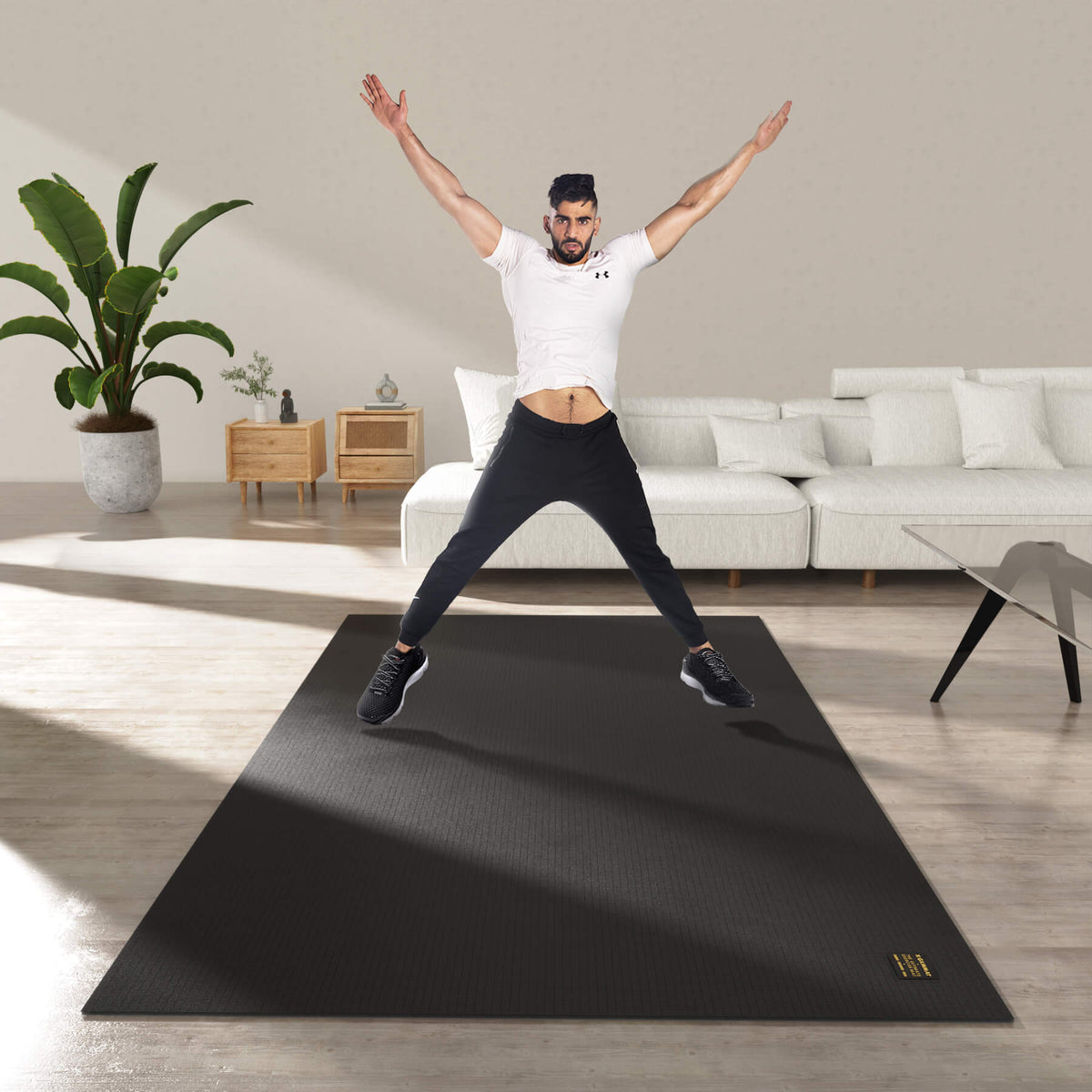
You'll go from plank to deep lunge to a reach with your arm out to the side, so you need length and width. A standard yoga mat is often too narrow for the hand outside the foot. GXMMAT large exercise mats and large yoga mats give room for the whole flow and cushion the back knee. Add a kneeling pad for extra knee comfort.
FAQ
What does the world's greatest stretch work?
The hip flexors, glutes, inner thighs, hamstrings, thoracic spine and shoulders, all in one dynamic stretch.
Why is it called the world's greatest stretch?
Because it covers so many areas in one move, making it one of the most efficient warm up drills.
How many reps should I do?
3–5 slow reps per side as a warm up.
Is it a static or dynamic stretch?
Dynamic. You move through positions with short pauses rather than holding one stretch for a long time.
Can I do it every day?
Yes. It's gentle enough for a daily routine, morning or before workouts.
Written by Yuvien Royer for GXMMAT. This article is general fitness information, not medical advice.