Inchworm Exercise: How to Do It, Benefits and Variations
Quick answer: To do the inchworm exercise, stand tall with feet hip width apart, hinge at the hips and place your hands on the floor (bend your knees if you need to). Walk your hands forward until you reach a high plank position, with your core engaged and body in a straight line. Then walk your feet toward your hands, keeping your legs straight if you can, and roll back up to the standing position. The inchworm stretches the hamstrings and posterior chain while strengthening the shoulders and core, making it a great full-body warm-up. Do 2–3 sets of 5–8 reps.
Key takeaways
- Warm-up favorite: stretches and activates the entire body in one move.
- Plank with the core engaged, no sagging hips.
- Bend the knees as much as you need to reach the floor.
- Small steps with the hands keep it controlled.
- Needs more space than most floor exercises: about 6–7 feet.
Muscles worked
| Muscle group | Role |
|---|---|
| Hamstrings and calves | Stretched as you fold forward |
| Shoulders and chest | Support body weight in the plank |
| Core muscles (abs and obliques) | Stabilize the plank and resist sagging |
| Glutes and lower back | Control the hip hinge |
| Triceps and wrists | Carry load as the hands walk forward |
Benefits
- Full-body warm-up that raises the heart rate and body temperature.
- Hamstring and posterior chain flexibility.
- Upper body strength and shoulder stability.
- Core stability in the plank.
- No equipment needed; works for most fitness levels.
How to do the inchworm exercise
- Starting position: stand tall, feet hip width apart, arms by your sides.
- Hinge: bend forward at the hips and place your hands on the floor in front of your feet. Keep your legs as straight as is comfortable.
- Walk out: walk your hands forward in small steps until your hands are under your shoulders in a high plank.
- Plank: pause with your body in a straight line from head to heels, belly button pulled in, shoulders engaged.
- Walk in: keeping your hands planted, take small steps with your feet toward your hands.
- Stand: roll up slowly to standing. That's one rep.
Common mistakes
| Mistake | Fix |
|---|---|
| Hips sagging in the plank | Brace the core; squeeze the glutes |
| Walking the hands too far past the shoulders | Stop when hands are under the shoulders |
| Forcing straight legs | Bend the knees; flexibility improves over time |
| Rushing | Small, controlled steps; breathe |
| Head dropping | Keep the neck in line with the spine |
Variations to add a challenge
| Variation | How |
|---|---|
| Inchworm with push up | Add a push up in the plank |
| Inchworm with shoulder taps | Tap each shoulder in the plank |
| Extended inchworm | Walk the hands further forward (more core engagement) |
| Inchworm with world's greatest stretch | Step one foot to the hand, rotate, then switch |
| Traveling inchworm | Move forward across the room instead of in place |
| Reverse inchworm | Start in plank, walk feet in, then hands out |
Where it fits in your workout routine
| Use | Prescription |
|---|---|
| Warm-up | 1–2 × 5 reps, slow |
| Conditioning circuit | 30–45 sec, with push ups |
| Mobility break during the day | 3–5 reps |
Sample 5-minute warm up
| Exercise | Reps |
|---|---|
| Inchworms | 5 |
| Cat cow | 8 |
| Bodyweight squats | 10 |
| Wall angels | 8 |
| Lateral lunges | 6 per side |
Guides: cat cow pose, wall angels and lateral lunges. For heavier days, also see warm-up sets.
Inchworms at home
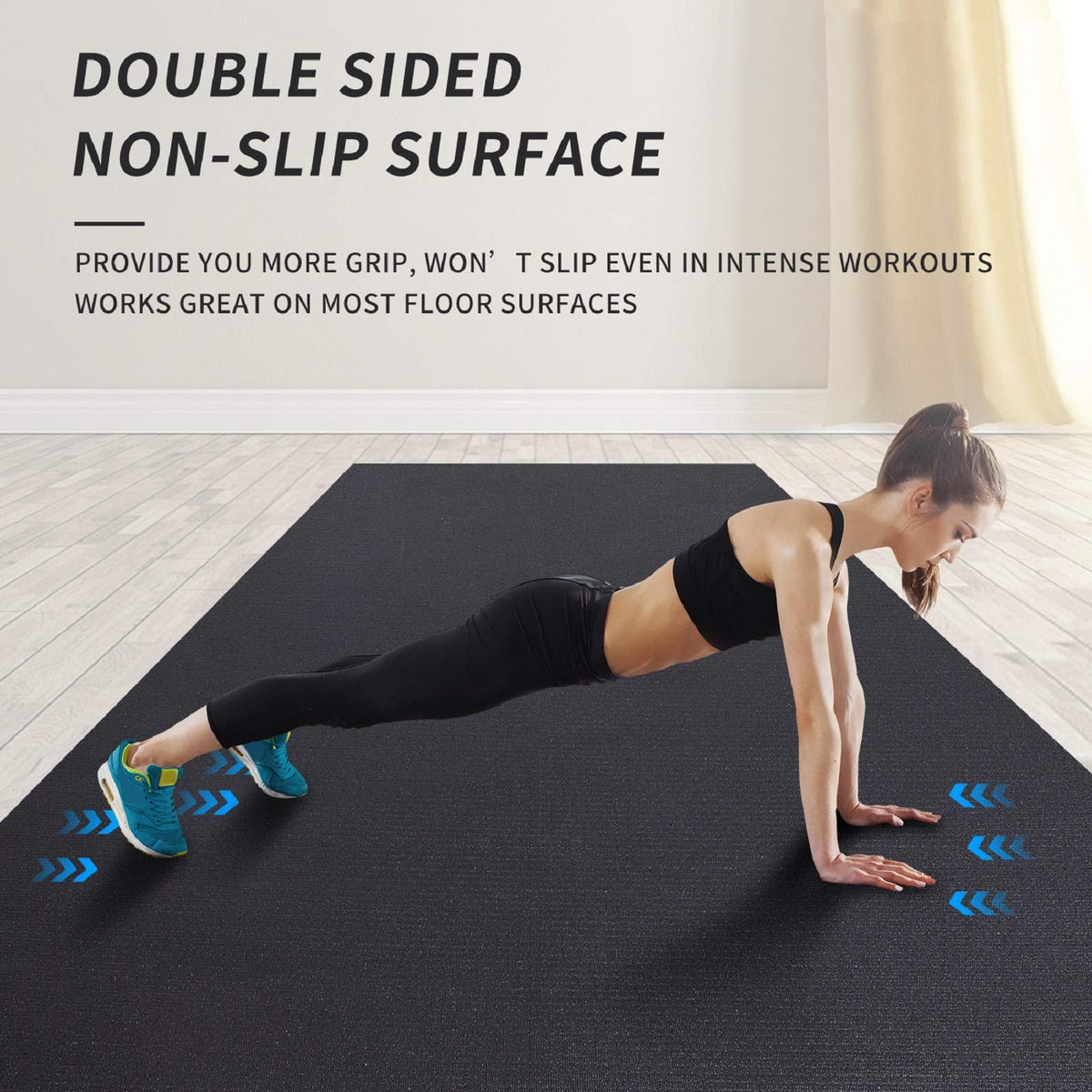
- Space: the inchworm needs more space than most floor moves. A 6x8 or larger large exercise mat fits a full walk-out without your hands or feet slipping off the edge.
- Wrists: a cushioned large yoga mat is easier on the wrists and grips bare hands.
FAQ
What does the inchworm exercise work?
It stretches the hamstrings and calves and strengthens the shoulders, chest, triceps and core.
Is the inchworm a warm-up or a workout?
Mostly a warm-up, but adding push ups or doing it for time turns it into a conditioning exercise.
How many inchworms should I do?
5–8 slow reps as a warm-up, or 2–3 sets in a circuit.
What if I can't touch the floor?
Bend your knees as much as needed. Your hamstring flexibility will improve with practice.
Are inchworms good for beginners?
Yes. Keep the walk-out short and the knees bent at first.
Written by Yuvien Royer for GXMMAT. This article is general fitness information, not medical advice.