Workout Routine Glutes Blueprint: Movement Vectors, Session Design, and Floor Mat Staging
Biomechanical Foundations of Glute Training
Designing a comprehensive workout routine glutes program requires an understanding of how the gluteal complex functions across multiple movement planes. The gluteus maximus serves as the primary hip extensor and external rotator, generating substantial force during both vertical hinging and horizontal thrusting. Flanking this primary muscle are the gluteus medius and gluteus minimus, which govern hip abduction, internal and external rotation, and lateral pelvic stability. A truly complete glute workout addresses all three muscles by varying resistance angles rather than relying on a single compound lift. Lifters seeking a broader programming context can consult a workout resource to balance lower-body days with overall athletic development.
When movement is restricted to a single vector, secondary muscles such as the hamstrings or lumbar erectors often take over the load. For instance, standing vertical hinges load the glutes primarily in an elongated position, whereas horizontal thrusts create peak tension at full hip extension. Incorporating lateral abduction ensures that the upper gluteal shelf stabilizes the pelvis during heavy unilateral stances. Structuring your sessions around these complementary lines of force builds balanced strength while minimizing joint strain across the hips, knees, and lower back.
Core Movement Patterns in a Complete Glute Workout
A balanced full glutes workout blends horizontal hip extension, posterior chain hinges, unilateral leg drives, and rotational abduction. Combining these patterns ensures thorough stimulus across all fiber orientations while allowing lifters to manage local fatigue efficiently. Complementing these free-weight patterns with machine-based variations detailed in a full workout guide can provide additional stability during secondary training days.
- Horizontal Hip Thrusts: Exercises such as barbell hip thrusts, kas glute bridges, and elevated single-leg bridges place peak mechanical tension on the gluteus maximus at short muscle lengths. Maintaining a slight posterior pelvic tilt at the top of the movement helps avoid lumbar hyperextension.
- Vertical and Angled Hinges: Romanian deadlifts, good mornings, and cable pull-throughs load the gluteal complex under stretch. Emphasizing a deep hip hinge with minimal knee flexion targets the glute-hamstring tie-in and posterior chain.
- Unilateral Split Stances: Bulgarian split squats, reverse lunges, and step-ups challenge pelvic levelness while demanding active contribution from the gluteus medius to prevent knee valgus collapse.
- Abduction and External Rotation: Seated cable abductions, banded lateral walks, and side-lying clam raises isolate the abductors to build lateral hip control and stability.
Rotating through these categories during intense glute workouts prevents overuse of specific joints while providing diverse stimulus to drive consistent muscular adaptation.
Step-by-Step Glute Workout Routine Structure
Organizing a training session logically maximizes muscle fiber recruitment while keeping energy levels aligned with exercise complexity. Similar to upper-body program design found in a workout routine guide, an effective glute session transitions from targeted activation into heavy compound movements, finishing with higher-repetition metabolic isolation.
Phase 1: Dynamic Activation and Joint Mobilization
Begin with unweighted or light banded movements to establish mind-muscle connection and open up hip capsule mobility. Quadruped bird-dogs, bodyweight glute bridges, and lateral monster walks prepare the nervous system without inducing premature muscular fatigue.
Phase 2: Primary Horizontal Compound Lift
Perform your heaviest hip extension movement early when systemic energy is highest. The barbell hip thrust or heavy dumbbell glute bridge serves as an ideal anchor. Focus on full hip extension, driving through the midfoot and heels, and pausing briefly at the peak contraction of each repetition.
Phase 3: Lengthened-State Posterior Hinge
Transition to a hinge variation such as the dumbbell Romanian deadlift. Shift the hips backward while maintaining a neutral spine, feeling a deep stretch across the glutes and upper hamstrings before driving the hips forward to return to standing.
Phase 4: Unilateral Loading
Integrate a split-stance movement, such as a deficit reverse lunge or rear-foot-elevated split squat. Torso angle plays a key role here; leaning slightly forward at the torso directs the line of force directly through the lead hip rather than the anterior quadriceps.
Phase 5: Abduction and Burnout Finisher
Conclude the session with high-repetition abduction work using resistance bands or cable pulleys. Exercises like seated abductions or standing kickbacks target remaining motor units and promote local metabolic stress to finish the routine.
Progressive Overload and Neuromuscular Connection
Building strength and muscle in the glutes requires structured progression rather than merely adding random exercises. Tracking training volume, controlling movement tempo, and refining execution cues are fundamental to long-term progress during intense glute workouts.
- Load and Repetition Progression: Gradually increase external resistance or target additional repetitions over time while maintaining strict movement mechanics.
- Tempo Manipulation: Implement controlled eccentric phases, such as lowering over three seconds during Romanian deadlifts, to increase time under tension.
- Isometric Peak Pauses: Hold the peak contraction of hip thrusts and bridges for one to two seconds to maximize motor unit recruitment at short muscle lengths.
- Pelvic Cues: Focus on drawing the ribcage toward the pelvis and avoiding excessive arching in the lower back during full extension.
Practicing these intentional cues ensures that mechanical tension remains on the target muscles throughout the entire range of motion.
Home Gym Floor Staging and Joint Protection
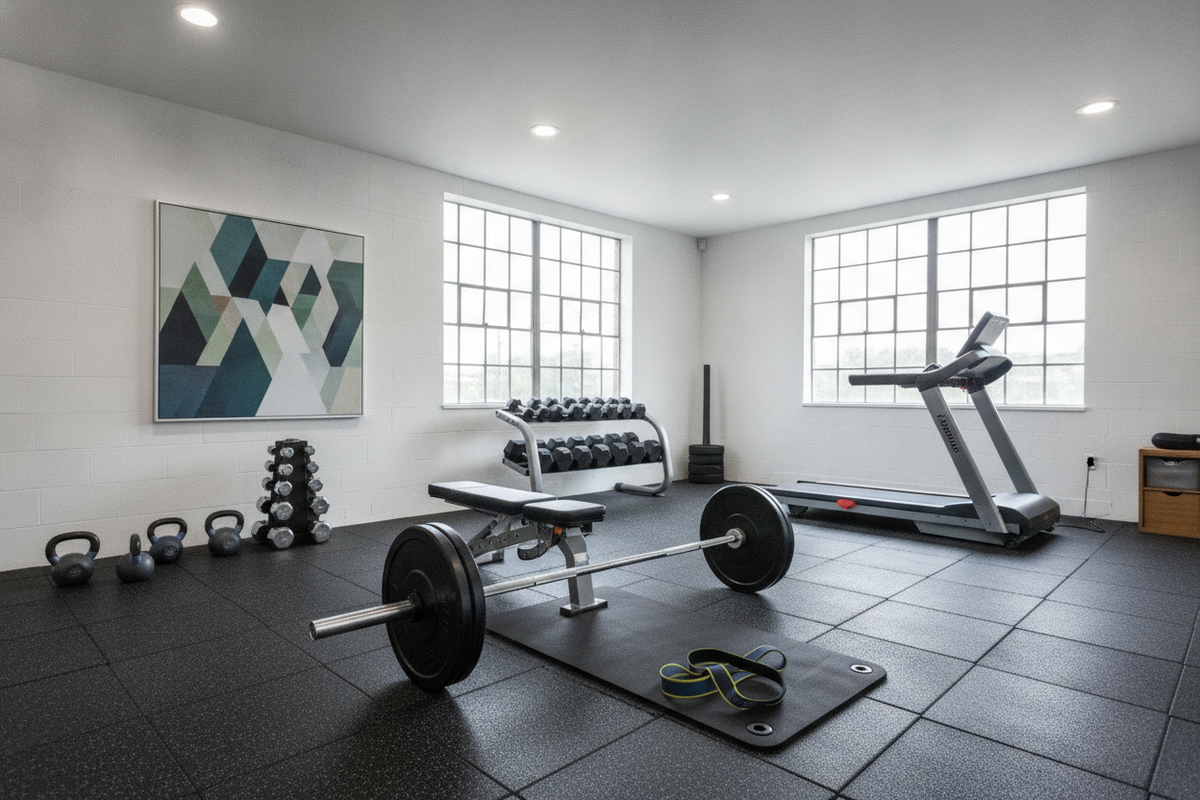
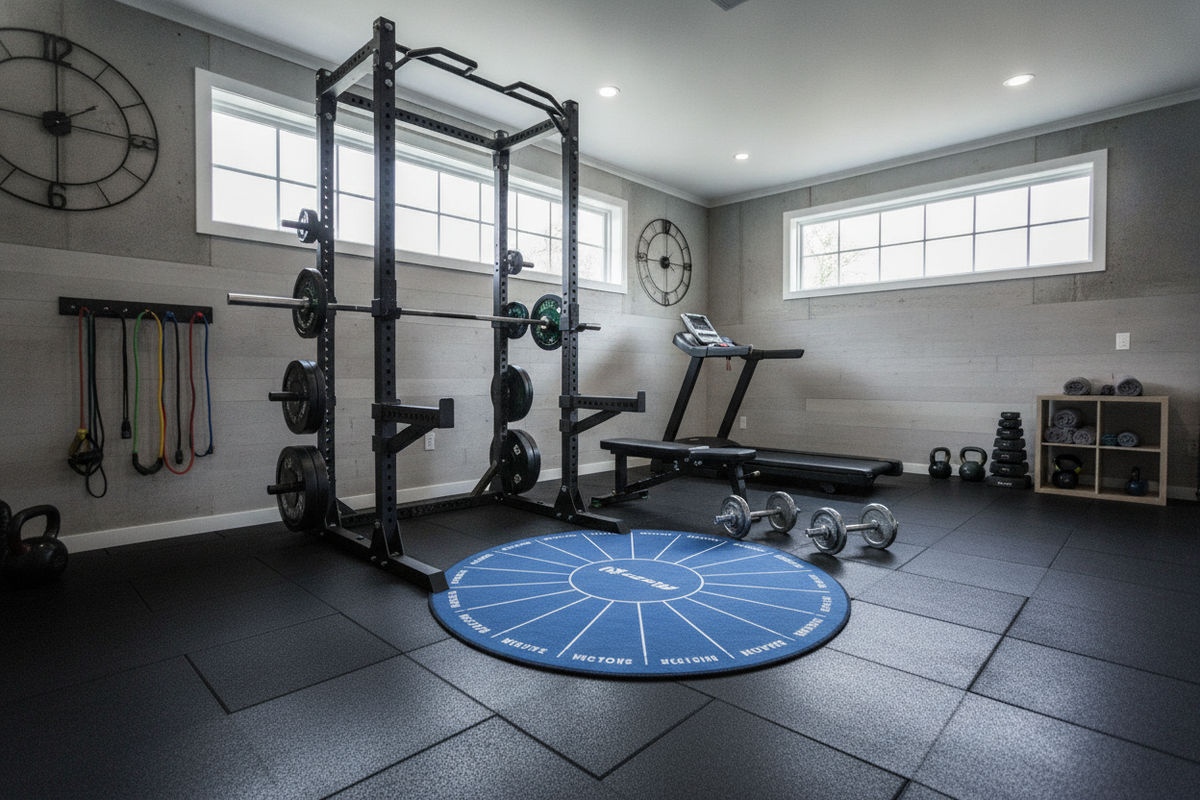
Executing a dedicated full glutes workout at home demands a secure, stable training surface. High-friction exercises like weighted hip thrusts, lunges, and bridges place significant horizontal shearing forces across the floor. Staging your training space with a dedicated workout product provides the non-slip foundation required for safe, confident lifts.
A durable, high-density exercise mat prevents workout benches from sliding backward during heavy thrusts, protecting both equipment and lifters from sudden shifts under load. In kneeling exercises like quadruped kickbacks or fire hydrants, dense flooring cushions the knees and wrists against hard subfloors. Furthermore, placing protective gym flooring beneath heavy dumbbells and barbell plates helps safeguard residential subfloors from impact damage during aggressive training sessions.
Designing Your Weekly Training Frequency and Recovery Split
Frequency and recovery determine how well your body adapts to lower-body training stress. Most lifters achieve optimal balance by training glutes two to three times per week, spacing sessions by at least forty-eight hours to allow for complete tissue repair and nervous system recovery. You can integrate a workout routine glutes focus into an upper/lower split, a push/pull/legs rotation, or a full-body training template.
Managing training volume alongside adequate rest, proper hydration, and clean gym mat maintenance keeps your home training space hygienic and your progression sustainable over months of consistent effort.