Isometric Exercise for Glutes: Static Tension Drills, Pelvic Alignment, and Training Mat Staging
Understanding Gluteal Isometrics: Mechanics and Static Muscle Recruitment
An isometric exercise for glutes involves contracting the posterior chain muscles under sustained mechanical tension without altering the joint angle or moving the limbs. Unlike dynamic concentric and eccentric lifting cycles, static contractions maintain a fixed muscular length while demanding sustained neural drive. Practicing gluteal isometrics allows lifters and fitness enthusiasts to cultivate targeted mind-muscle connection, improve pelvic positional awareness, and build static strength endurance across the gluteus maximus, medius, and minimus.
During a static hold, the muscle fibers produce force against an immovable barrier or maintain an elevated body position against gravity. This sustained recruitment engages both deep stabilizing muscles and primary movers. Integrating static holds alongside a broader lower-body routine, such as an isometric exercise guide, creates a balanced foundation for knee, hip, and lumbar stability.
Core Isometric Glute Exercises: Step-by-Step Movement Blueprints
Incorporating direct isometric glute exercises requires deliberate positioning and strict attention to alignment. Without movement to mask technical errors, joint angles and core bracing dictate the quality of muscular recruitment. Combining these drills with dynamic movement frameworks outlined in a glutes exercise guide helps create comprehensive lower-body tension.
1. Isometric Glute Bridge Hold
Lie faceup on a padded workout mat with your knees bent and feet planted flat on the floor, roughly hip-width apart. Rest your arms alongside your torso with palms down.
- Execution: Drive through your heels to elevate your hips until your thighs, pelvis, and torso form a straight line. Avoid arching your lower back by keeping your ribcage depressed and your abdominal wall braced.
- Tension Cue: Perform sustained isometric glute squeezes at the peak position by actively pulling your heels slightly toward your shoulders without moving them along the mat surface.
- Hold Duration: Maintain tension steadily while breathing diaphragmatically into your ribs.
2. Prone Single-Leg Hip Extension Hold
Lie facedown with your legs extended straight behind you, resting your forehead on your hands to keep your cervical spine in neutral alignment.
- Execution: Engage your core to prevent the pelvis from tilting forward. Lift one leg a few inches off the floor while keeping the knee fully extended.
- Tension Cue: Squeeze the glute on the working side at the top of the lift, ensuring the movement originates from the hip rather than extension through the lumbar spine.
- Hold Duration: Hold the elevated position steadily, then switch to the opposite leg with equal control.
3. Static Split-Squat Hold
Assume a staggered stance with your front foot flat on the floor and your rear foot resting on the ball of the foot.
- Execution: Lower your hips straight down until both front and rear knees reach approximately right angles. Keep your torso tall or slightly pitched forward at the hip.
- Tension Cue: Drive down through the front heel while actively engaging the forward glute to stabilize the femur against rotation.
- Hold Duration: Hold the bottom position without resting the back knee on the mat before standing up smoothly.
Targeting the Lateral Hip: Isometric Gluteus Medius Exercises
The gluteus medius plays a crucial role in stabilizing the pelvis during single-leg stance, walking, and rotational athletic movements. Applying dedicated glute med isometrics reinforces lateral hip stability and reduces compensatory movement patterns.
Standing Wall Hip Abduction Press
Stand parallel to a sturdy wall, roughly a foot away. Lift the leg nearest the wall, bending the knee to a right angle so the outer side of the knee contacts the wall surface.
- Execution: Press the elevated knee laterally into the wall surface with moderate effort while maintaining an upright, unmoving torso.
- Tension Cue: Feel the contraction in the lateral hip of both the pressing leg and the supporting stance leg, which works simultaneously to anchor the pelvis.
Side-Lying Clamshell Hold
Lie on your side with your hips and knees bent at comfortable angles, stacking your feet directly on top of one another.
- Execution: Keeping the feet glued together, rotate the top knee upward toward the ceiling without allowing your pelvis to roll backward.
- Tension Cue: Hold the peak open position as a dedicated isometric gluteus medius exercise, focusing on continuous tension along the upper-lateral hip.
Sequencing and Tension Cues: Structuring an Isometric Training Session
To program glute isometric exercises effectively, select two to three variations based on your training objectives. Isometric training can serve multiple functions within a workout split:
- Warm-Up & Muscle Activation: Perform brief holds prior to heavy squats, deadlifts, or running sessions to establish conscious muscular control.
- Post-Workout Burnout / Finisher: Place longer static holds at the conclusion of a training routine to safely exhaust muscle fibers under controlled conditions.
- Active Recovery: Practice low-to-moderate intensity static holds on non-lifting days to maintain neuromuscular connection without generating excessive joint stress.
When selecting training gear for your routine, exploring an exercise collection ensures you have the right foundation for floor holds, planks, and bridge positions.
Floor Staging and Surface Stability for Safe Isometric Training
Static floor exercises require a stable, supportive base to maintain joint alignment and prevent discomfort. Performing prone holds or bridge variations directly on hard floors can create uncomfortable pressure on the sacrum, spine, and knees, leading to compromised form and reduced force production.
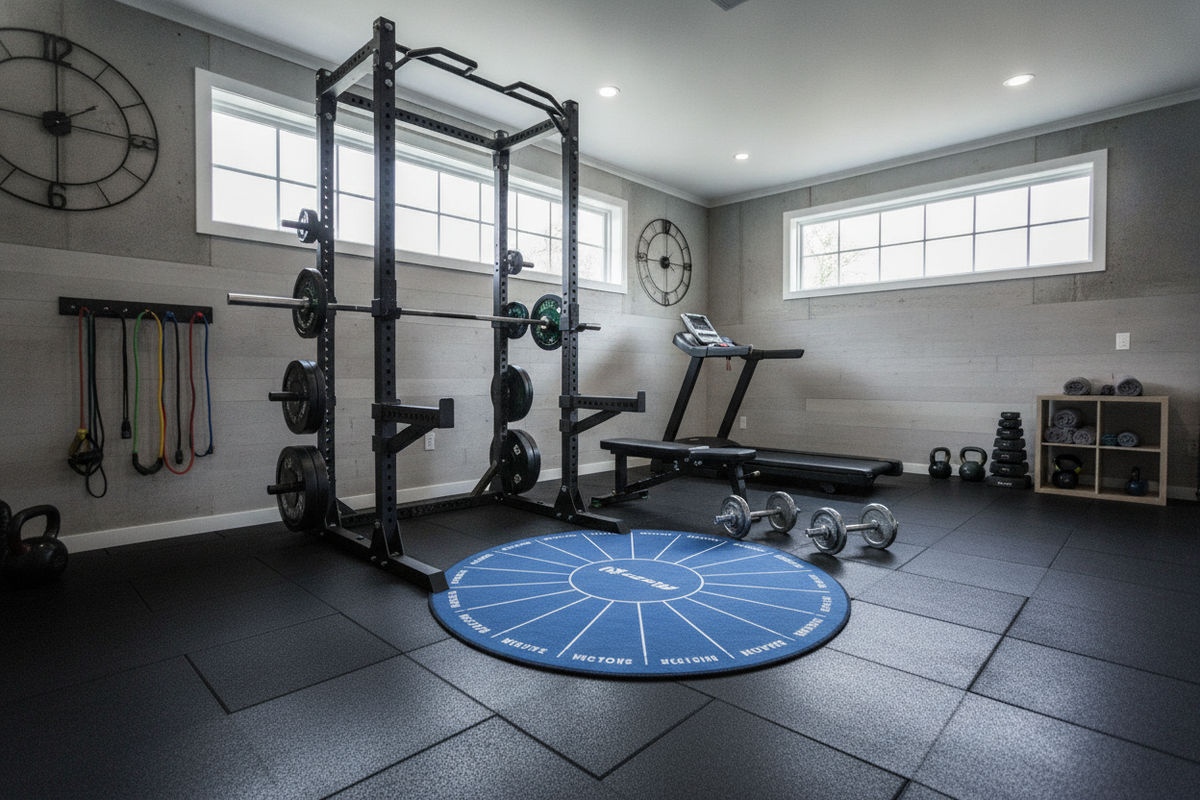
Setting up your training station with a spacious, high-density surface, such as an exercise product, provides the necessary grip and cushioning. A non-slip base prevents your feet from sliding forward during bridge holds or lateral shifts, allowing you to focus entirely on sustained muscular recruitment, consistent breathing, and neutral pelvic posture throughout every repetition.