Complete Guide to Building a Strong Chest Workout Routine
Designing an effective chest exercise schedule is more than just picking a few popular moves. A structured workout plan for chest day can help you build size, strength, and definition, while minimizing injury risk. Whether you train at home or in the gym, having a clear program for chest that balances volume, intensity, and recovery will lead to better results over time.
Understanding Chest Workout Structure
A well-crafted chest workouts routine targets all areas of the chest: the upper, middle, and lower portions. This approach allows muscles to develop evenly, providing both strength and aesthetic balance. Your schedule for chest workout should ideally include exercises that push, press, and fly in different angles, ensuring full activation of the pectoral fibers.
Compound vs Isolation Movements
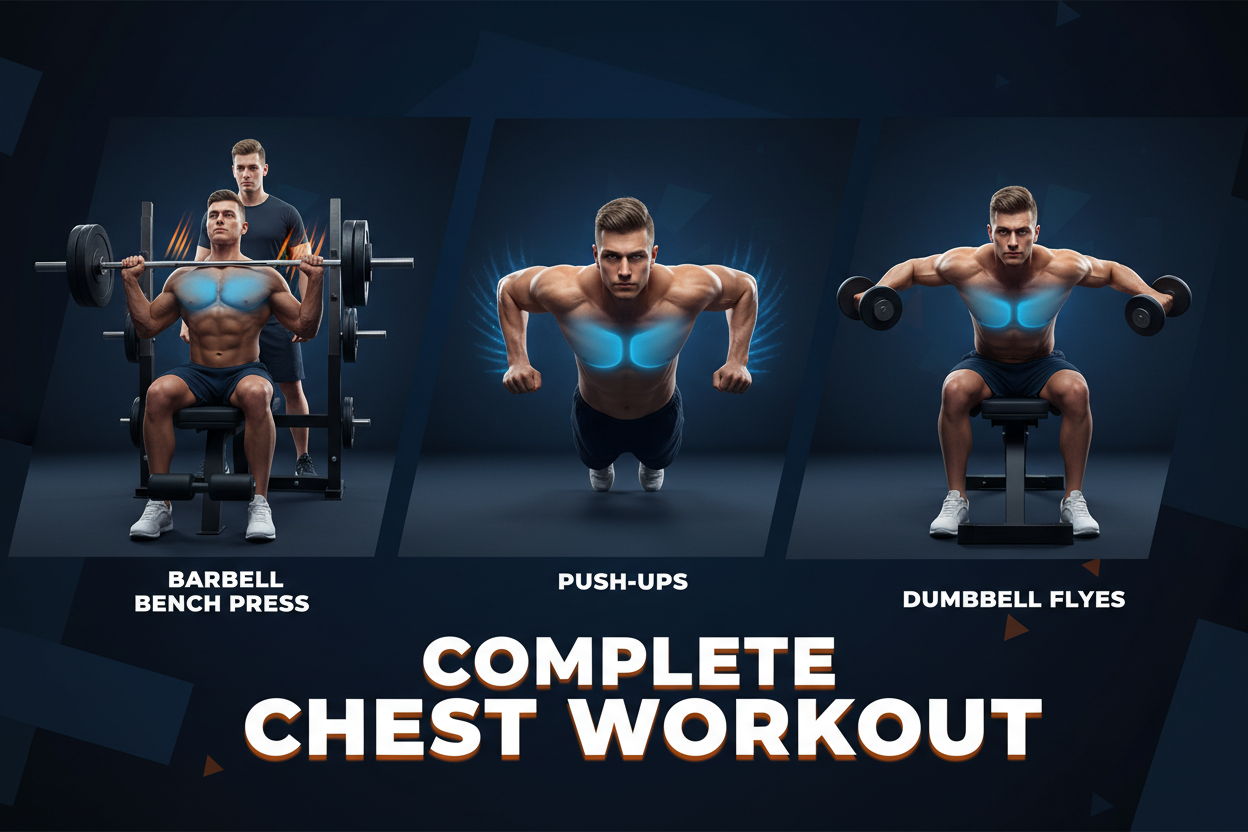
Compound lifts, such as bench presses or push-ups, engage multiple muscle groups and should be the foundation of any program chest workout. These moves allow for heavier loads, which are crucial for building mass. Isolation exercises, like chest flys, help refine definition and are often best placed towards the end of a workout routine for chest to fully exhaust the targeted muscles.
Planning Your Workout Plan for Chest
The best chest workout chart often includes a mix of heavy and moderate weights, with varying rep ranges. For instance, starting chest day routine with heavy barbell bench presses for 4 sets of 6-8 reps builds strength. Following that with incline dumbbell presses for 3 sets of 8-12 reps targets the upper chest. Cable flys or machine presses can then be used for 3 sets of 12-15 reps to improve endurance and finish the session.
Sample Chest Gym Workout Routine
- Flat barbell bench press – 4 sets of 6-8 reps
- Incline dumbbell press – 3 sets of 8-12 reps
- Cable fly – 3 sets of 12-15 reps
- Decline push-ups – 3 sets to failure
By adjusting weights and reps, this full chest workout routine can be tailored to suit beginners or advanced lifters.
Scheduling Chest Workouts
Most lifters benefit from training chest once or twice per week. Your schedule for chest workout depends on your overall split. If you follow a push-pull-legs routine, chest often falls on ‘push’ days together with shoulders and triceps. However, if size and strength are your primary goals, dedicating a specific chest day routine once per week, combined with lighter activation during other sessions, can yield results without overtraining.
Sets and Recovery
Choosing the right sets for chest workout depends on your training frequency. For once-weekly dedicated chest sessions, aim for 12-16 working sets. Divide these among different exercises and angles. Recovery plays a key role: muscles need time to repair and grow, so avoid hitting chest hard two days in a row. Adequate sleep, nutrition, and hydration will complement your efforts in the gym.
Progressive Overload in Chest Training
One of the most effective strategies in any program for chest is progressive overload—gradually increasing the resistance or reps over time. This ensures continual adaptation and improvement. Track your workouts using a notebook or app, noting sets, reps, and weights used. Small, consistent increases will lead to noticeable gains without risking injury.
My Personal Experience
When I first started focusing on my chest gym workout routine, I made the mistake of repeating the same exercises and weights for months. Progress stalled, and I felt discouraged. It wasn’t until I began following a workout plan for chest day that varied angles, rep ranges, and incorporated incremental weight increases that I saw real results. Within six months, my chest strength improved, and overall muscular development became more balanced.
Tips for an Effective Chest Day Routine
- Always warm up with dynamic stretches and light sets to prepare joints and muscles.
- Focus on proper form over heavy weight to maximize muscle recruitment and minimize injury.
- Include both incline and decline movements for complete chest development.
- Rest 60–90 seconds between hypertrophy-focused sets and 2–3 minutes for strength-focused sets.
Conclusion
A full chest workout routine should be thoughtfully planned, including a mix of exercises, rep ranges, and recovery strategies. The best chest workout chart serves as a guide but should be adjusted according to personal progress and lifestyle. By committing to a consistent program for chest, monitoring performance, and making gradual advancements, you can steadily build a stronger, more defined chest.