Best Muscle Groups to Pair with Chest Day for Maximum Gains
When planning your workout routine, pairing muscle groups effectively can make a significant difference in your progress. Chest day is one of the most popular in any training program, but knowing what to pair with chest day can enhance balance, strength, and overall performance.
The Science of Pairing Muscle Groups
In resistance training, muscle pairing is about optimizing fatigue and recovery. The chest is a prime mover in pushing exercises, and pairing it with complementary muscle groups allows you to train efficiently while minimizing risk of overtraining.
What to Pair with Chest Day
There are several approaches to choosing muscles to work alongside your chest. The most common include pairing chest with triceps, shoulders, or back, depending on your goals.
Chest and Triceps
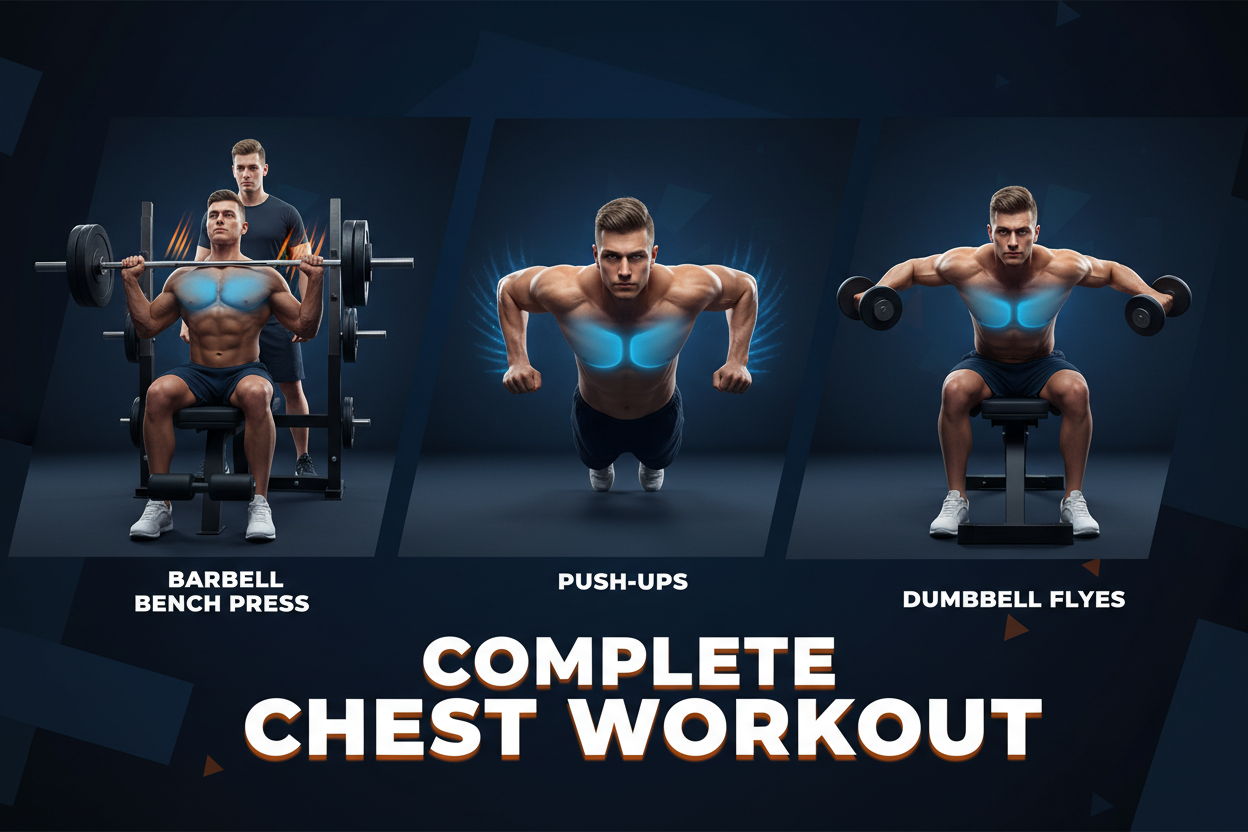
Both the chest and triceps are involved in pushing movements such as bench presses, push-ups, and dips. Pairing them makes sense because your triceps are already engaged during chest exercises, allowing you to fully fatigue them in the same workout. This can be ideal for building upper body strength and increasing pressing power.
Chest and Shoulders
Shoulders, especially the anterior deltoids, work alongside the chest during pressing. Training them together helps create balanced development across the upper torso. However, be mindful of volume since shoulders are engaged heavily during chest work; avoid excessive fatigue by adjusting sets and repetitions accordingly.
Chest and Back
Pairing chest with back is a push–pull approach. By training the pushing muscles (chest) with the pulling muscles (back), you maintain balance in the upper body and reduce the likelihood of muscular imbalances. For example, you might alternate bench presses with pull-ups or rows in a single workout.
What to Pair Chest Workout With Based on Goals
Your goal will dictate the optimal pairing:
- If your goal is strength, pairing chest with triceps or shoulders allows direct focus on pressing power.
- If your objective is balance and symmetry, pairing chest with back keeps antagonistic muscle groups strong.
- If you want endurance or a full upper body session, combining chest with multiple muscle groups can work, but adjust intensity to avoid overtraining.
Personal Experience with Pairing Chest Days
In my own training, I initially paired chest with shoulders. While this built strength, I found my triceps lagging behind. Later, switching to a chest and triceps routine helped balance my pressing power and improved my bench press performance significantly. I also occasionally use the chest–back format when I want a high-calorie burn and a satisfying pump in the entire upper body.
Practical Tips for Chest Pairing
Here are a few considerations to keep in mind:
- Schedule rest days strategically when training synergistic muscle groups.
- Warm up thoroughly before heavy pressing to protect shoulders and elbows.
- Adjust your set and rep scheme according to the muscle pairing; training antagonistic groups usually allows more total volume.
- Consider incorporating accessory work, such as face pulls or rotator cuff exercises, to maintain joint health.
Sample Pairing Workouts
For those wondering what to pair chest workouts with, here are examples:
Chest + Triceps Day
- Bench Press – 4 sets
- Incline Dumbbell Press – 3 sets
- Tricep Dips – 3 sets
- Overhead Tricep Extension – 3 sets
Chest + Back Day
- Flat Barbell Bench Press – 4 sets
- Bent-Over Rows – 4 sets
- Incline Dumbbell Press – 3 sets
- Pull-Ups – 3 sets
Chest + Shoulders Day
- Incline Bench Press – 4 sets
- Military Press – 3 sets
- Lateral Raises – 3 sets
- Push-Ups – 2 sets to failure
Final Thoughts
Understanding what to pair with chest day is key for a balanced, effective routine. Whether you choose triceps, shoulders, or back, tailor your approach to match your goals, recovery capacity, and overall fitness plan. Testing different combinations will give insight into what works best for your body and how to progress over time. Remember, the right pairing can lead to better performance and long-term gains.