Why Your Glute Hamstring Stretches Actually Make You Tighter
I spent years following the same ritual before every heavy leg day: 15 minutes of sitting on the floor, grabbing my toes, and grimacing. I thought I was fixing my 'tight' hamstrings. In reality, I was just making my deadlift setup feel like garbage and wondering why my squat depth never improved despite all those glute hamstring stretches. If you feel like your legs are made of dry beef jerky no matter how much you stretch, you're likely fighting a battle against your own nervous system.
- Passive stretching can actually reduce power output before a lift.
- Tightness is often a neurological 'brake' rather than a short muscle.
- Loaded eccentric movements build more mobility than floor stretching.
- Anterior pelvic tilt makes hamstrings feel tight when they are actually over-stretched.
The Illusion of 'Tight' Legs
Most of us spend eight hours a day glued to a desk chair. This position puts your pelvis into an anterior tilt, which essentially yanks your hamstrings into a constant state of tension. Think of a rubber band that is already pulled to its limit; when you try to perform a glute and hamstring stretch, you aren't lengthening a short muscle, you're trying to stretch a tissue that is already screaming for slack. This is why stretches for hamstrings and glutes often feel like they hit a 'hard stop' almost immediately.
This sensation is neurological tightness, not structural shortening. Your brain is sensing that the joint is unstable, so it locks down the muscle to protect you. When you perform a standard hamstring and glutes stretch, you're just tugging on a protective guardrail. To actually get 'loose,' you have to stop pulling and start providing the brain with a sense of stability through range. Understanding how to stretch hamstring and glutes requires moving away from the 'lengthening' mindset and toward a 'control' mindset.
Why Passive Stretching is a Trap for Lifters
If you're about to get under a barbell, static stretching is one of the worst things you can do. Aggressively holding a stretch for hamstrings and glutes for 60 seconds or more dampens the muscle spindle reflex. This is the mechanism that allows your muscles to produce force quickly. By 'relaxing' the muscle right before a heavy set, you're essentially turning off your power source. I've found that my heaviest pulls always felt sluggish after a long session of passive hip and hamstring stretches.
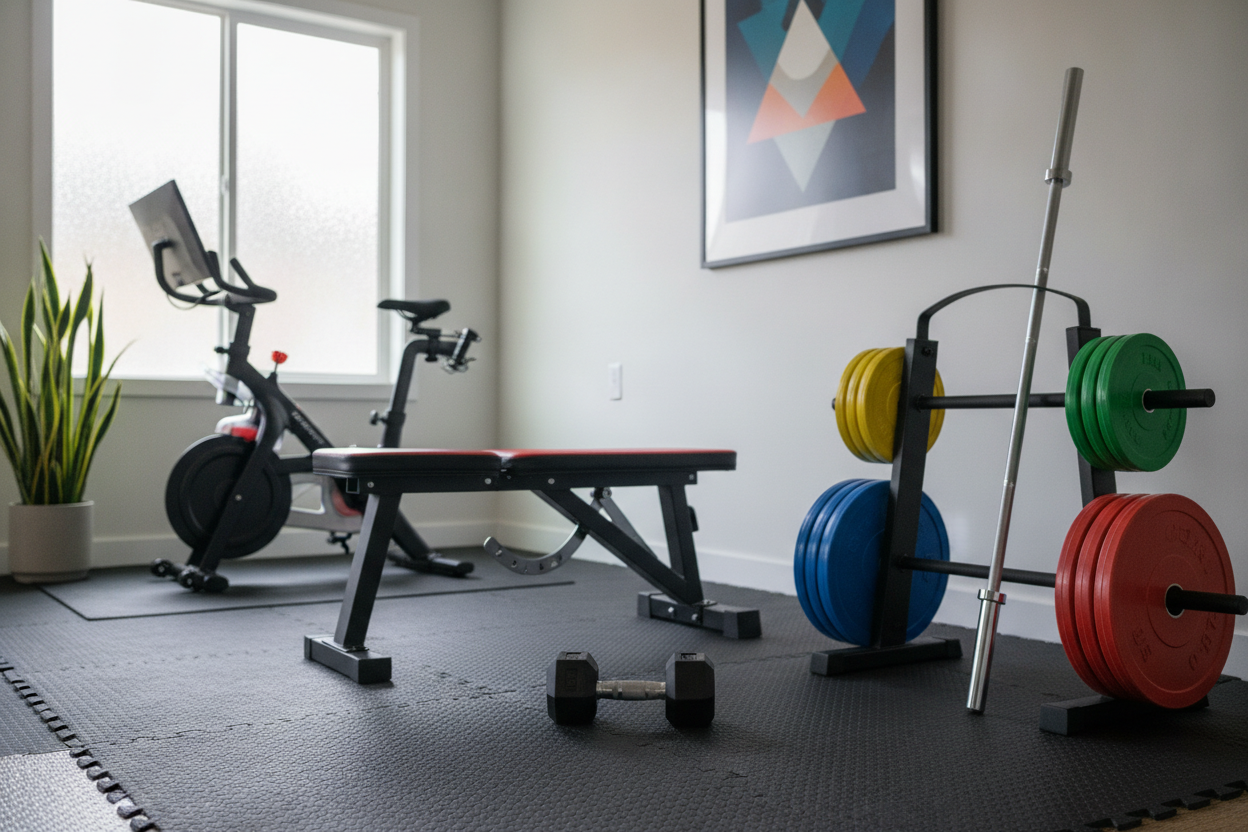
While having a solid foundation like a large exercise mat for home workouts is great for floor work, spending 20 minutes passively stretching on it won't fix your squat depth. You might feel a temporary release, but that 'stretch' is usually gone by the time you've walked over to the rack. For lifters, stretches for hips and hamstrings need to be active. You want to tell your central nervous system that it is safe to access those deep positions under load, rather than just forcing the tissue into a temporary state of submission.
3 Active Glute Hamstring Stretches That Actually Work
If you want real results, you need to transition to dynamic movements that challenge your strength at the end of your range. These aren't just glutes and hamstring stretches; they are neurological drills that teach your body to own its mobility. By adding a small amount of load or movement, you signal to your brain that the position is safe, which causes the 'tightness' to melt away naturally.
The Weighted Elephant Walk
The elephant walk is my go-to for mobilizing the sciatic nerve and hitting those stubborn hamstring buttock stretches. Stand with your feet hip-width apart and your hands on a bench or holding light dumbbells. Keep one leg straight while you bend the other knee significantly. Alternate legs, 'walking' in place. This provides a rhythmic hamstring hip stretch that targets the upper hamstring and buttocks without the dangerous spinal flexion of a standard toe-touch. It’s a phenomenal way to stretch hamstrings and hip flexors simultaneously by oscillating the tension.
The 90/90 Hip Switch to Extension
This is a superior alternative to the pigeon pose. Sit on the floor with your legs bent at 90-degree angles—one in front and one to the side. Rotate your torso over the front leg to get a deep glute hamstring stretch. To make it active, press your knees into the floor and lift your hips into an extension. This forces the glutes to fire while in a lengthened position, making it one of the best stretches for tight hamstrings and hips. It bridges the gap between a hip and hamstring stretch and a functional movement.
Romanian Deadlifts with a Pause
The best hamstring and glute stretches aren't stretches at all—they're exercises. A Romanian Deadlift (RDL) with a three-second pause at the bottom is the ultimate mobility tool. By using a slow eccentric, you are strengthening the muscle as it lengthens. This is the most effective way to handle a hip flexor to hamstring stretch because it forces the entire posterior chain to work in unison. Make sure you load this correctly so that your dumbbell exercises for glutes and hamstrings actually challenge your mobility and strength. If you're just swinging light weights, you're missing the point of the eccentric loading.
How to Program Mobility Without Killing Your Gains
Stop treating mobility as a separate 30-minute block at the end of the day. It rarely sticks. Instead, use these active drills as a primer. I like to perform two sets of Elephant Walks and 90/90 switches before I even touch a barbell. This wakes up the nervous system and 'unlocks' the range of motion I need for my primary lifts. It turns a standard hip flexor hamstring stretch into a performance-enhancing tool rather than a time-waster.
I suggest integrating these active mobility drills as the primer for a heavy dumbbell routine for glutes and hamstrings. When you move straight from an active stretch into a loaded lift, you 'save' that new range of motion in your brain's movement library. This is how you stop feeling tight every morning. You don't need more stretching; you need more control at the end of your range. Stop pulling on your toes and start owning your movement.
My Personal Experience
A few years back, I was obsessed with hitting a full 'pancake' stretch. I spent 30 minutes every night on a mat, aggressively pulling my chest to the floor. My hamstrings never felt tighter. It wasn't until I dropped the passive stuff and started doing heavy RDLs and loaded hip rotations that my 'tightness' disappeared. I realized my body was tightening up because I was weak in those deep positions. Once I added strength, the brain let go of the tension. I haven't done a static hamstring and hip flexor stretch in years, and I'm more mobile now at 215 lbs than I was at 180 lbs.
FAQ
Should I stretch my hamstrings if I have lower back pain?
Probably not. Most back pain is exacerbated by aggressive hamstring stretching which pulls on the pelvis. Focus on hip stability and active movements like the elephant walk instead of static pulling.
How long does it take to see results from active stretching?
You’ll often feel an immediate 'release' in range of motion during the session. However, permanent structural and neurological changes usually take 4-6 weeks of consistent loading at end-ranges.
Is it okay to do static stretching after a workout?
Yes, static stretching is fine for a cooldown to help down-regulate the nervous system. Just don't expect it to fix your 'tightness' long-term if you aren't also doing loaded mobility work.