Why Your Chest Muscle Groups Workout Is Leaving Your Upper Pecs Flat
I remember the day I realized my chest looked like a pair of melting ice cream cones. I had spent three years chasing a 315-lb flat bench, convinced it was the only chest muscle groups workout I needed. I got the strength, sure, but my upper pecs were nonexistent, leaving a hollow gap right under my collarbones that made my physique look bottom-heavy and unfinished.
If you are training in a garage or a spare bedroom, you probably fall into the same trap. We gravitate toward the flat bench because it is the gold standard of ego lifting. But if you want a chest that actually fills out a t-shirt, you have to stop treating the pectoral muscle like one big slab of meat. It is a complex fan of fibers that requires specific angles to fully develop.
- Prioritize the Incline: Your upper chest is likely your weakest link; hit it first when you are fresh.
- Adjust Your Angles: A 15 to 30-degree incline is often better for pec isolation than the standard 45-degree setting.
- Don't Sleep on Dips: Weighted dips are the 'squat of the upper body' for hitting the lower pec fibers.
- Mind the Stretch: Hypertrophy happens at the bottom of the movement, not just the lockout.
The Flat Bench Trap (Why Your Chest Looks Droopy)
The standard three-sets-of-ten on the flat bench press is the fastest way to build a 'dad chest.' I am talking about that look where all the mass sits at the bottom of the pec, creating a saggy silhouette. While the flat bench is great for moving maximum weight, it primarily targets the sternocostal head of the pec.
When you over-index on flat pressing, you neglect the fibers that attach to your collarbone. This creates a visual imbalance. In my experience, most lifters would benefit from swapping their flat bench for an incline press as their primary movement for at least six months. You might have to swallow your pride and use lighter plates, but the visual payoff is worth the ego hit.
The Actual parts of chest to workout (Anatomy for Lifters)
You do not need a medical degree to build big pecs, but you do need to understand where the fibers run. The pectoralis major is split into three distinct regions. First, the clavicular head (upper chest) runs from your collarbone down to your arm. This is what gives you that 'shelf' look. If this is flat, your chest will never look 'armored.'
Then you have the sternocostal head (middle chest), which makes up the bulk of the muscle, and the abdominal head (lower chest), which creates that sharp underline. Understanding these parts of the body to workout is the difference between mindlessly moving weight and actually sculpting a physique. If you only press horizontally, you are leaving the top and bottom fibers on the table.
The Best exercises for different parts of chest (No Fluff)
To target the upper chest, the Incline Dumbbell Press is my go-to. Unlike a barbell, dumbbells allow for a deeper stretch and a slight convergence at the top, which feels much more natural on my beat-up shoulders. I usually set my adjustable bench to a slight 15-degree incline. Anything steeper and my front delts start stealing all the tension.
For the lower chest, nothing beats weighted dips. Lean forward slightly to keep the tension on the pecs rather than the triceps. If you are training at a commercial gym, you might see people using a chest workout using machines like the converging chest press or the pec deck. These are fantastic for high-volume finishers because they provide constant tension that free weights sometimes lose at the top of the rep.
how to work different parts of chest Without 15 Machines
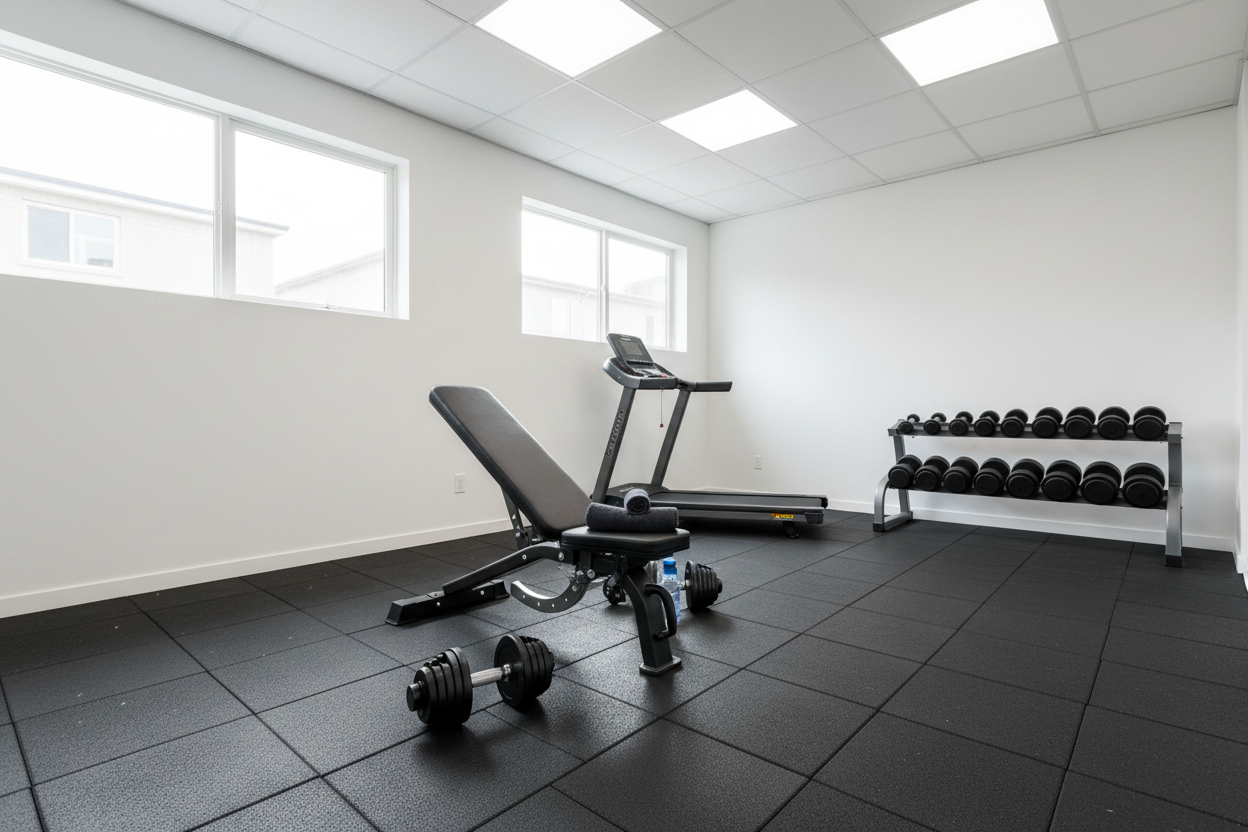
You do not need a 5,000-square-foot facility to hit every angle. In my home gym, I rely on an adjustable bench and a solid set of dumbbells. By manipulating the bench from a slight decline (using a couple of weight plates to prop up one end) to a high incline, I can hit every fiber of the pec. Even the floor press is a secret weapon for mid-chest thickness and tricep lockout power.
One tip for the home lifter: when you are going heavy on floor presses or dumbbell work, make sure you have decent gym flooring for home workout setups. Dropping a 100-lb dumbbell on bare concrete is a quick way to crack your foundation and ruin your equipment. A high-density mat allows you to focus on the set rather than worrying about your floor.
Putting It Together: how to hit all chest muscles in One Session
A balanced session should sequence exercises from hardest to easiest. I always start with the upper chest because it is the hardest to grow and requires the most focus. Start with an Incline DB Press for 3 sets of 8-10. Follow that with a Flat Barbell Press or Weighted Dips to hammer the mid and lower sections. Finish with a flye variation to get that deep, muscle-tearing stretch.
If you are looking for more ways to structure your splits, check out the Workout Hub for full programming ideas. The goal is to ensure you are hitting each head of the pec at least twice a week. Consistency and variety in angles are the only ways to avoid the 'flat top' look.
Personal Experience: My Biggest Chest Mistake
For years, I refused to use an incline bench because I couldn't lift as much weight. I stayed on the flat bench, ego-pushing 275 for reps, while my upper chest looked like a pancake. It wasn't until I dropped the weight by 30% and focused on the 30-degree incline that my chest finally started to pop. I also learned the hard way that 'touching the chest' on every rep isn't always best for shoulder health—listen to your joints, not just the guys on YouTube.
FAQ
Can I build a full chest with just pushups?
You can build a decent foundation, but eventually, you need external load. To hit different parts, use 'feet-elevated' pushups for the upper chest and 'hand-elevated' pushups for the lower chest.
How often should I train chest?
Twice a week is the sweet spot for most. It allows for enough volume to hit all three heads while giving your shoulders and triceps time to recover between sessions.
Should I use a barbell or dumbbells?
Dumbbells are generally better for hypertrophy because of the increased range of motion and the ability to adjust your grip. Barbells are better for pure strength and moving the heaviest possible loads.