Parts of the Body to Workout: The Definitive Guide to Balanced Gains
Walking into the gym without a plan is the fastest way to hit a plateau. Most people gravitate toward the "mirror muscles"—the chest and biceps—while completely neglecting the structural pillars that actually drive performance. Understanding the essential parts of the body to workout isn't just about aesthetics; it is about building a machine that functions without pain or restriction.
If you have ever wondered why your bench press is stuck or why your lower back aches after leg day, the answer usually lies in an imbalance. You are likely overtraining one area and ignoring another. Let's break down the anatomy of a successful routine and how to train for longevity and strength.
Key Takeaways: The Anatomy Checklist
If you are looking for a quick breakdown of the major muscle groups you need to hit every week, here is the cheat sheet:
- The Push Muscles (Chest, Shoulders, Triceps): Responsible for pushing weight away from the body.
- The Pull Muscles (Back, Biceps, Rear Delts): Crucial for posture and pulling weight toward you.
- The Lower Body (Quads, Hamstrings, Glutes, Calves): The foundation of your power.
- The Core (Abs, Obliques, Erector Spinae): The stabilizer that connects your upper and lower body.
- frequency: Aim to hit each body part 2 times per week for optimal hypertrophy.
The Major Muscle Groups Broken Down
When planning a routine, think in terms of movement patterns rather than just individual muscles. This ensures you are selecting the right workouts for different parts of the body without creating imbalances.
1. The Anterior Chain (The Front)
This includes your pectorals (chest), anterior deltoids (front shoulders), and quadriceps. These are your "pushers." While these are the most popular parts of the body to exercise, they are often overdeveloped compared to the back.
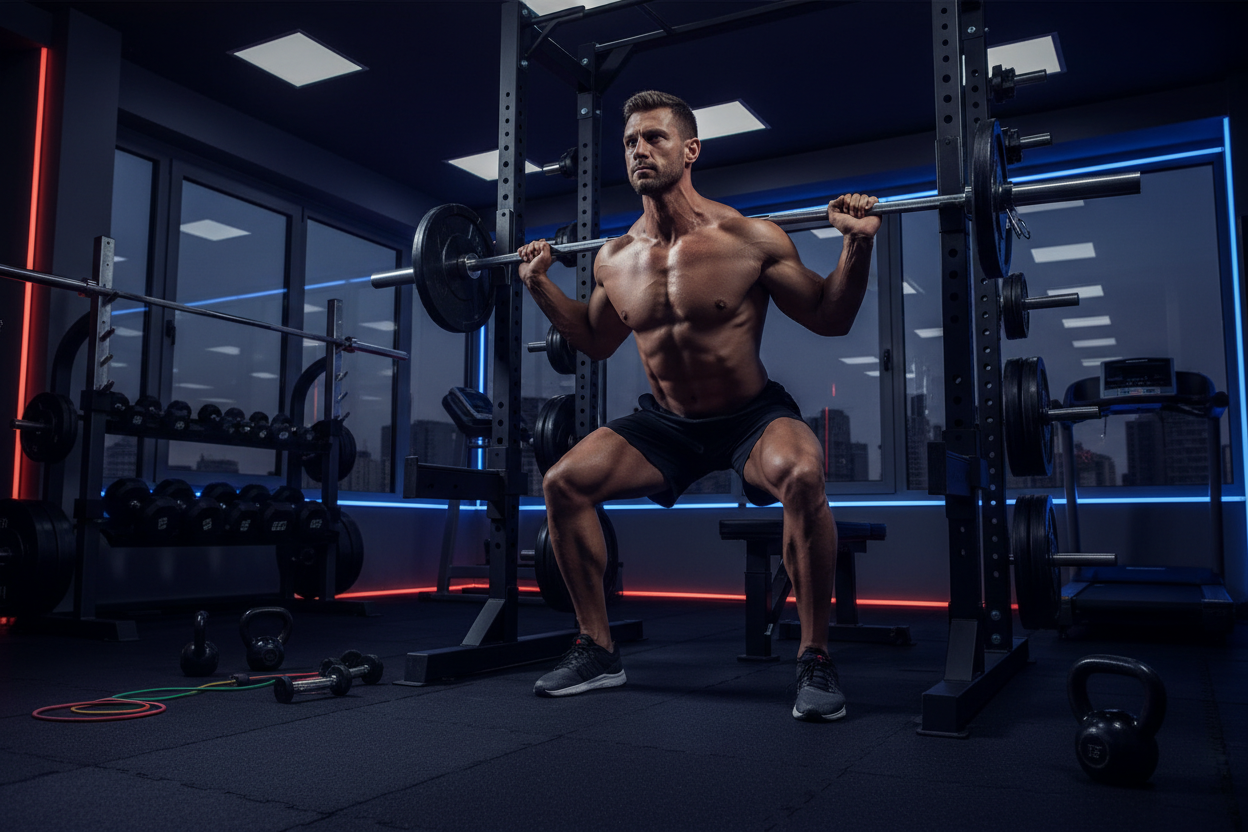
To train this area effectively, focus on compound movements. A bench press hits the chest, shoulders, and triceps simultaneously. A squat targets the quads but recruits the entire lower body. Don't waste time on endless isolation exercises until you have mastered the big lifts.
2. The Posterior Chain (The Back)
This is where the real work happens. Your lats, traps, rhomboids, glutes, and hamstrings make up the posterior chain. Neglecting these workout parts is the primary cause of "slouching" posture and shoulder injuries.
Think of your back as the foundation for your chest. You cannot fire a cannon from a canoe. If your back is weak, your pressing strength will suffer. Prioritize rows, pull-ups, and deadlifts to thicken these areas.
3. The Core and Stabilizers
Most people think "core" means "six-pack." In reality, your core includes the deep stabilizers and the lower back muscles. Workouts for specific body parts like the abs are useless if your lower back is weak.
Your goal here is anti-rotation and stability. Planks, hanging leg raises, and farmer's carries are superior to crunches because they force your trunk to stabilize against gravity and movement.
Structuring Your Week: The Split
Knowing the parts of body for workout sessions is half the battle; scheduling them is the other. You generally have three options:
- Full Body: Hitting every major muscle group in one session (great for beginners).
- Upper/Lower: Dedicating days to the torso and days to the legs.
- Push/Pull/Legs: Grouping muscles by function (highly effective for recovery).
The "Push/Pull/Legs" split is often the gold standard because it allows you to train workouts for different parts of the body with maximum intensity while giving related muscles time to recover.
Common Mistakes in Body Part Selection
The biggest error is volume mismatch. You shouldn't do 15 sets for your chest and only 3 sets for your back. Because we sit at desks all day, our shoulders are naturally rolled forward. To correct this, aim for a 2:1 pull-to-push ratio.
Another issue is ignoring the "invisible" muscles. The rear deltoids, the rotator cuff, and the tibialis anterior (shin muscle) are rarely listed as parts of the body workout enthusiasts care about, but they are the first places to get injured if weak.
My Training Log: Real Talk
I used to be the guy who thought "parts of the body to workout" meant Chest on Monday and Arms on Friday. I skipped the boring stuff. The result? A nagging, sharp click in my left shoulder every time I tried to overhead press anything heavier than a 40lb dumbbell.
It wasn't until I started specifically hammering my rear delts and rotator cuffs with face pulls that the clicking stopped. I remember the specific feeling of the rope scratching my forehead and the deep, nauseating burn in the back of my shoulder—a muscle I didn't even know I had. It wasn't glorious, and I didn't get a pump that looked good in a t-shirt, but that "boring" work is the only reason I can press pain-free today. If your shoulder feels "loose" or clicks at the bottom of a bench press, stop adding weight and start looking at your back.
Conclusion
Building a physique isn't about picking random exercises; it's about architectural balance. Ensure you are giving equal attention to the front and back of your body. Treat your recovery and stabilizer muscles with the same respect you give your pecs and biceps. Start balancing your routine today, and your numbers will go up.
Frequently Asked Questions
Can I workout all body parts every day?
Technically, yes, but intensity must be managed. Full-body workouts are effective, but you shouldn't train to failure on the same muscle group 7 days a week. Your muscles grow during rest, not during the workout.
What are the most neglected parts of the body to exercise?
The rear deltoids, glutes, and hamstrings are often neglected. Most people are "quad-dominant" and "chest-dominant," leading to knee pain and shoulder impingement.
How many exercises should I do per body part?
For larger groups like legs and back, 3-4 exercises are standard. For smaller groups like biceps or triceps, 2-3 exercises are usually sufficient. Focus on quality sets rather than junk volume.