How to Build Monster Legs With This Huge Quad Workout
You have been hitting the squat rack faithfully, but your jeans still fit loosely around the thighs. It is frustrating. You put in the effort, but the size just isn't following the strength gains. The problem usually isn't a lack of effort; it is a lack of strategic tension and biomechanics.
To build truly impressive legs, you need more than just heavy weight. You need a huge quad workout designed specifically to target all four heads of the quadriceps muscle group. This guide strips away the bro-science and focuses on the mechanical tension and metabolic stress required for hypertrophy.
Key Takeaways
- Focus on Knee Flexion: To isolate quads, your knees must travel forward over your toes (safely) to stretch the muscle fibers fully.
- Volume over Ego: Hypertrophy responds best to controlled negatives and higher rep ranges (8-20 reps) rather than just 1-rep maxes.
- Foot Placement Matters: Narrower stances and lower foot placement on machines shift the load from glutes to quads.
- Full Range of Motion: Half-reps yield half-results. You must break parallel to trigger significant growth.
The Anatomy of a Massive Quads Workout
Before lifting, you need to understand what you are trying to build. The quadriceps are made of four muscles. Most people develop the Vastus Lateralis (the outer sweep) but neglect the Rectus Femoris and the Vastus Medialis (the teardrop).
A truly massive quads workout requires hitting the muscle from different angles to ensure the teardrop and the sweep grow in proportion. If you only do low-bar back squats, you are likely bias-loading your glutes and lower back more than your quads.
Compound Movements: The Foundation
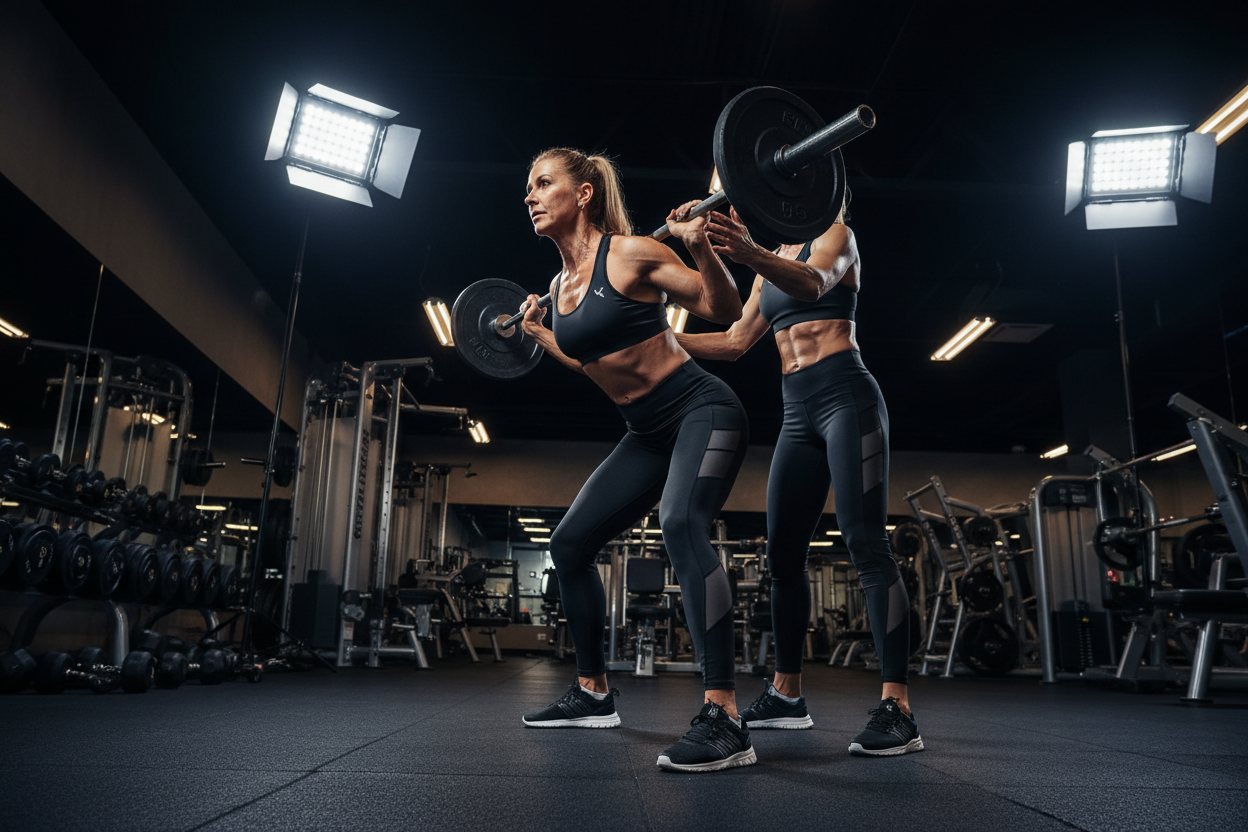
High-Bar Squat
Forget the powerlifting low-bar style for a moment. To prioritize quad growth, the bar needs to sit high on your traps. This forces you to maintain a more upright torso. Why does this matter? An upright torso forces the knees to track forward, placing the maximum moment arm (tension) on the knee joint rather than the hip.
Heel-Elevated Goblet Squats
If back squats hurt your lower back, this is the superior alternative. By elevating your heels on a small plate or wedge, you increase your ankle mobility artificially. This allows you to squat deeper while keeping your torso vertical, putting pure isolation on the quads.
Isolation and Metabolic Stress
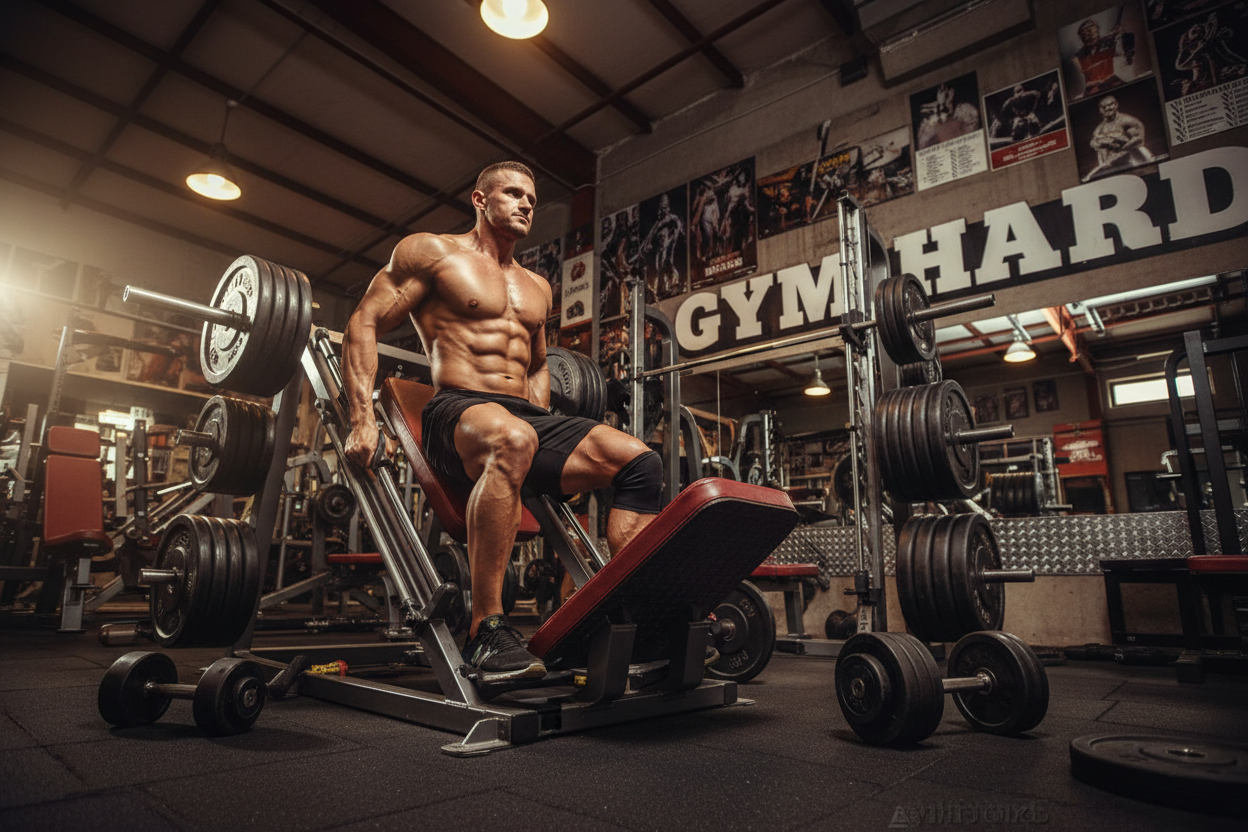
Leg Press (Low Foot Placement)
The leg press is often misused. To target the quads, place your feet lower on the platform and slightly closer together. This increases the range of motion at the knee while decreasing it at the hip. Do not lock your knees at the top; keep the tension constant like a piston.
Leg Extensions with a Peak Contraction
This is the only exercise where the quad is loaded in its fully shortened position. Don't just swing the weight. Kick up, hold for a distinct one-second count at the top to squeeze the muscle, and lower slowly. This targets the Rectus Femoris specifically.
Programming for Hypertrophy
Building size requires a mix of mechanical tension (heavy weight) and metabolic stress (the burn). A standard 5x5 routine often isn't enough volume for maximum growth.
Aim for 3 to 4 sets per exercise. Start your compound movements in the 8-10 rep range to build a strength foundation. Move to your accessory movements (leg press, lunges) in the 12-15 rep range. Finish with isolation movements in the 15-20 rep range to drive blood into the muscle and stretch the fascia.
Conclusion
Building legs that demand attention doesn't happen by accident. It happens when you stop focusing on how much weight is on the bar and start focusing on how much tension is on the muscle. Implement this strategy, eat in a caloric surplus to support recovery, and stay consistent. The growth will follow.
Frequently Asked Questions
How often should I perform this workout?
For most lifters, training legs twice a week is optimal for hypertrophy. This frequency allows you to accumulate enough volume to stimulate growth while giving your central nervous system 48 to 72 hours to recover between sessions.
Can I build big quads without squats?
Yes. While squats are excellent, they are not mandatory. You can build massive legs using leg presses, hack squats, and Bulgarian split squats, provided you apply progressive overload (adding weight or reps over time).
Why do my knees hurt during quad workouts?
Knee pain often stems from poor mobility or lack of stability, not the exercise itself. Ensure you are warming up properly and not letting your knees cave inward (valgus collapse) during heavy lifts. If pain persists, switch to more stable machines like the hack squat.