How to Sculpt Great Legs After 50: The Strength Blueprint
There is a misconception that once you hit menopause, your body enters a permanent state of decline. We are told that muscle loss is inevitable and that gravity always wins. I am here to tell you that is nonsense. Getting great legs after 50 isn't just possible; it is a vital part of your longevity plan.
The goal isn't to look like a teenage fitness model. The goal is strong, shapely legs that can carry you up mountains, through garden work, and into your later years with confidence. However, the tactics that worked in your 30s won't work now. Your hormonal landscape has shifted, and your training needs to shift with it.
Key Takeaways: The "Great Legs" Cheat Sheet
- Strength over Cardio: Endless walking will not build muscle. You must use resistance to counteract sarcopenia (age-related muscle loss).
- Protein is Queen: To support women's legs after 50, you need higher protein intake to trigger muscle synthesis.
- Compound Movements: Focus on squats and lunges rather than isolation machines to burn more calories and improve balance.
- Recovery Matters: Your joints need more recovery time now; training legs 2-3 times a week is the sweet spot.
Why Your Legs Change After 50 (And How to Fix It)
Before we get into the exercises, you need to understand the biology. After 50, estrogen levels drop. Estrogen is anabolic—it helps build muscle. When it declines, muscle mass decreases and fat storage often shifts to the midsection and thighs. This creates that feeling of "softness" many women complain about.
To fix this, we have to send a louder signal to the muscles. Light pink dumbbells won't cut it. To stimulate how to tone legs after 50, you need to lift weights that challenge you by the 10th repetition. This mechanical stress forces the body to hold onto and rebuild muscle tissue.
The "Fabulous 50" Leg Workout Strategy
You don't need a gym membership to see results, but you do need gravity-defying effort. Here is the framework for a leg workout over 50 that prioritizes joint health while maximizing tone.
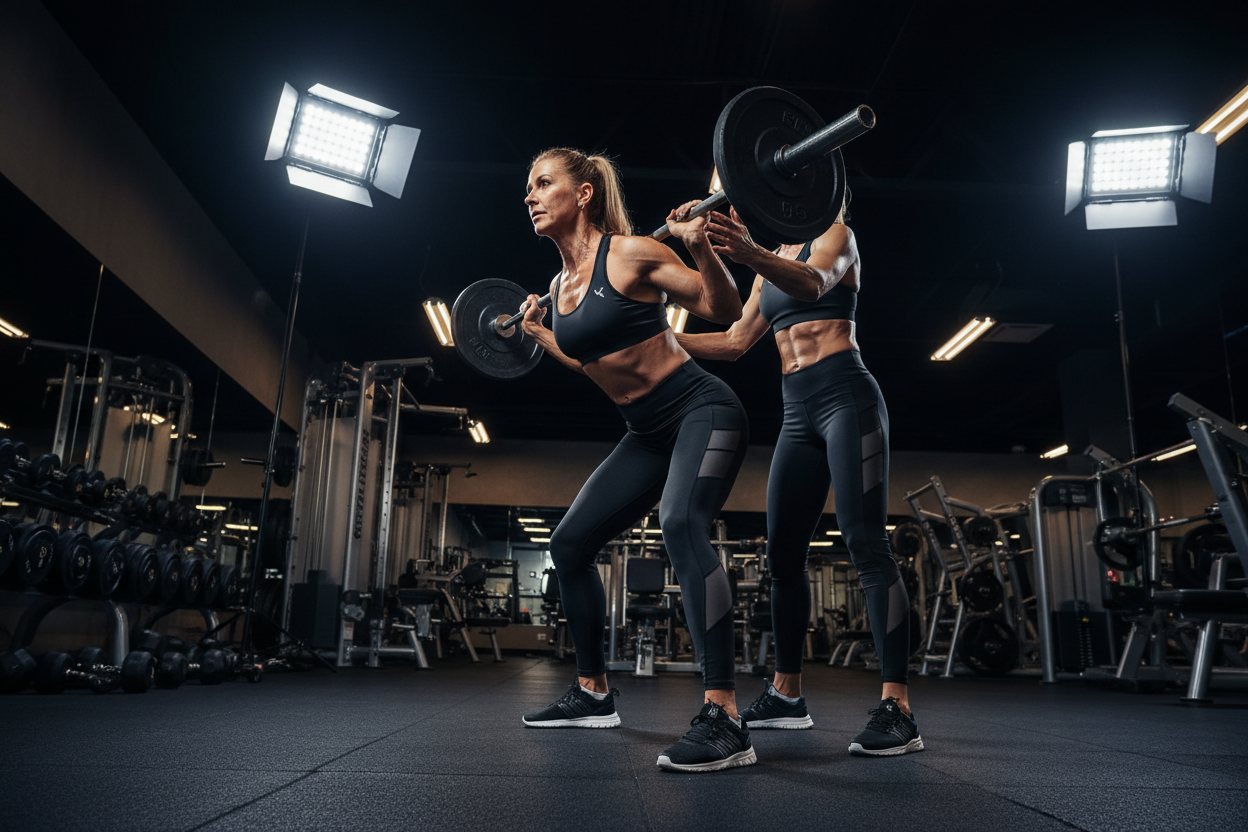
1. The King of Exercises: The Box Squat
Standard squats can be tough on knees. The box squat is safer. Stand in front of a chair or bench. Lower your hips back until you tap the seat, then drive back up through your heels. This targets the glutes and quads effectively without the shearing force on the knees often associated with standard leg exercises for women over 50.
2. The Fabulous 50 Inner Thigh Workout
Many women ask how to firm thighs after 50, specifically the adductors (inner thigh). The Sumo Squat is your answer. Stand with feet wider than shoulder-width, toes pointed out at 45 degrees. Hold a weight at your chest (Goblet style). Lower down, keeping knees tracking over toes. You should feel a deep stretch and activation in the inner thigh. This is far superior to the seated adductor machine at the gym.
3. The Glute Bridge for Posterior Chain
If you sit a lot, your glutes are likely inactive (or "asleep"). Lie on your back, knees bent, feet flat. Lift your hips toward the ceiling, squeezing the glutes hard at the top. This is crucial for fabulous 50 legs because strong glutes pull the skin of the upper thigh tight, improving the appearance of cellulite.
Common Mistakes in Over 50 Leg Workouts
I see many women making the same errors when attempting an over 50 leg workout. Correcting these can double your results.
- Ignoring Balance: As we age, proprioception (balance) fades. Incorporate single-leg movements like supported reverse lunges.
- Fearing Bulk: You do not have the testosterone to get bulky. Heavy weights will make you smaller and firmer, not larger.
- Overdoing High Impact: Jumping jacks and burpees are not necessary for toning legs after 50. They often just inflame the joints. Stick to low-impact strength training.
My Personal Experience with Great Legs After 50
I want to be transparent about my own training log here. When I first transitioned my routine to focus on leg exercises over 50, the hardest part wasn't the weight—it was the ego check regarding my knees.
I remember vividly trying to do walking lunges across the gym floor, a staple I'd done for decades. About four reps in, I felt this sharp, grinding sensation under my right patella—not muscle burn, but structural protest. I had to stop immediately. I felt embarrassed, standing there with 15lb dumbbells, unable to finish a set.
That was the turning point. I swapped walking lunges for static reverse lunges holding onto a rack for stability. The first few weeks, I felt "wobbly," like my ankles were made of Jell-O. It wasn't a strength issue; it was a stability issue. But the specific feeling of my glute activating to stabilize my hip—rather than just my quad taking the load—was a game changer. Now, I don't chase the "pump" or the sweat; I chase that stable, controlled tension. My legs are actually firmer now than they were ten years ago, simply because I stopped injuring them and started actually engaging the muscle.
Conclusion
Building great legs at 50 is a marathon, not a sprint. It requires a shift in mindset from "burning calories" to "building armor." By focusing on strength, eating adequate protein, and respecting your joints, you can achieve fabulous 50 legs that look great and, more importantly, carry you through life with power.
Frequently Asked Questions
Can I really tone my legs after 50 or is it too late?
It is never too late. While muscle building slows down due to hormonal changes, muscle tissue remains responsive to strength training at any age. With consistent fabulous 50 leg exercises and proper nutrition, you can significantly increase muscle tone and reduce body fat.
How often should I do leg exercises over 50?
For most women, 2 to 3 days per week is ideal. Muscles grow during rest, not during the workout. Because recovery slows down slightly with age, taking at least 48 hours between intense leg workout over 50 sessions allows for repair and growth.
What is the best exercise for crepey skin on knees?
While no exercise tightens loose skin directly (that is largely collagen and genetics), building the quadriceps muscle underneath can "fill out" the area, making the skin appear tauter. Leg extensions (with light weight) and squats are excellent for this.