Why the Cable Hip Thrust Is the Best Glute Builder You're Ignoring
I’ve spent a decade in garage gyms, and if there is one exercise that makes me want to quit training altogether, it is the barbell hip thrust. Not because it is hard—I love hard training—but because the setup is a total circus act. Between dragging a bench over, finding the one squat pad that hasn't been chewed by a gym dog, and rolling 315 pounds over my shins, I am usually exhausted before the first set even starts.
That is why I started experimenting with the cable hip thrust. It is the smarter way to build a backside without the bruised hip bones and the logistical nightmare of a free weight setup. If you have a low pulley, you have a better glute workout waiting for you. It is efficient, it is painful in all the right ways, and it actually stays put.
- Constant tension throughout the entire rep—no dead spots at the bottom.
- Zero barbell-on-pelvis pain; your hips will thank you the next morning.
- Setup takes about 30 seconds once you have your bench in place.
- Easier to implement dropsets and high-volume finishers.
Why Traditional Free Weight Thrusts Keep Letting Us Down
We’ve all been there. You are trying to look focused in the gym, but you are actually just struggling to keep a 45-pound plate from crushing your fingers while you wedge yourself under a bar. The barbell hip thrust is arguably the best glute builder on paper, but in practice, it is a mess. The pressure on the pubic bone is intense, even with a high-quality pad. Most lifters end up cutting their sets short not because their muscles failed, but because their skin is screaming.
Then there is the stability issue. Unless you have a heavy power rack or a wall to wedge your bench against, that bench is going for a ride. I have seen more people slide backward across the floor than I have seen successful PRs. This frustration leads to the skip-it mentality. When an exercise is a chore to set up, you eventually stop doing it. That is a recipe for flat glutes and wasted potential in your programming.
The Magic of Constant Tension in a Cable Hip Thrust
The biggest advantage of the hip thrust cable machine setup is the resistance curve. When you use a barbell, the weight is heaviest at the top, but at the bottom of the movement, the tension drops significantly. Gravity only works vertically. With a cable, the force is pulling you toward the pulley, which means your glutes have to stay engaged just to keep the weight from slamming back into the stack.
This constant tension is a massive driver for hypertrophy. While some dedicated leg machines attempt to mimic this feeling, they often take up a massive footprint in your gym. A cable system allows you to achieve that same mechanical tension without the bulk. You get a smooth, consistent pull that keeps the muscle under fire from the first inch of the rep to the peak contraction. It is the difference between a jerky movement and a fluid burn.
How to Set Up a Flawless Hip Thrust on Cable Machine
To get this right, position your bench about two to three feet away from the low pulley. You want the cable to be at a slight angle, not perfectly vertical. Sit on the floor with your back against a solid hip thrust bench. If your bench is light, put a couple of 45s behind the legs so it does not move when you start driving your hips up. I have made the mistake of not bracing the bench before, and it is a quick way to end up on your back looking at the ceiling.
Align your shoulder blades against the edge of the bench. Your feet should be positioned so that when you reach the top of the movement, your shins are vertical. If your feet are too far out, you will feel it in your hamstrings. Too close, and it is all quads. The sweet spot is where you can feel your heels driving into the floor, creating a direct line of force through your glutes. Once you find that anchor point, do not move your feet.
Ditch the Straight Bar: Use a Belt or Rope
Stop trying to use those short straight bar attachments. They roll, they are uncomfortable, and they limit your range of motion. Instead, grab a dip belt or a long tricep rope. Looping a dip belt around your waist and clipping it to the carabiner is a total revelation. It distributes the weight across your hips evenly, allowing you to focus entirely on the squeeze rather than balancing a piece of metal on your lap. It makes the cable thrust feel like a natural extension of your body rather than an awkward piece of equipment you are fighting against.
3 Ways You're Butchering the Cable Thrust
The most common mistake I see is the hamstring curl error. This happens when you sit too far back from the machine. Instead of driving up, you end up pulling the weight toward you with your legs. If your hamstrings are screaming and your glutes are silent, move closer to the pulley. You want the force to be directed through the hips, not the knees. It should feel like a push, not a pull.
Second, stop looking at the ceiling. When you arch your back and look up, you are asking for a lower back tweak. Keep your chin tucked toward your chest and your spine neutral throughout the movement. Finally, do not rush the way down. The beauty of the hip thrust on cable machine is the eccentric phase. Control the weight as it pulls you back down; do not let the stack crash. That controlled descent is where the real growth happens.
Is Your Garage Gym Ready for a Hip Thrust Cable Machine Setup?
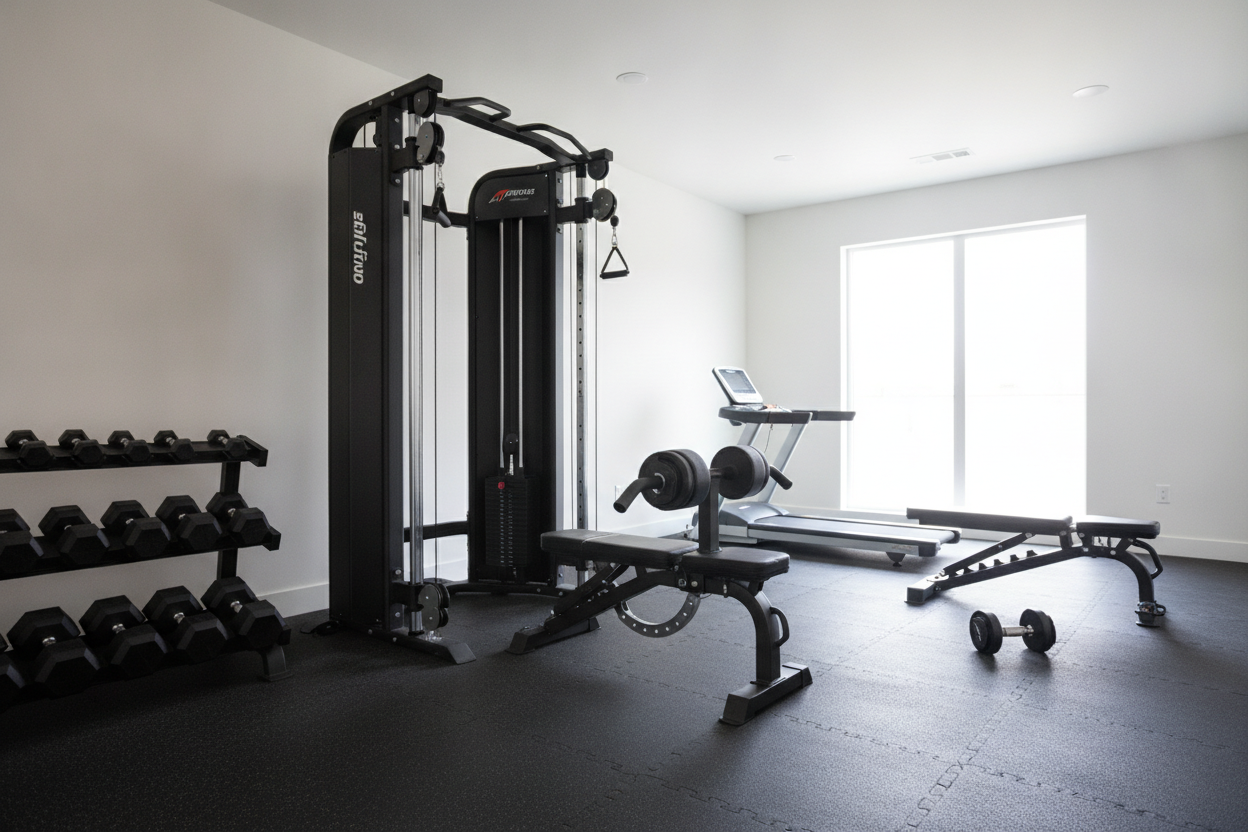
Before you go all-in, look at your current gear. If you are investing in a home gym cable machine, make sure it has a high enough weight capacity. A 150-pound stack might sound like a lot for triceps, but for glutes, you will max that out in a week. Look for a 1:1 or 2:1 ratio that actually offers enough resistance to challenge you as you get stronger.
For those who want a truly seamless experience, commercial quality cable systems are the gold standard. They feature smoother pulleys and thicker cables that won't jerk or catch mid-rep. If your current pulley feels crunchy, it is going to ruin the mind-muscle connection you need for high-rep glute work. A smooth glide allows you to explode at the top and hold that squeeze without the weight bouncing or losing tension.
My Honest Take
I will be real: I used to think cable glute work was for people who were afraid of heavy iron. I was wrong. I spent years chasing a 500-pound barbell thrust, and while my ego was huge, my lower back was always cranky. Switching to cable thrusts for my accessory work allowed me to get more volume with less systemic fatigue. My biggest mistake was trying to use a standard D-handle at first—it was lopsided and awkward. Buy a dedicated belt attachment; it is the best thirty bucks you will spend on your glutes.
FAQ
Can I do this on a functional trainer?
Absolutely. Just make sure the pulleys are set to the lowest position. If the handles are too wide, you might need a chain extension to bring the attachment point together in the center of your lap so the pull is centralized.
Is the cable thrust better for high reps or low reps?
I find it shines in the 12 to 20 rep range. The constant tension makes high-volume sets absolutely brutal. Save the low-rep, heavy-weight stuff for your primary squats and deadlifts where stability is less of an issue.
What if my cable stack isn't heavy enough?
Slow down your reps. Add a 3-second pause at the top and a 4-second eccentric on the way down. You can also use a gym pin to add external weight plates to your selectorized stack if your machine’s guide rods can handle the extra load.