Cable Machine in Gym: Bringing Commercial Quality Home
If you've been building out your home workout space, you've probably hit that inevitable plateau where dumbbells and barbells just aren't enough. You start missing the smooth, constant tension of the cable machine in gym settings. Whether you are dealing with a cramped garage, a low-ceiling basement, or budget constraints, figuring out how to replicate that commercial experience at home is a game-changer. This guide will help you navigate the specs, space requirements, and variations to find the perfect fit for your setup.
Key Takeaways
- Constant Tension: Cables provide uniform resistance through the entire range of motion, unlike free weights.
- Footprint Matters: Corner-mounted functional trainers save space, while standard standalone units require at least an 8-foot width clearance.
- Weight Stack vs. Plate-Loaded: Weight stacks offer quick transitions but cost more; plate-loaded systems save money and utilize your existing bumper plates.
- Attachment Versatility: A basic gym machine rope and D-handles can unlock hundreds of exercises.
Understanding the Types of Cable Machines
When you use a pulley machine at gym facilities, you are usually working on a massive, multi-station jungle gym. For residential spaces, the options are more streamlined. Knowing the different types of cable machines is crucial for maximizing your floor plan.
Functional Trainers vs. Single Pulleys
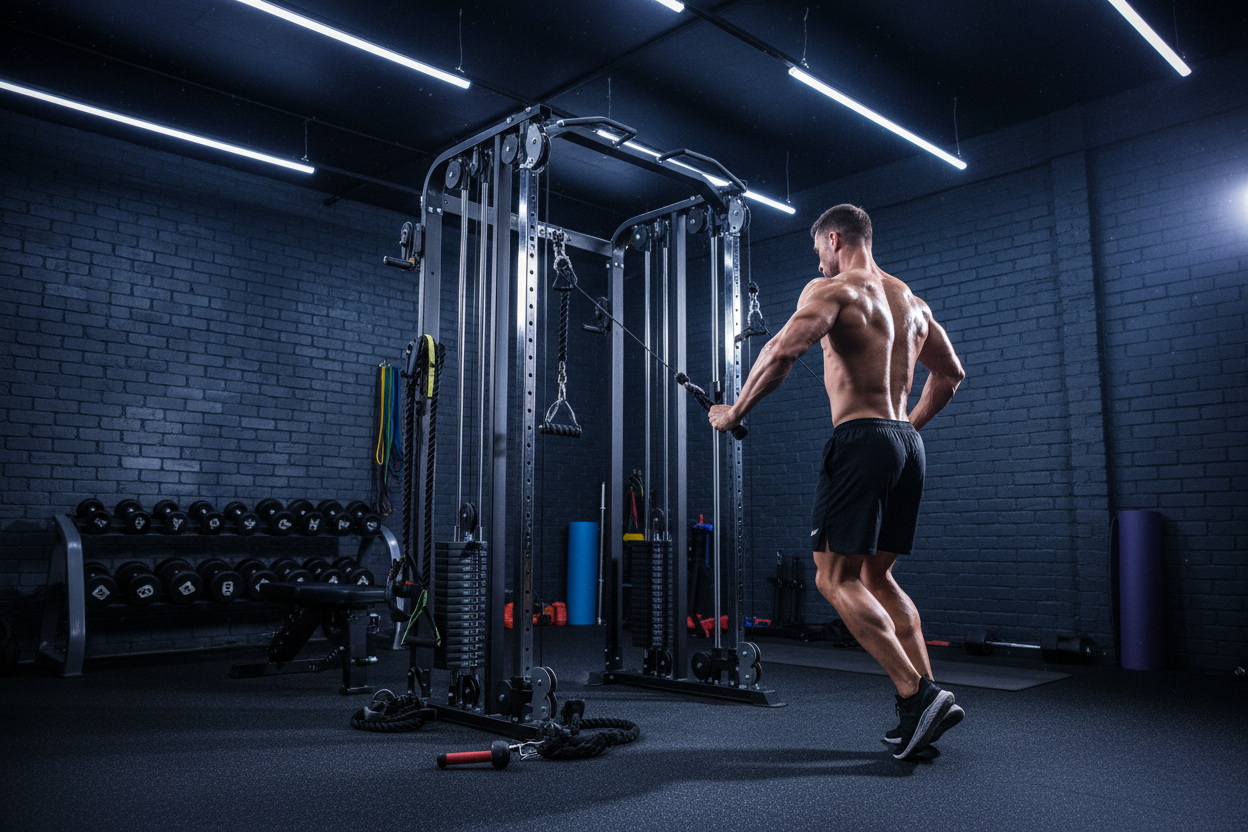
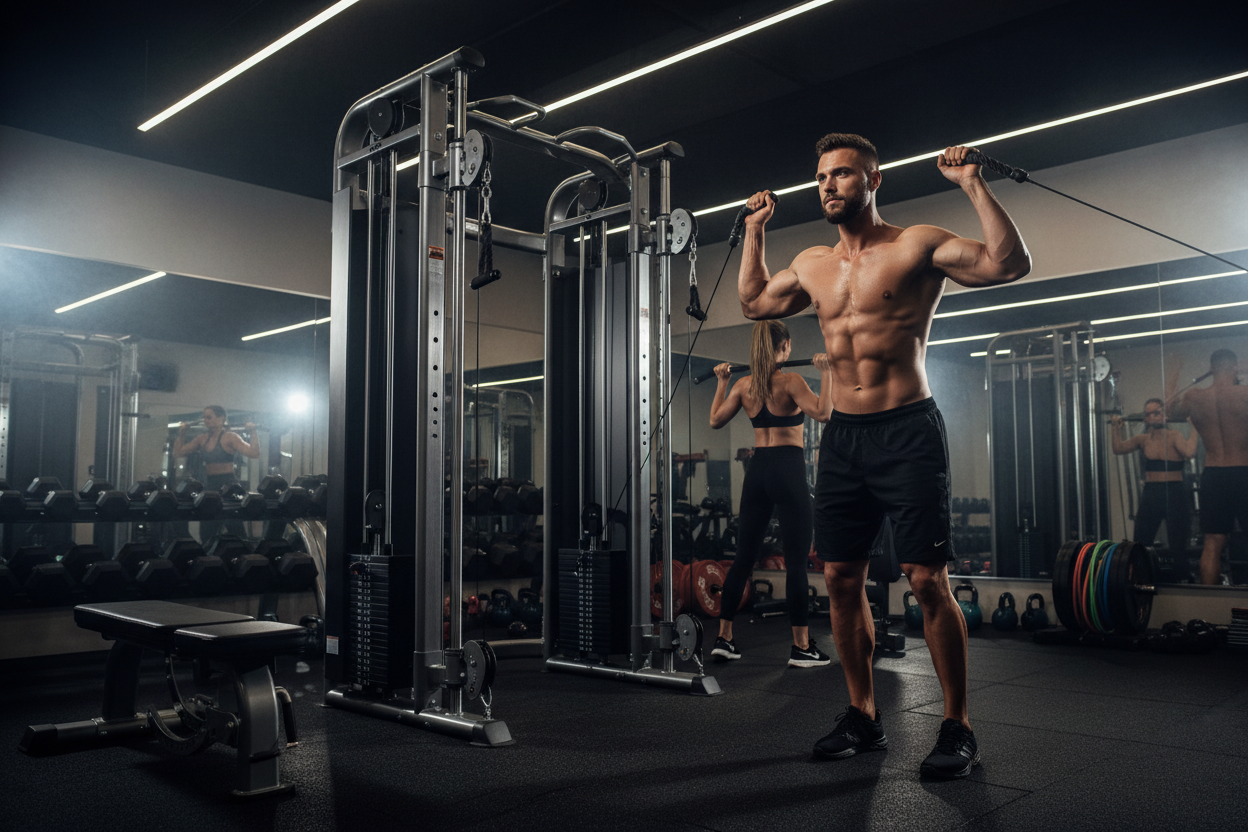
A functional trainer features dual adjustable pulleys, allowing for unilateral movements, chest flyes, and complex sports-specific training. Single pulley machines, like a dedicated lat pulldown or a simple low-row station, are incredibly effective but lack the multi-angle versatility of dual cables. If you want the ultimate all-in-one solution, a functional trainer is the gold standard.
Space Planning for Pulley Machines
The biggest hurdle to bringing cables gym equipment into a residential space is the footprint. Most commercial units are towering beasts.
Height Clearances and Footprints
Before you buy, measure your ceiling height—twice. Many standard functional trainers require an 84-inch ceiling clearance, and that does not account for the space needed to do pull-ups on the integrated crossbar. If you are in a basement setup, look for 'shorty' models specifically designed for low ceilings. Additionally, ensure you have at least 3 to 4 feet of working clearance in front of the machine for lunges and cable crossovers.
Maximizing Your Workout Potential
The beauty of a cable extension machine lies in its biomechanical efficiency. It allows you to target muscles from angles that barbells simply cannot reach.
The Power of Attachments
Your machine is only as good as its accessories. While most units come with basic nylon D-handles, upgrading your grip changes the game. Investing in a high-quality tricep cable rope machine attachment or a specialized gym machine rope allows for deeper contractions on tricep press-downs, face pulls, and ab crunches.
From Our Gym: Honest Take
When I first upgraded our garage setup with a dual-stack functional trainer, the difference was night and day compared to our old resistance band setup. The aluminum pulleys on our model provided a buttery-smooth glide that perfectly mimicked the cable machines in gym environments. One specific detail I love: the 2:1 pulley ratio. It means a 200-pound stack actually provides 100 pounds of felt resistance, which allows for micro-adjustments in 5-pound increments. The only caveat? The assembly process was a nightmare. It took two people over six hours to route the cables and align the guide rods. If you have the budget, pay for professional assembly.
Frequently Asked Questions
Is a cable machine worth the investment for a home gym?
Absolutely. If you already have a power rack, a barbell, and plates, a cable machine is the ultimate complementary piece. It provides the isolation and constant tension needed for hypertrophy that free weights alone struggle to deliver.
How much space do I need for a functional trainer?
At a minimum, you need a footprint of about 5 feet wide by 4 feet deep, plus an 84-inch ceiling clearance. However, always factor in an additional 3 to 4 feet of forward working space so the cables do not rub against the frame during extended movements.
Can I build muscle using only cables?
Yes. Because cables provide continuous tension throughout both the concentric and eccentric phases of a lift, they are highly effective for muscle hypertrophy. They are especially useful for targeting the chest, back, and shoulders from multiple angles.