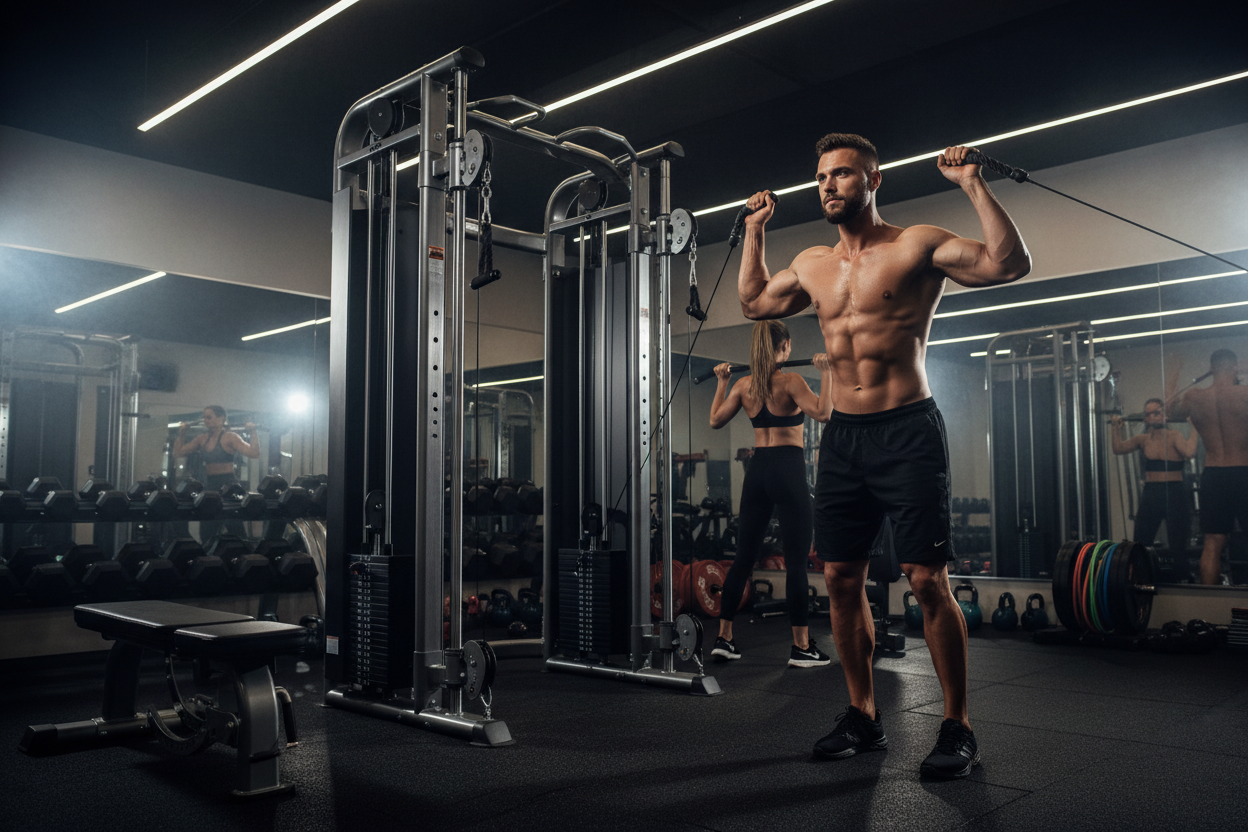
Cable Tower Home Gym Setup: What Nobody Tells You
If you have ever tried to replicate a smooth triceps pushdown using resistance bands looped over a pull-up bar, you already know the frustration. You lose tension at the bottom, the band snaps back, and it just doesn't feel like the commercial gym experience. For years, strength enthusiasts believed that achieving constant, fluid tension required massive commercial rigs. Today, adding a cable tower home gym to your setup is not only accessible, but it might be the single best investment you can make for breaking through workout plateaus.
Whether you are dealing with a cramped one-car garage or a low-ceiling basement, a dedicated cable setup transforms how you train. But before you hit 'add to cart', there are crucial details about pulley ratios, footprint, and weight capacities that can make or break your training experience. Here is everything you need to know to find the perfect fit.
Key Takeaways
- Space Efficiency: A single tower cable machine offers over 50 exercise variations while taking up less than a 3x3 foot footprint.
- Pulley Ratios Matter: Most home units use a 2:1 ratio (moving 100 lbs feels like 50 lbs), which is ideal for functional training and longer cable travel.
- Weight Stack vs. Plate-Loaded: Plate-loaded towers save money and utilize your existing bumper plates, while selectorized weight stacks offer faster drop sets and convenience.
- Ceiling Clearance: Always measure your ceiling height; many towers require at least 80 to 84 inches of vertical clearance.
Space Planning & Footprint
One of the biggest misconceptions about a home gym cable tower is that it requires a massive amount of floor space. In reality, these units are designed to be tucked into corners or mounted directly to your existing power rack.
Garage Gyms vs. Basements
If you are building out a garage gym, floor space is usually your premium commodity. A wall-mounted cable workout tower is incredibly space-efficient, often extending less than 10 inches from the wall. However, if you are setting up in a basement, vertical clearance becomes your main enemy. Standard towers sit around 80 to 84 inches tall. If you have low ceilings, look for a compact multifunction cable machine specifically designed for short basements, or consider a rack-attached functional trainer that utilizes your squat rack's existing footprint.
Key Specs to Compare
Not all cable machines are created equal. When comparing models, look closely at the materials used in the pulley system and the guide rods.
Smoothness and Durability
The hallmark of a premium cable tower gym is the smoothness of the pull. Entry-level models often use plastic or nylon pulleys with hollow guide rods, which can lead to a 'catchy' or jerky feeling during slow eccentric movements. If your budget allows, upgrade to a system with aluminum pulleys and solid steel guide rods. They require less maintenance, resist wear over time, and provide that buttery-smooth commercial gym feel. Additionally, check the weight capacity. Even if you don't plan on doing heavy lat pulldowns immediately, a system rated for 250+ pounds indicates better overall structural integrity.
Training Application: Unlocking Constant Tension
Free weights are fantastic for building raw strength, but they rely on gravity. This means the resistance curve changes depending on the angle of your joints. A cable tower provides constant tension throughout the entire range of motion, making it an elite tool for hypertrophy (muscle growth) and joint-friendly isolation work.
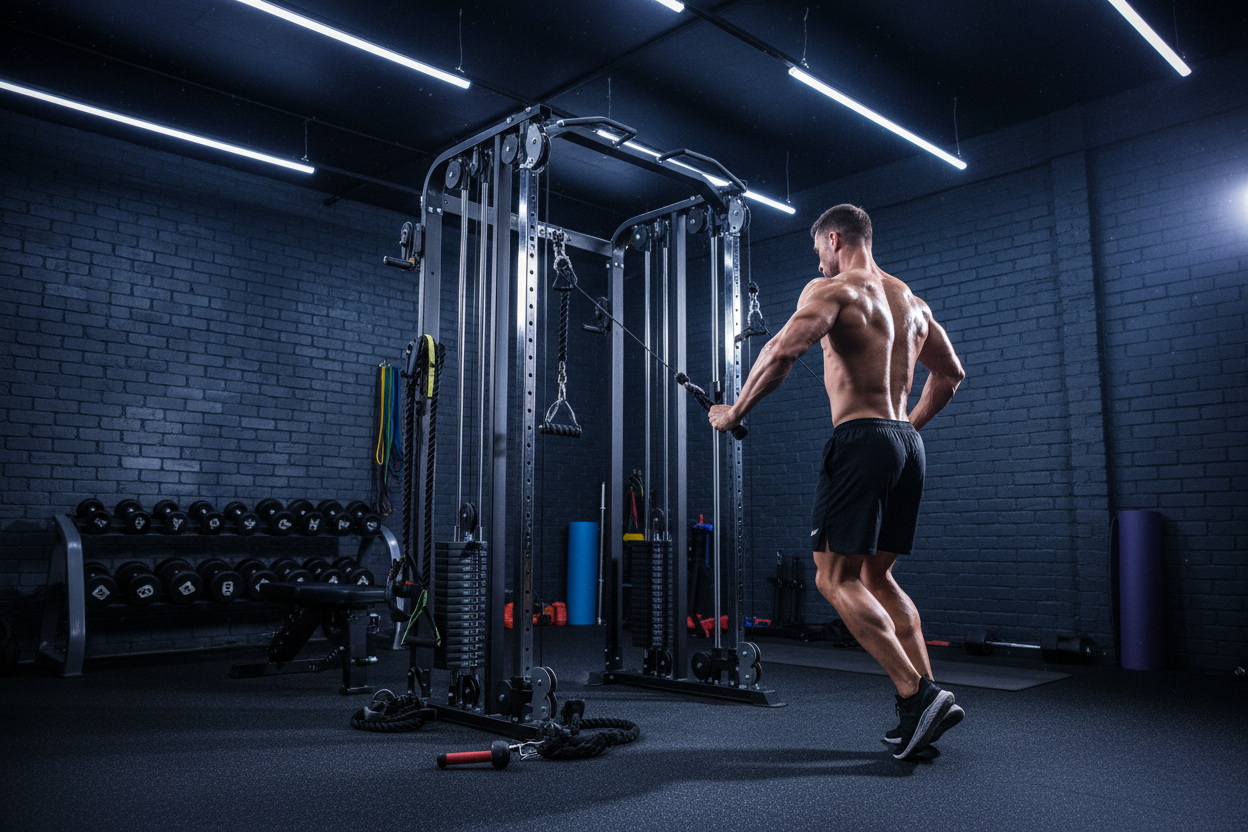
A single tower cable machine allows you to perform unilateral (one-sided) exercises like single-arm chest flies, lateral raises, and woodchoppers. This is critical for identifying and fixing muscle imbalances that barbells often hide. For advanced lifters, cables make it incredibly easy to perform mechanical drop sets—simply move the pin up the stack and continue your set without missing a beat.
From Our Gym: Honest Take
I have tested dozens of cable systems in my own garage gym over the last five years. One detail that most product pages completely ignore is the actual travel distance of the carriage and the cable length. At 6'2", I found that on a standard 2:1 ratio single tower, doing walking cable lunges meant I would bottom out the weight stack if I stepped too far away from the machine.
However, for 95% of movements—like face pulls, triceps pushdowns, and cable crunches—the constant tension is flawless. My honest advice? If you are deciding between a cheaper weight stack model and a premium plate-loaded model for the same price, go with the premium plate-loaded. The aluminum pulleys and solid guide rods make a far bigger difference in how the workout actually feels than the convenience of a selectorized pin.
Frequently Asked Questions
Is a single cable tower enough for a full-body workout?
Yes. While a dual functional trainer allows for bilateral movements (like standard cable crossovers), a single tower can hit every major muscle group through unilateral training. It just takes slightly longer since you are working one side at a time.
How much ceiling clearance do I need?
Most standard cable towers require an absolute minimum of 82 inches of vertical clearance. Always leave an extra 2 to 3 inches above the machine so you can easily access the top pulleys for maintenance or assembly.
Are plate-loaded cable towers better than weight stacks?
It depends on your budget and current equipment. If you already own a lot of Olympic weight plates, a plate-loaded system is highly cost-effective and allows for higher weight capacities. Weight stacks are more expensive but offer unmatched convenience for quick weight changes during supersets.