Are the Best Glute Exercises for Strength Just Heavy Squats?
I spent three years doing glute activation drills with neon-colored bands before I realized my deadlift was stuck at 225 lbs because I was avoiding the actual work. I was scrolling through forums at midnight, buying into the idea that 'the pump' was the same thing as progress. It wasn't. If you want a posterior chain that moves heavy weight and looks the part, you need the best glute exercises for strength, not a library of bodyweight variations.
- Mechanical tension is the primary driver of growth and power, not just the 'burn.'
- The Romanian Deadlift (RDL) is the undisputed king of the eccentric load.
- Barbell Hip Thrusts provide the highest peak activation in the shortened position.
- Unilateral work like Bulgarian Split Squats is mandatory for fixing strength imbalances.
- Proper flooring is non-negotiable once you start moving real weight in a garage.
Why Your Current Posterior Routine Isn't Building Power
Most people confuse metabolic stress—that burning sensation you get from 50 reps of banded side-steps—with actual strength adaptation. While bands have their place in a warmup, they don't provide the mechanical tension required to force your nervous system to get stronger. You need to Stop Doing Circus Acts: Pick a Real Exercise for Muscle Strength if your goal is raw power.
Strength is built by overloading the muscle through a full range of motion. When you rely solely on high-rep isolation circuits, you're building endurance, not the explosive hip extension needed for a heavy squat or a sprint. You have to pick up something heavy enough that you actually have to focus on your bracing.
What Actually Makes a Proper Leg and Glute Muscle Exercise?
A legitimate leg and glute muscle exercise must prioritize hip extension. The gluteus maximus is the most powerful muscle in your body, designed to pull your torso upright from a hinged position. If you feel your lower back taking over, it's usually a sign that your hips aren't doing the heavy lifting.
To fix this, you have to master the 'hip hinge.' This means pushing your hips back as if you're trying to touch a wall behind you with your glutes, keeping your spine neutral. Loading this movement pattern is how you build a posterior chain that can handle 400+ pounds without snapping like a twig.
The Holy Trinity of Lower Body Power
You don't need twenty different machines to build strength. You need a barbell, some plates, and the willingness to suffer through a few heavy sets. Knowing How To Build Muscle With The Best Leg Exercise Equipment For Home starts with these three movements. They offer the highest return on investment for every minute you spend in the gym.
The Heavy Romanian Deadlift (RDL)
The RDL is my go-to for building the 'shelf' and raw pulling power. Unlike a standard deadlift, the RDL starts from the top and focuses on a slow, controlled eccentric (lowering) phase. This creates massive tension in the stretched position. I usually program these in the 6-8 rep range with a 3-second descent. If your hamstrings aren't screaming the next day, you didn't go heavy enough.
A Flawless Leg and Glute Muscle Exercise Example: The Barbell Hip Thrust
The barbell hip thrust is a leg and glute muscle exercise example that specifically targets the glutes at the top of the movement where they are shortest. To do this right, you need a bench that won't slide and a thick bar pad. Drive through your heels and tuck your chin. If you aren't locking out fully at the top, you're leaving strength on the table. I've seen guys move 500 lbs on this, and their squat numbers shot up as a result.
The Bulgarian Split Squat (The Widowmaker)
I hate these. Everyone hates these. That’s why they work. By loading one leg at a time, you force the glute medius to stabilize your pelvis, which fixes the imbalances that lead to knee pain. Use a pair of heavy dumbbells and get your back foot up on a bench. The deep hip flexion at the bottom of a Bulgarian split squat is a brutal stimulus for growth that a standard squat just can't replicate.
Protecting Your Floors (And Your Joints) When Going Heavy
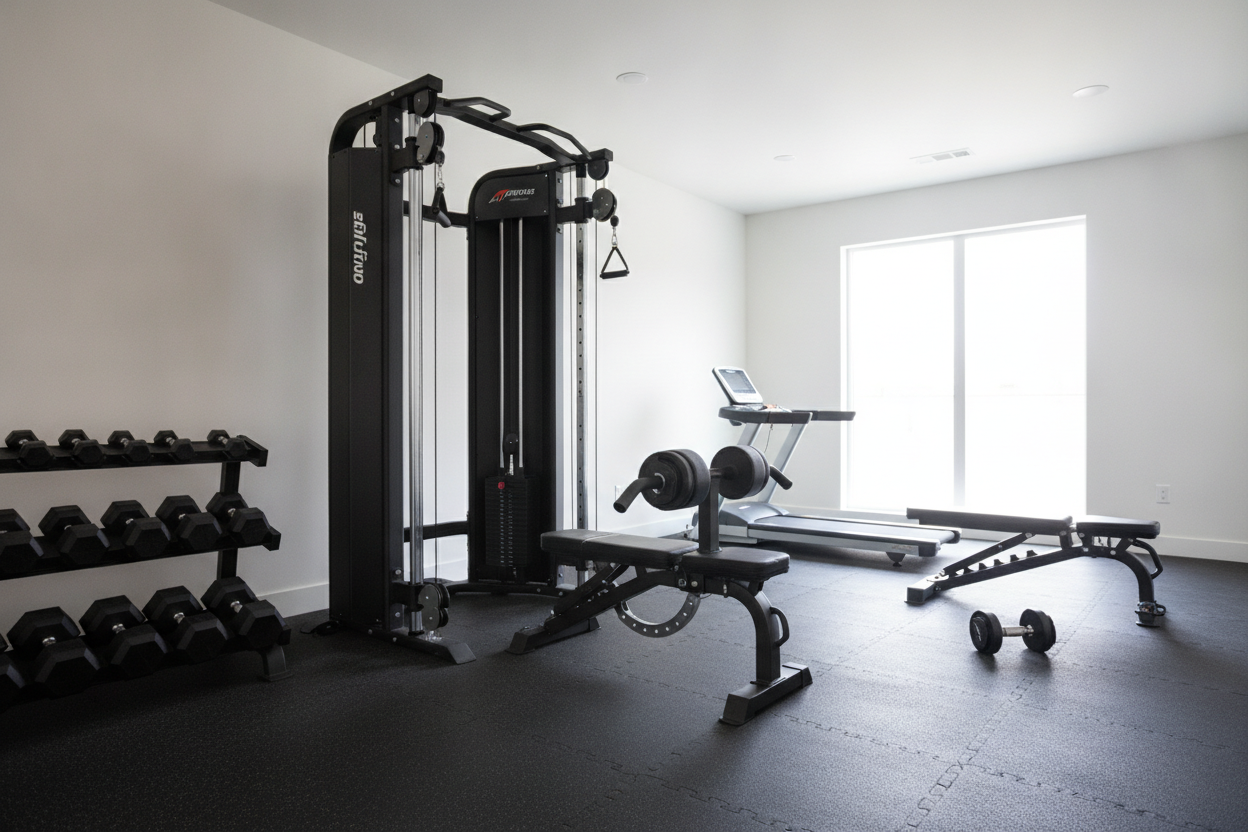
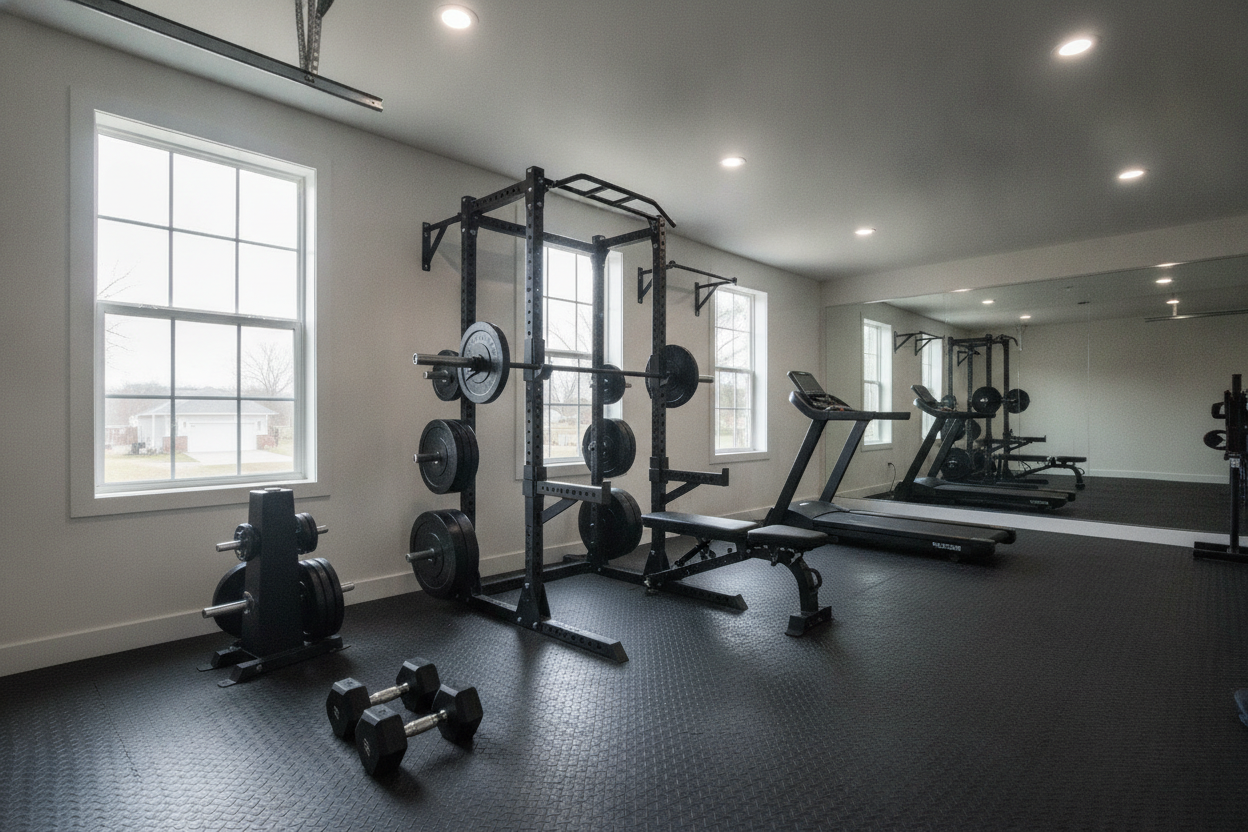
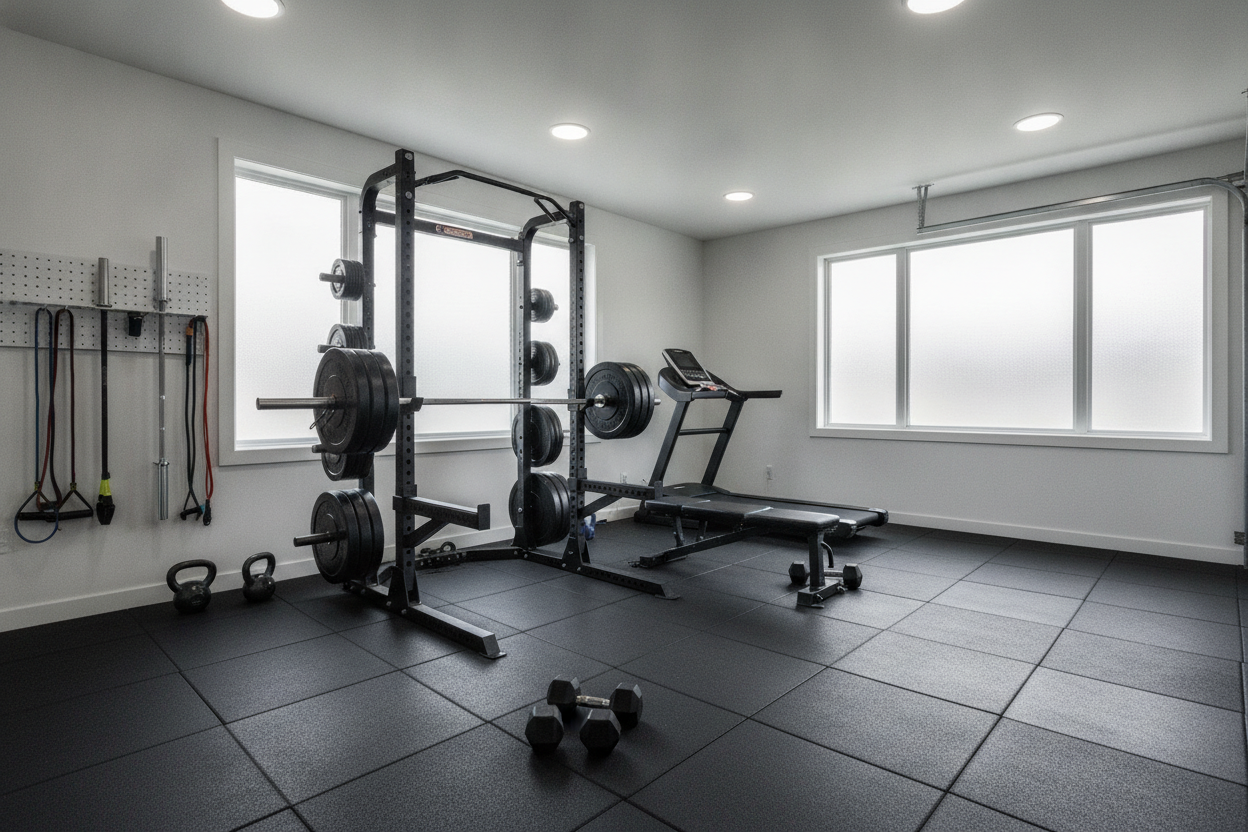
If you're training in a garage like I do, you can't just drop 300 lbs on bare concrete. Not only will you crack your foundation, but the vibration is terrible for your joints. You need a Large Exercise Mat For Home Gym or a dedicated lifting platform. I learned this the hard way after chipping my floor with a set of iron 45s during a heavy RDL session. A 1/2-inch or 3/4-inch rubber surface is the bare minimum for heavy posterior work.
Structuring Your Weekly Training Volume
Strength isn't built by training to failure every single day. For the glutes, I recommend hitting them twice a week. One day should focus on the 'stretch' (RDLs), and the second day should focus on the 'squeeze' (Hip Thrusts). Keep your heavy working sets between 3 and 5. If you can do more than 10 reps, the weight is too light. Period.
Personal Experience: The 400-lb Mistake
A few years ago, I thought I could hip thrust 405 lbs using a cheap, standard barbell I found on Craigslist. The bar didn't have a rotating sleeve, and the knurling was so passive it kept sliding. Halfway through the second rep, the bar tilted, and I nearly torqued my SI joint into another dimension. I learned that day that as you get stronger, your equipment has to keep up. Don't go heavy on gear that isn't rated for the load.
FAQ
Do I need to squat to get strong glutes?
Squats are great, but they are often quad-dominant. If you want maximum glute strength, RDLs and Hip Thrusts are actually superior because they isolate hip extension more effectively.
How many times a week should I train glutes for strength?
Two heavy sessions per week is the sweet spot. This allows enough recovery for your central nervous system while providing enough frequency to master the movements.
Can I build glute strength with just dumbbells?
Yes, but you'll eventually hit a ceiling. Dumbbells are great for Bulgarian split squats, but for RDLs and Hip Thrusts, you'll eventually need the loading capacity of a barbell.