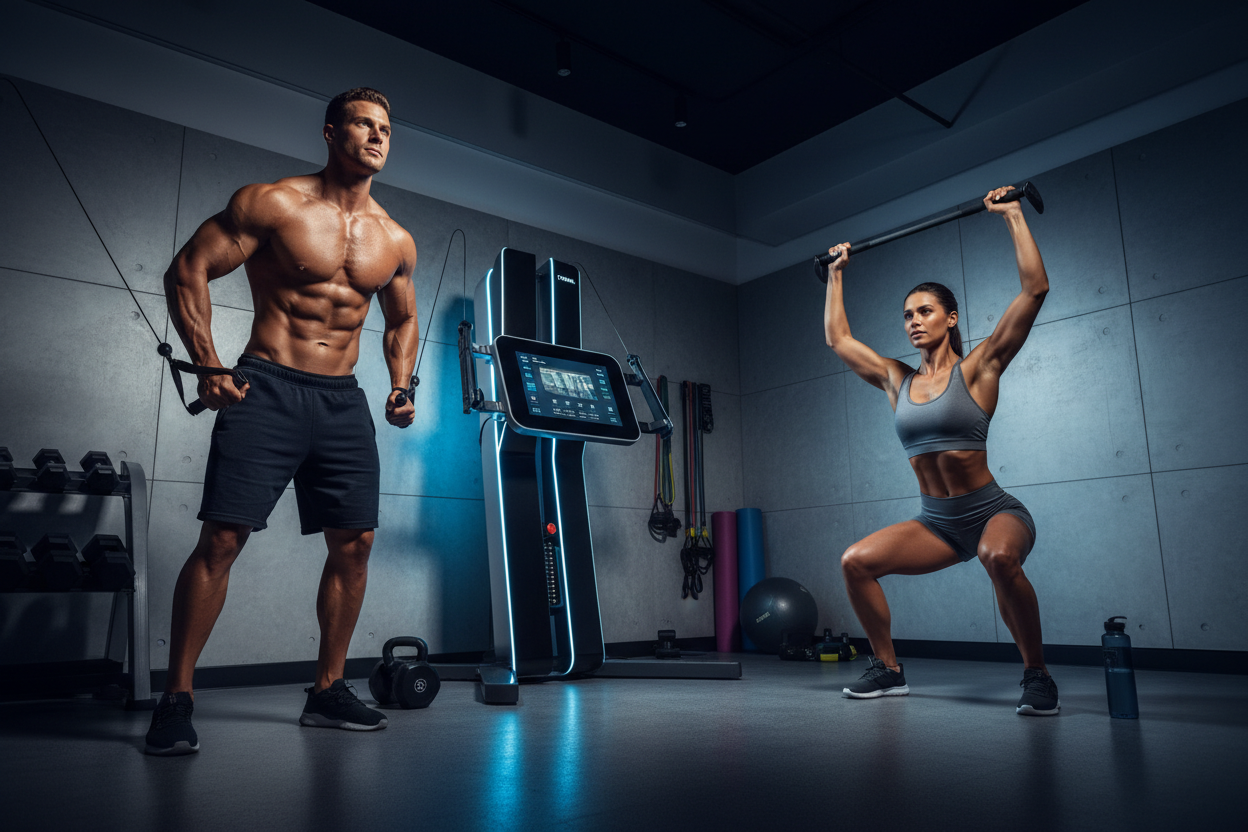
How to Build Muscle With the Best Leg Exercise Equipment for Home
Let's be honest: bodyweight squats and lunges will only take you so far. Eventually, you hit a plateau, and your living room workouts stop delivering the hypertrophy or strength gains you’re chasing. If you are serious about lower body development, investing in the best leg exercise equipment for home is the only way to replicate the intensity of a commercial gym setting without the commute.
Building a home setup doesn't mean you need a 2,000-square-foot warehouse. Whether you are looking for compact tools or heavy-duty iron, the right gear changes the game. This guide cuts through the marketing fluff to tell you exactly what works for leg development.
Quick Summary: Essential Home Leg Gear
If you are in a rush, here is the shortlist of equipment that offers the highest return on investment for lower body training:
- Adjustable Dumbbells: The most versatile tool for lunges, goblet squats, and RDLs.
- Squat Stand/Power Rack: Essential for heavy compound movements and safety.
- Kettlebells: Superior for ballistic movements and posterior chain work.
- Resistance Bands: Crucial for glute activation and finishing moves.
- Compact Leg Press/Hack Squat: For those with space who need heavy isolation without spinal loading.
The Foundation: Why Free Weights Still Rule
When looking for workout equipment for legs at home, many people immediately search for complex machines. However, the gold standard for hypertrophy remains free weights. They force you to stabilize the load, recruiting more muscle fibers than a fixed path machine.
The Power of the Squat Rack
If you have the vertical clearance, a squat rack or half-rack is non-negotiable. It allows you to perform the king of all exercises safely. Unlike leg workouts at the gym with machines where you are locked into a seat, a rack permits heavy barbell squats, front squats, and rack pulls. Look for a rack with robust safety spotter arms—this is critical when training alone.
Dumbbells and Kettlebells
For smaller spaces, heavy adjustable dumbbells are the best home gym equipment for legs. They allow for unilateral training (single-leg work), which is vital for fixing imbalances. Bulgarian split squats holding heavy dumbbells will humble even experienced lifters. Kettlebells add another dimension, specifically for hinge movements like swings, which torch the hamstrings and glutes.
Machines That Are Actually Worth the Space
While free weights are king, sometimes you need the stability of a machine to take a muscle to absolute failure safely. If you are trying to replicate a gym machine leg workout routine, here is what to prioritize.
The Compact Leg Press
A full-sized leg press is massive, but newer vertical leg press models or compact "sled" styles fit well in garages. These are excellent weight machine exercises for legs because they remove the balance component, allowing you to focus purely on quad output. If you have back issues, this is a safer alternative to heavy spinal loading.
Glute and Hamstring Specifics
For many, specifically those looking for gym leg workout female machines focused on the posterior chain, the Glute-Ham Developer (GHD) or a hip thrust machine is invaluable. However, these are bulky. A great space-saving alternative is a "Nordic Curl" strap or a simple barbell pad for hip thrusts off a bench. These tools isolate the hamstrings and glutes effectively without taking up half the room.
Structuring Your Home Leg Day
Owning the gear is step one; using it effectively is step two. You don't need 20 different machines to get big legs. Here is how to structure a leg workout with gym equipment at home:
- Compound Movement (Heavy): Barbell Squats or Trap Bar Deadlifts (3-4 sets).
- Unilateral Movement: Dumbbell Walking Lunges or Bulgarian Split Squats (3 sets).
- Posterior Chain: RDLs (Romanian Deadlifts) or Kettlebell Swings (3 sets).
- Isolation/Burnout: Banded Leg Curls or Goblet Squats (High reps to failure).
Common Mistakes When Buying Leg Gear
The biggest error is buying cheap multi-function stations. You have likely seen the all-in-one thigh exercise machine at home that promises to do leg extensions, curls, and press. Usually, the biomechanics on these are terrible. The pivot points rarely align with your knees, causing joint stress rather than muscle tension. Stick to commercial-grade specialized equipment or high-quality free weights.
My Training Log: Real Talk
I want to share a specific experience regarding the "best" gear. A few years ago, I bought a budget-friendly leg extension/curl attachment for my weight bench. On paper, it was the perfect leg workout device to finish off my quads.
In reality? It was a nightmare. The foam rollers were too thin, so once I went over 80lbs, the metal bar inside started digging into my shins, leaving bruises. Worse, the strength curve was nonexistent—there was zero tension at the bottom of the movement and way too much at the top. I found myself cheating the rep just to get it moving.
I eventually sold it and bought a pair of high-quality ankle straps for my cable pulley system instead. The difference was night and day. The constant tension from the cable gave me a better pump than the cheap attachment ever did. Lesson learned: makeshift mechanics usually lead to makeshift results. If you can't afford the high-end machine, find a cable or free-weight variation instead.
Conclusion
Building a set of wheels at home is entirely possible if you choose the right tools. You don't need a sea of chrome machines; you need gravity and ergonomics. Start with a solid rack and weights, add a unilateral component, and only invest in machines that mimic natural biomechanics. The best leg exercise equipment for home is the stuff you will actually use consistently without getting injured.
Frequently Asked Questions
What is the single best piece of equipment for legs?
If you can only buy one item, get a pair of heavy adjustable dumbbells. They allow you to perform squats, lunges, deadlifts, and step-ups. They take up minimal space and offer enough resistance for most people to build significant muscle.
Can I build big legs without a squat rack?
Yes, but it requires more creativity. You will need to focus heavily on unilateral exercises like Bulgarian split squats and lunges. Since you can't load these as heavy as a back squat, you will need to increase volume (reps) and focus on time-under-tension to stimulate growth.
Are resistance bands effective for leg workouts?
Bands are excellent for warm-ups, activation, and finishing moves, but they rarely provide enough resistance on their own to build massive mass in the quads or hamstrings. They are best used as a supplement to iron, not a replacement.