Why the Best Exercise Programs for Beginners Fit on a Sticky Note
I remember downloading a 40-page PDF from a pro bodybuilder back when I first started training in my parent's garage. I spent more time squinting at my phone trying to figure out what a 'superset with 3030 tempo' meant than I did actually moving weight. It was a disaster. I felt like a failure before I even finished the first week because I couldn't keep track of the data. The truth is, the best exercise programs for beginners don't require a degree in data science or a complex spreadsheet.
Quick Takeaways
- Complexity kills consistency; if you can't memorize the workout, it's too complicated.
- Focus on three movement patterns: a push, a pull, and a lower-body exercise.
- Your physical environment (flooring and space) matters more than having a rack full of dumbbells.
- Progress comes from repeating the same simple moves, not 'confusing' your muscles with variety.
The 12-Week Spreadsheet Trap
Most 'expert' routines are designed to look impressive so you'll pay for them. They come loaded with RPE scales, percentage-based loading, and three different phases of periodization. For a novice, this is total overkill. Your body is so sensitive to new stimulus that you could practically do yard work and see gains for the first month.
When you download a complex 12-week PDF, you're setting yourself up for burnout. By week two, life gets in the way, you miss a 'taper' session, and you feel like the whole program is ruined. Beginners don't need advanced periodization; they need to learn how to move. Repetition is the only way to build the mind-muscle connection that actually keeps you safe when the weights get heavy later on.
The 'Sticky Note' Rule for Novice Lifters
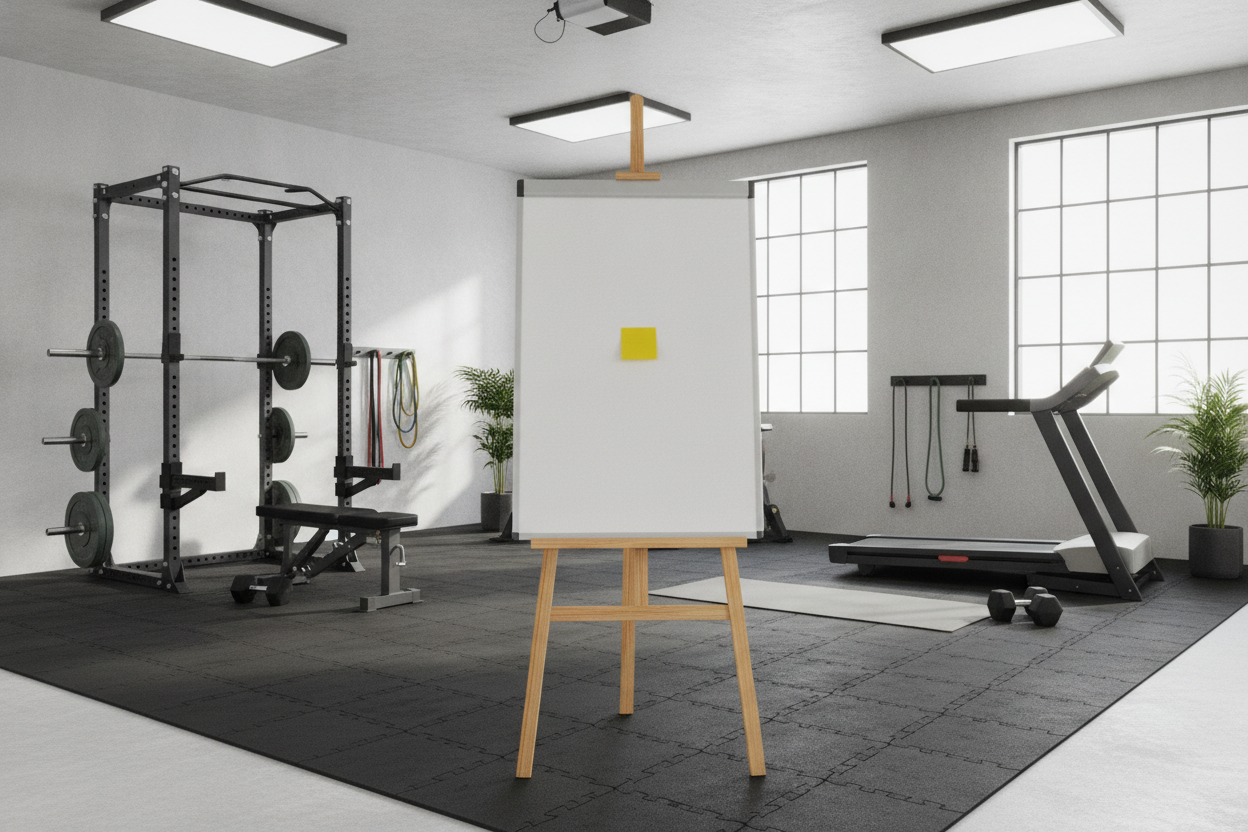
I tell everyone I coach the same thing: if your routine requires scrolling on your phone between sets, it's garbage. The best fitness program for beginners should fit on a 3x3 piece of paper stuck to your wall. If you can't remember the three or four things you need to do, you aren't focused on the lift—you're focused on the instructions.
A sticky note forces you to prioritize. It removes the 'analysis paralysis' that happens when you have 12 different accessory exercises to choose from. You walk into your space, you see the three moves, and you execute. No distractions, no blue light from your phone, just work.
Building Your 3-Move Daily Template
To build a routine that actually sticks, you only need three categories: one push, one pull, and one lower-body movement. For example: Overhead Press, Rows, and Squats. That covers almost every major muscle group in your body without needing a commercial gym membership. You can get a massive amount of work done with just a few pieces of the best home exercise equipment for beginners, like a solid pair of adjustable dumbbells or a single kettlebell.
Keep the sets and reps simple too. Three sets of eight to ten reps. When that gets easy, add five pounds or do two more reps. You don't need a calculator to figure out your 'one-rep max' yet. Just move more than you did last time. This minimalist approach keeps the session under 45 minutes, which is the sweet spot for staying consistent when you're just starting out.
Where Most Starter Routines Go Wrong
I see a lot of exercise programmes for beginners that focus entirely on the movements but completely ignore the environment. They'll tell you to do 'dead bugs' or 'planks' on a cold, hard concrete garage floor. Nothing kills motivation faster than bruised knees or a sore lower back from trying to balance on a thin, slippery yoga mat that won't stay flat.
Invest in your floor before you invest in a fancy barbell. Having a dedicated large exercise mat for home gym use transforms a corner of your house into a real training zone. I personally recommend a 6x8ft exercise mat because it gives you enough room to move laterally without stepping off onto the carpet or hardwood. If you're comfortable, you'll actually finish your floor work instead of skipping it.
When You're Actually Ready to Level Up
So, when do you ditch the sticky note? Not after a week. You graduate when you've hit your 'sticky note' workouts perfectly for at least eight weeks straight. You'll know it's time when you've plateaued on your weights for three sessions in a row or when the movements feel so automatic that you're getting bored. That boredom is actually a sign of mastery.
Once you've built that foundation of consistency, you can look for the best exercise book for beginners to find a program that introduces more variety or specific strength goals. But until you can squat your body weight and do ten clean push-ups, keep that sticky note on the wall. It's the most effective tool in your gym.
Personal Experience: The 'More is Better' Mistake
Early in my training, I thought I needed a 'chest day' and a 'back day' like the guys in the magazines. I bought a cheap bench and a set of plastic-coated weights that leaked sand. I spent two hours a day doing every variation of a curl known to man. I got zero results and a lot of elbow tendonitis. It wasn't until I stripped everything back to just three basic lifts that my strength actually started to climb. I realized I was trying to build a skyscraper on a foundation of sand.
FAQ
How many days a week should a beginner train?
Three days a week is plenty. Your muscles grow while you rest, not while you're lifting. Giving yourself a day off between sessions helps your central nervous system recover.
Do I need a squat rack to start?
No. You can do goblet squats with a single dumbbell or lunges with just your body weight. A rack is great eventually, but it shouldn't be a barrier to starting today.
What if I can't do a single push-up?
Start with your hands on a bench or a sturdy table to change the angle. As you get stronger, move your hands closer to the floor. Everyone starts somewhere; don't ego-lift.