Why the Best Workouts for Flexibility Involve Heavy Weights
I remember sitting on my cold garage floor three years ago, desperately trying to touch my toes after a brutal leg day. I felt like a rusted gate hinge. I spent twenty minutes every night doing the same passive holds I learned in middle school gym class, only to wake up the next morning feeling just as tight. It was a cycle of frustration that most lifters know too well.
The reality is that traditional workouts for flexibility often fail because they treat your muscles like inert rubber bands. Your nervous system isn't stupid; if it feels you are weak in a certain position, it will keep those muscles tight to protect your joints. To actually unlock your body, you have to stop stretching and start loading.
Quick Takeaways
- Passive stretching provides temporary relief; loaded mobility creates permanent change.
- Strength is the foundation of usable range of motion.
- Eccentric movements (the lowering phase) are the fastest way to lengthen tissue.
- Stable flooring is non-negotiable when loading deep ranges.
Why Touching Your Toes Is a Terrible Goal
Touching your toes is a parlor trick, not a fitness metric. Most people reach their toes by rounding their lower back and hanging on their hamstrings. This is passive flexibility—it’s the ability to get into a position using gravity or external force, but having zero control once you’re there. If you can’t move through a range of motion under your own power, you don’t own it.
We need to talk about active mobility. This is the ability to actually use your strength at the end of your reach. When you train for active range, you aren't just pulling on a muscle; you are teaching your brain that it is safe to be there. I’ve found that once I started prioritizing strength at my limits, my chronic lower back tightness vanished faster than it ever did with a foam roller.
The Science of 'Loaded Mobility'
When you lower a heavy weight through a full range of motion, you’re performing eccentric training. This process actually adds sarcomeres—the basic building blocks of muscle—in series. You are literally building longer muscles. This is why a heavy Romanian Deadlift does more for your hamstring length than a seated toe touch ever could.
Loading a muscle under a stretch tells your nervous system that you have the stability to handle the position. This is a critical distinction, especially for those worried about joint health. For example, building strength at the end of a range is a much smarter approach than just chasing looseness, which can lead to instability, as seen in exercises for hypermobile shoulder where the goal is stability over raw reach.
3 Lifts That Double as Flexibility Training
You don't need a 90-minute yoga flow to get bendy. You just need to execute these three lifts with a focus on the 'bottom' of the rep.
First, the Romanian Deadlift. Keep the back flat and lower the bar until your hamstrings scream. Hold that bottom position for a second. You’re strengthening the hamstrings while they are at their longest point. Second, the Bulgarian Split Squat. Go deep—deep enough that your back knee almost touches the floor. This creates a massive stretch in the hip flexors of the trailing leg. It requires the same intense, slow-burn control you'd find in Pilates exercises for quads, but with the added stimulus of a heavy dumbbell.
Finally, the Dumbbell Pullover. Lie across a bench and lower a weight behind your head with slightly bent elbows. This opens up the lats and thoracic spine, which is the antidote to the 'desk hunch' most of us battle daily.
Setting Up Your Space for Deep Range of Motion
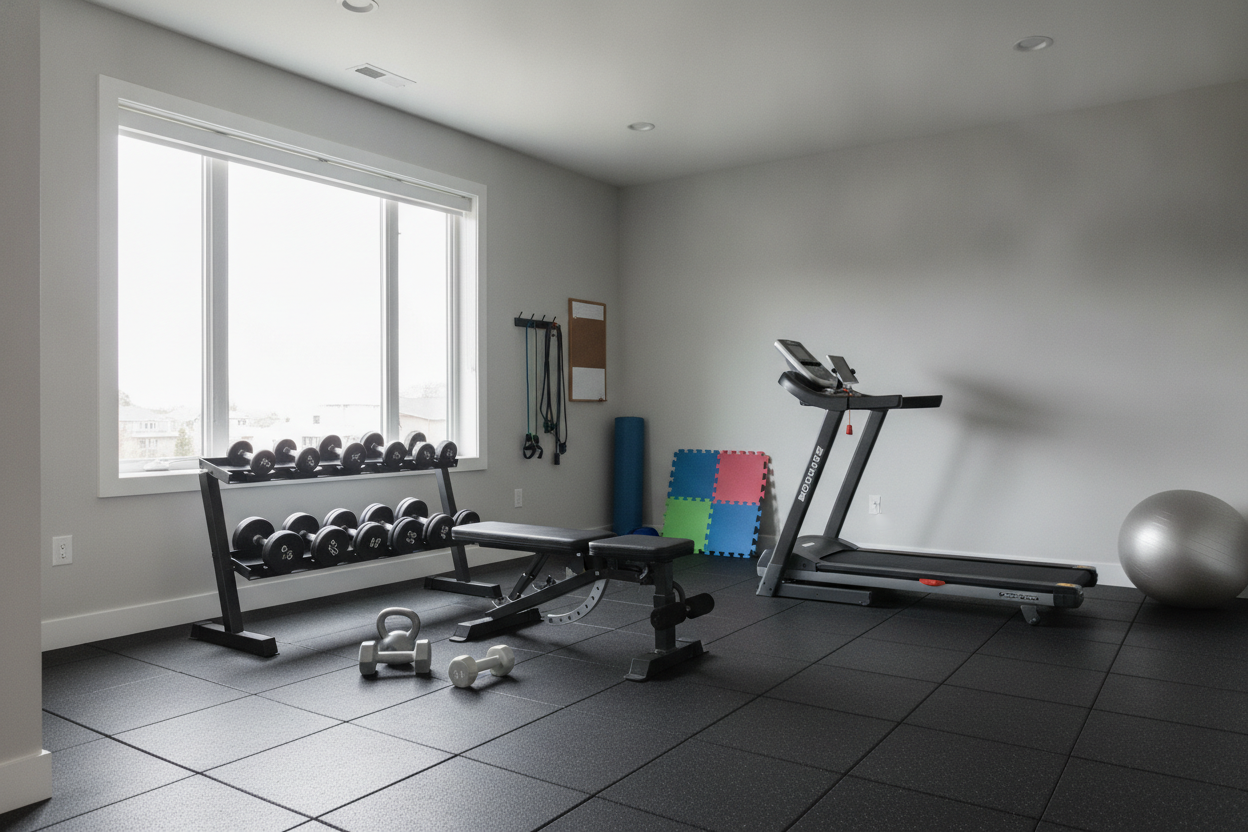
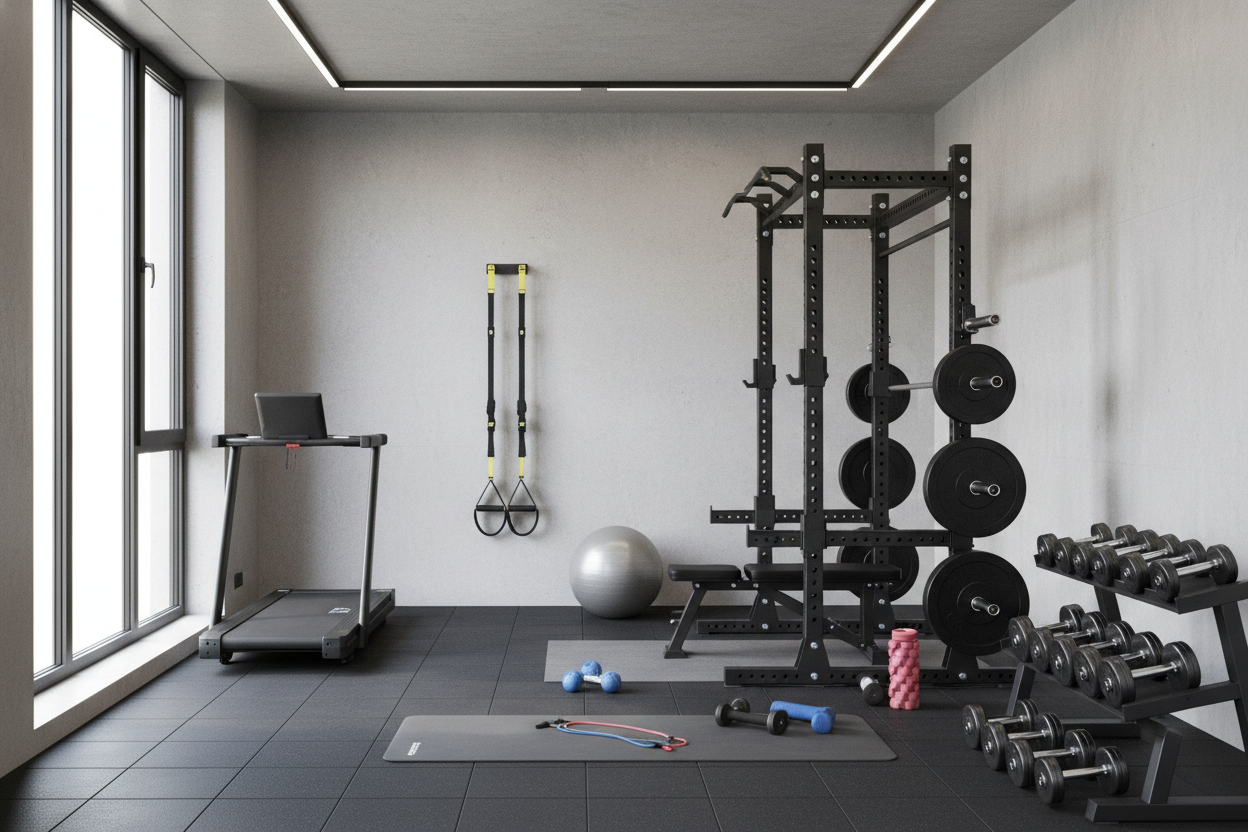
You cannot train loaded mobility if you’re worried about your feet sliding out from under you. I learned this the hard way when I tried to do a heavy Cossack squat on bare concrete and nearly tore my groin when my lead foot drifted. You need a surface that bites back.
In my own gym, I use a 6x8ft exercise mat because it gives me enough real estate to move laterally without stepping off onto the cold floor. If you have a smaller footprint or a dedicated corner for your rack, a 6x4ft yoga mat is usually plenty. The key is density—you want something firm enough that it doesn't squish and kill your balance, but grippy enough to hold your stance during a deep split squat.
How to Program This Into Your Week
Don't add these on top of your current routine; swap them in. If you usually do leg curls, do RDLs. If you usually do leg presses, do deep split squats. The goal is to maximize the range of motion on every single rep. Stop short-changing your squats. If you aren't hitting depth, you aren't getting the flexibility benefits.
I usually recommend two 'loaded mobility' sessions per week. Focus on a 3-second lowering phase (eccentric) and a 2-second pause at the bottom of the stretch. This is where the magic happens. You’ll be sore in places you didn't know existed, but within a month, you’ll be moving better than you did in your twenties.
FAQ
Do I need to warm up before loaded stretching?
Yes. Never dive into a heavy, deep-range lift cold. Spend 5 minutes getting your blood flowing with some bodyweight lunges or a light jog to make the tissue more pliable.
Will lifting heavy make me less flexible?
Only if you use partial reps. If you lift through a full range of motion, strength training is actually one of the most effective ways to increase your functional reach.
How heavy should I go?
Start with about 50% of what you think you can handle. The goal is the depth and the pause, not just moving the most weight possible. Form is everything here.