Why The Best Building Muscle Diet Revolves Around Leg Day
I’ve spent a decade staring at spreadsheets, tracking every gram of protein while my garage gym floor slowly collected a layer of chalk and sweat. Most guys treat nutrition like a math problem where the variables never change, eating the same chicken and rice at 2:00 PM on a rest day as they do after a soul-crushing set of squats. If you want to actually fill out a t-shirt, you need to realize that the best building muscle diet isn't a static number—it is a moving target that peaks when your training is at its most violent.
Quick Takeaways
- Calorie cycling prevents unnecessary fat gain while fueling growth.
- High-carb windows should be strategically placed 24 hours around leg sessions.
- Joint health is as important as caloric intake when you start moving heavy weight.
- Liquid nutrition is a lifesaver when post-workout nausea hits.
Stop Eating the Same Macros Every Single Day
The standard advice is to find your maintenance calories, add 500, and stay there forever. That is a recipe for getting soft and sluggish. When I’m chasing the best diet for gaining muscle mass, I look at my week as a series of peaks and valleys. On a day where I’m just doing some light mobility work or hitting a few sets of curls, my body doesn't need a massive caloric surplus. It needs enough to recover, not enough to store fat.
By fluctuating your intake, you create a metabolic environment that favors muscle tissue over adipose tissue. I typically keep my fats higher and carbs lower on rest days, then flip the script when it’s time to move the heavy iron. This isn't just about weight on the scale; it's about how you feel when you unrack the bar. A flat caloric intake usually leads to feeling bloated on off-days and under-fueled when it actually counts.
Why Your Heaviest Meals Belong After Heavy Squats
There is no stimulus in the gym quite like a high-volume leg session. When you are performing leg muscle building exercises for mass, you aren't just taxing a single muscle; you are demanding a systemic response from your entire central nervous system. Your legs are your biggest muscle group. Training them hard creates a massive 'sink' for nutrients.
After a heavy squat session, your insulin sensitivity is through the roof. This is the one time of the week where I’ll tell you to eat until you’re uncomfortable. I’m talking about a massive influx of complex carbohydrates and lean protein. If you’ve ever felt that 'leg day flu' where you’re shivering and exhausted two hours after the gym, it’s because you didn't fuel the recovery. Your body is screaming for resources to repair the damage you just did to half of your total muscle mass.
The 'Pre-Leg Day' Carb Load Strategy
Most people think about the post-workout meal, but the best diets to build muscle focus on the 24 hours *before* the workout too. If I have a heavy session scheduled for Friday morning, my 'leg day diet' actually starts Thursday night. I’ll double my carb portion at dinner—usually sweet potatoes or white rice—to ensure my muscle glycogen stores are topped off.
You can’t drive a car on an empty tank, and you certainly can’t hit a PR on a low-carb stomach. I’ve tried the 'keto-gains' route, and frankly, it felt like moving through molasses. For natural lifters, carbs are the ultimate performance enhancer. By loading up the night before, you wake up with muscles that look full and feel tight, ready to handle the eccentric load of a heavy barbell.
Protecting Your Joints When You Get Heavy
As you dial in your nutrition and the weight on the bar starts climbing, your joints are going to feel the pressure. It’s not just about the calories; it’s about the environment where you’re moving that weight. I learned the hard way that squatting 400 pounds on thin, cheap flooring is a one-way ticket to knee tendonitis. Your body weight is up, your strength is up, and your floor needs to be up to the task.
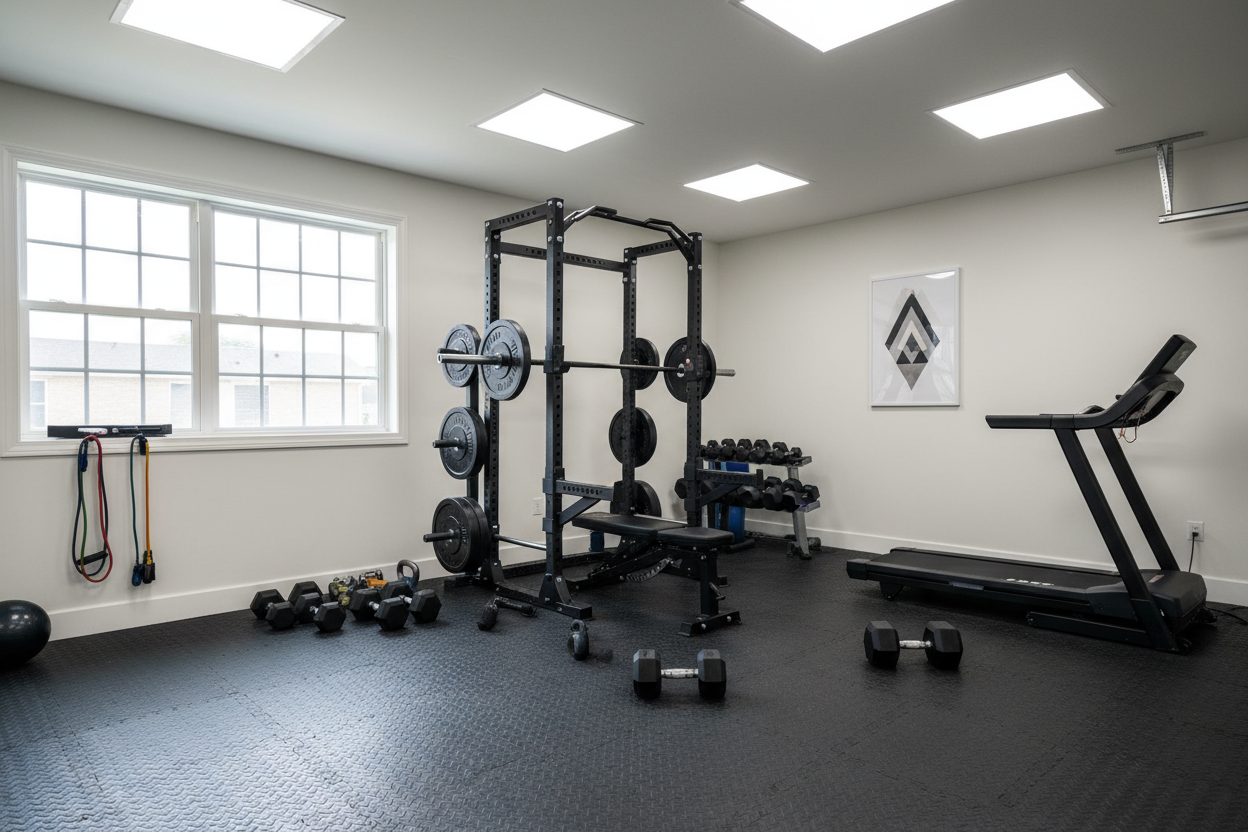
I eventually upgraded to the best large exercise mat I could find to provide some much-needed shock absorption. When you’re at the bottom of a heavy rep, you need a surface that doesn't compress unevenly. If you’re working in a tight space, look for extra wide exercise mats that allow you to walk out your squat without stepping off the edge onto bare concrete. It sounds like a small detail, but when you’re bulking, every bit of joint protection matters.
What to Eat When You Feel Like Garbage Post-Workout
We’ve all been there. You finish a brutal session using your leg exercise equipment for home and the last thing you want to look at is a steak. The CNS fatigue is real, and it can kill your appetite for hours. However, missing that window is the fastest way to stall your progress when following the best diet gaining muscle mass.
In these moments, I lean heavily on liquid calories. A high-quality whey isolate mixed with highly branched cyclic dextrin or even just a blended banana provides the insulin spike you need without making you want to lose your lunch. Keep it simple. Once your nervous system settles down a few hours later, then you can go for the whole food meal. The goal is to keep the nutrients flowing, even when your stomach is protesting.
My Personal Lesson in Mass Gaining
Three years ago, I thought 'bulking' meant eating everything in sight. I was hitting 4,500 calories a day, every day. I got strong, sure, but I also got a gut that made my belt uncomfortable and my cardio non-existent. The biggest mistake I made was not respecting the difference between a 'chest day' and a 'leg day.' Once I started cutting my calories by 20% on arm and rest days and piling them onto my squat days, my body composition completely shifted. I stayed leaner while my leg drive actually improved. Nutrition is a tool, not a chore—use it where it's needed most.
FAQ
Do I really need more calories on leg day?
Yes. The sheer volume of muscle tissue being worked and the hormonal response triggered by heavy compound movements require significantly more energy for repair than a smaller muscle group like shoulders or biceps.
What are the best carbs for building muscle?
Stick to easily digestible options like white rice, cream of rice, or potatoes. You want fuel that won't sit heavy in your gut during a workout but will replenish your glycogen quickly afterward.
How much protein do I actually need?
The old '1 gram per pound of bodyweight' is a solid baseline. During a mass-gaining phase, you don't actually need to go much higher than that, as the extra carbohydrates will provide a protein-sparing effect.