Why My Home Weight Training Equipment Beats Any Commercial Gym
I remember the exact Tuesday I quit my big-box commercial gym. I was standing behind a guy doing bicep curls in the only functional power rack while three other people hovered nearby like vultures. My workout, which should have taken 45 minutes, dragged into a two-hour ordeal of frustration and compromise. That was the day I realized that owning my own home weight training equipment wasn't just about convenience—it was about reclaiming my progress.
Quick Takeaways
- Eliminating wait times means higher training density and better hypertrophy.
- A minimalist setup forces you to master the 'Big Four' lifts that actually build muscle.
- High-quality flooring is the most underrated safety feature in any garage gym.
- Free weights offer superior stabilizer recruitment compared to fixed-path machines.
The Commercial Gym Illusion (Why More Isn't Better)
Commercial gyms are designed to sell memberships, not to build athletes. They lure you in with 40 different selectorized machines that look like they belong on a spaceship. But here is the truth: having access to every variation of a chest press actually hurts your focus. When you have too many options, you tend to jump from machine to machine without ever mastering the mechanics of a single movement.
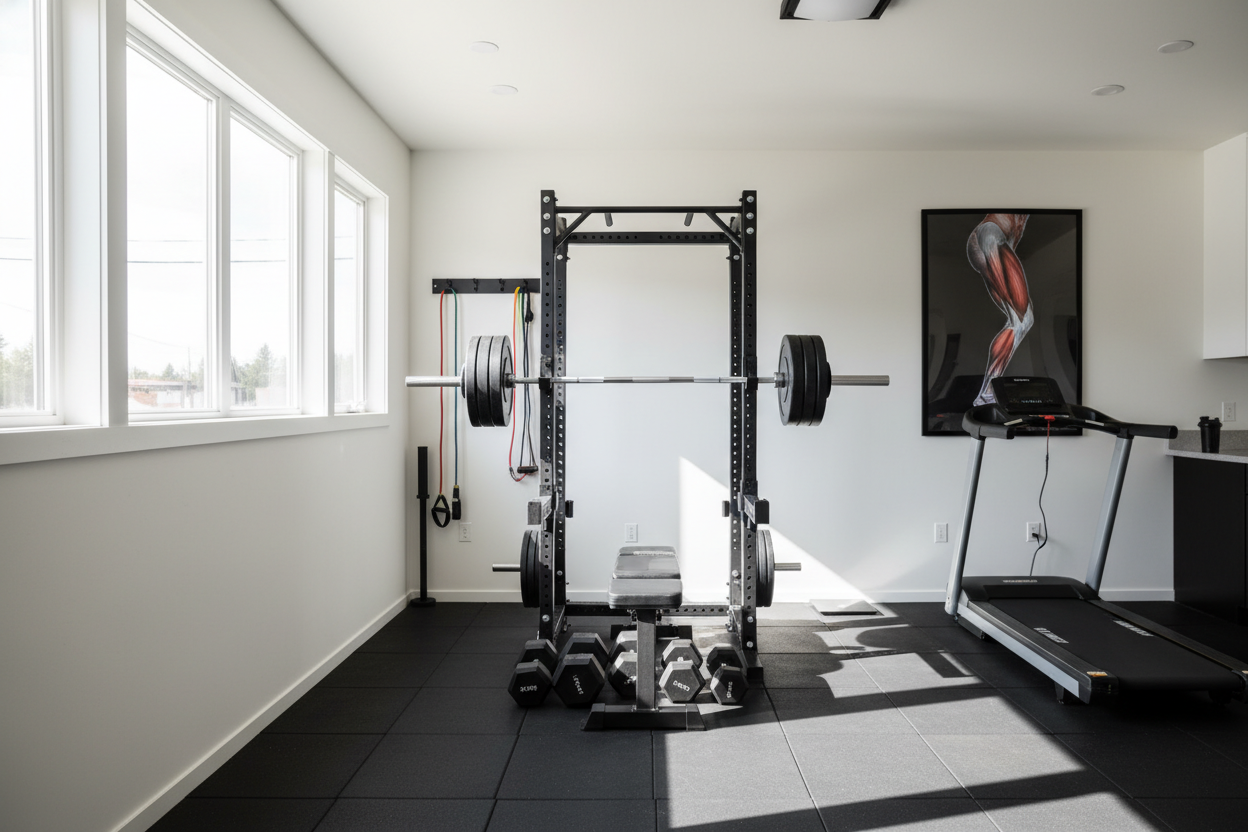
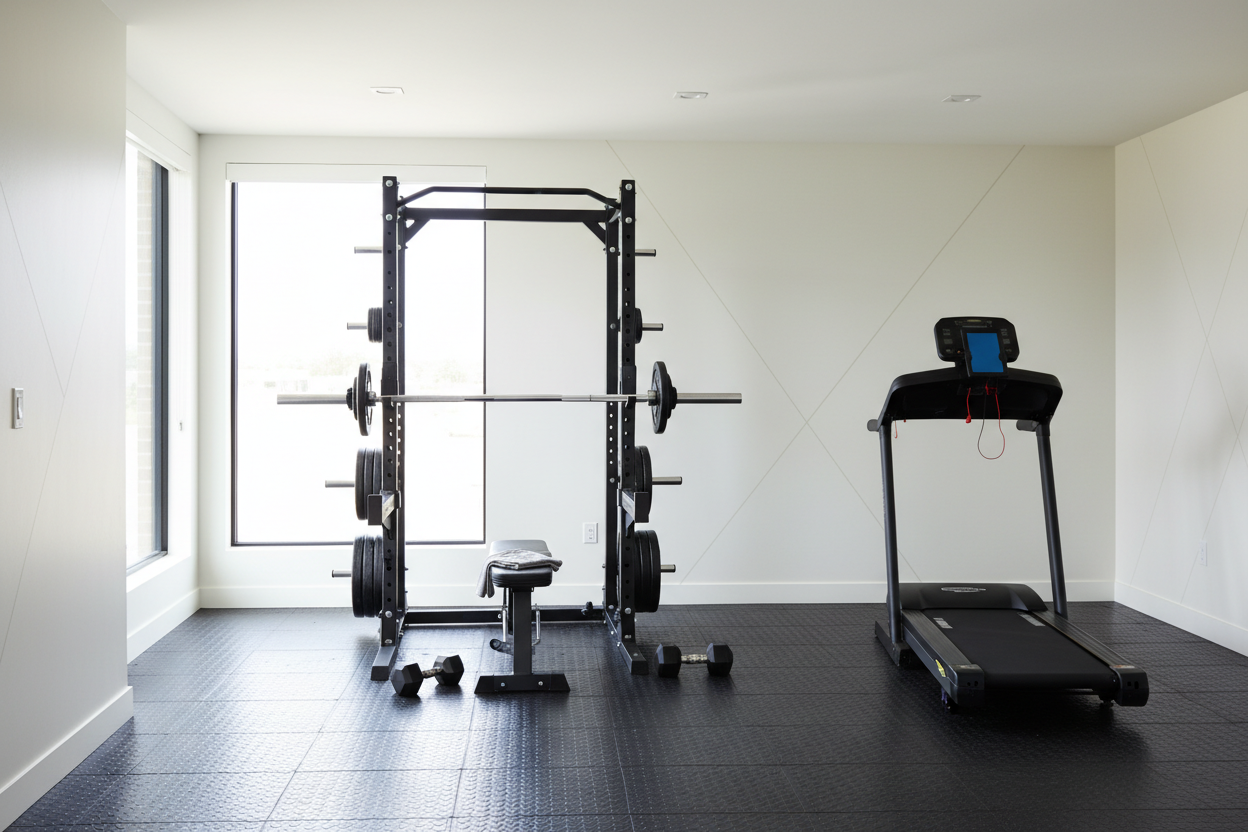
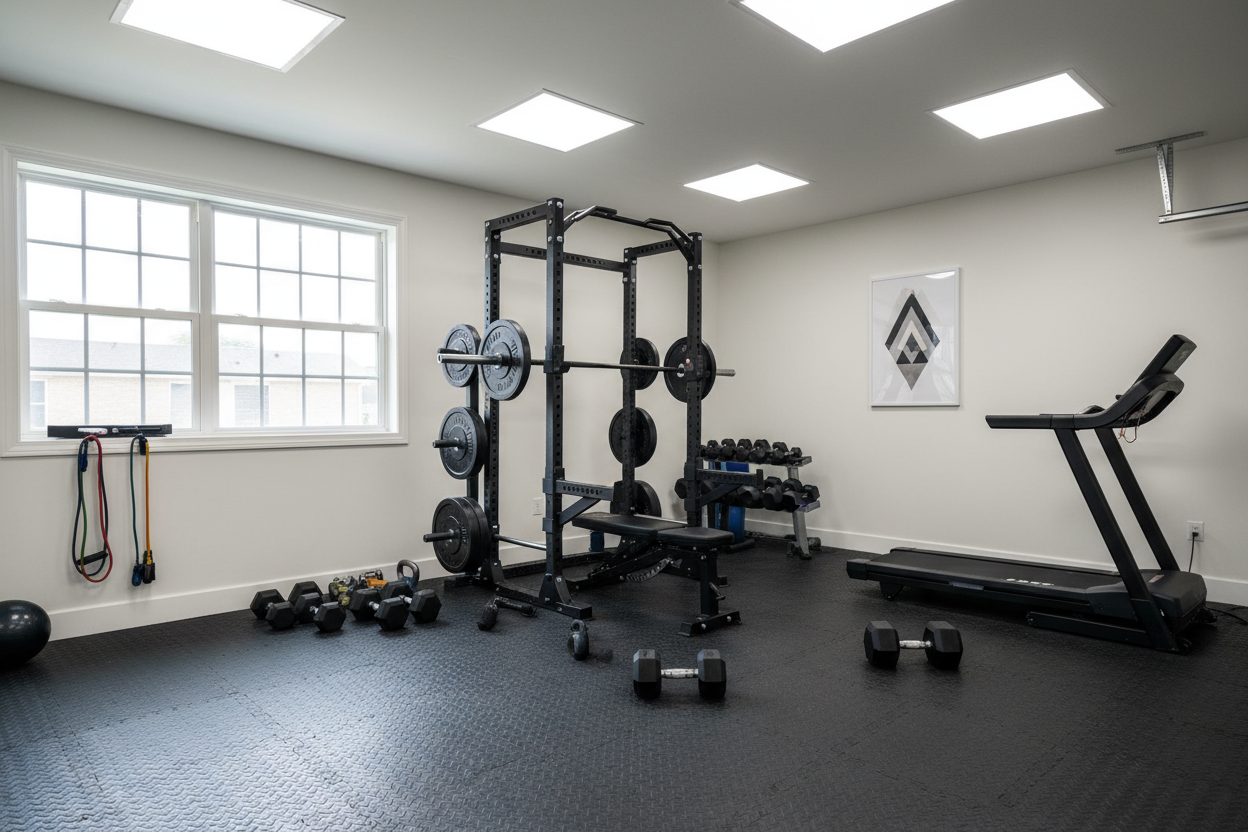
By shifting your mindset toward choosing weight training equipment that actually works, you simplify your life. In my garage, I have a rack, a bar, and plates. There is no 'analysis paralysis.' I know exactly what I need to do: squat, bench, and pull. This forced simplicity drives better results because you're spending your energy on high-output movements rather than wandering around looking for an open cable station.
Furthermore, at home weight training equipment allows you to control the environment. You choose the music, you choose the chalk usage, and you don't have to worry about the person before you leaving a puddle of sweat on the bench. It is a focused, high-intensity environment where the only variable is your effort.
The Core Elements of a Serious Garage Setup
If you are building a space from scratch, you have to be disciplined. Most people make the mistake of buying 'accessory' gear before they have the foundation. You do not need a fancy adjustable pulley system if you do not have a place to safely squat 300 pounds. You are building a temple of iron, so start with the structural essentials that won't fail when the weights get heavy.
Start With the Floor (Seriously, Don't Skip This)
Most garage floors are sloped for drainage and made of concrete that will eventually crack under the stress of dropped deadlifts. I have seen guys spend $1,000 on a barbell only to ruin it by dropping it on a hard surface. Beyond protecting the gear, a solid floor protects your joints. Concrete has zero give; if you are doing high-rep cleans or heavy squats, your knees will feel every vibration.
I always recommend starting with a heavy-duty 6x8ft exercise mat. This provides a stable, non-slip base that is wide enough for a full power rack and a deadlift platform. It dampens the noise—which your neighbors will appreciate—and ensures that your rack stays pinned to the ground during aggressive re-racks. If your floor isn't level and cushioned, your lifts will never feel truly locked in.
Finding the Right Rack and Bench Combo
The rack is the heart of your gym. Don't fall for the wobbly $150 budget traps found on big-box retail sites. You want a rack with at least 11-gauge steel and a footprint that fits your space. If you have low ceilings, look for a 'shorty' rack. If you have the height, go for a full power cage with integrated pull-up bars.
Pair that rack with a bench that doesn't wobble. There is nothing more terrifying than feeling a bench shift under your shoulder blades when you are mid-set with a heavy pair of dumbbells. Look for a bench with a weight capacity of at least 800 pounds. Even if you aren't benching that much, that rating tells you the frame is built to handle the lateral forces of a real workout.
Why Free Weights Crush Selectorized Machines
There is a reason the strongest people in the world prioritize barbells. Machines follow a fixed, artificial path. They take the stabilization work out of the equation. When you use best at-home weight training equipment like a 7-foot Olympic bar, your body has to work ten times harder to keep the weight balanced. That 'micro-work' from your core and rotator cuffs is what builds a resilient, athletic physique.
Home resistance training equipment like dumbbells and kettlebells also allows for unilateral work. You can't hide a strength imbalance on a barbell, and you definitely can't hide it with dumbbells. If your left arm is weaker than your right, the dumbbells will let you know immediately. Machines often mask these issues, leading to injuries down the road. Stick to the iron; it doesn't lie to you.
How to Save Cash Without Buying Dangerous Junk
Building a home gym is an investment, but you don't have to go bankrupt. My best advice is to buy the 'touchpoints' new—the barbell and the rack—and hunt for the 'dumb iron' used. Iron plates don't expire. A 45-pound plate from 1985 weighs the same as one made last week. You can often find incredible home gym equipment deals if you keep an eye on seasonal sales or local marketplaces.
Avoid buying anything that uses plastic in the load-bearing joints. I once bought a cheap adjustable bench that used plastic spacers in the hinge. Within three months, the bench started to tilt to the left. It was a safety hazard, and I ended up spending more money to replace it than if I had just bought a quality steel bench the first time. Buy once, cry once.
Personal Experience: My $100 Mistake
When I first started my home gym, I bought a 'complete set' from a local sporting goods store. The bar was thin, the knurling felt like smooth plastic, and the plates were filled with sand instead of being solid iron. During my first heavy deadlift session, the bar actually kept a permanent bend in it. I learned the hard way that when it comes to lifting, 'cheap' usually means 'disposable.' I sold that set for pennies and invested in a real 20kg bushing bar. The difference in my grip and confidence was night and day. Don't settle for toys when you are trying to move real weight.
FAQ
Is a 6x8 space really enough for a full workout?
Absolutely. A standard power rack has a footprint of about 4x4 feet. With a 6x8 mat, you have enough room for the rack, a bench, and a small area to the side for dumbbell work or stretching. It is the 'sweet spot' for most garage setups.
How do I stop my equipment from rusting in a garage?
Maintenance is key. Wipe down your barbell with 3-in-1 oil once a month to prevent sweat from eating the finish. If you live in a humid climate, a small dehumidifier can save your rack from oxidation.
Can I really build as much muscle at home as in a commercial gym?
You can build more. Without the distractions of social hour and the limitations of machine-only training, your intensity naturally increases. If you have a rack, a bar, and enough plates to challenge yourself, there is no physiological limit to what you can achieve.