Stop Logging Lifts on Your Phone (Use This Workout Sheets PDF)
I have stood in that exact spot: halfway through a heavy squat session, resting between sets, and reaching for my phone to log the weight. Three minutes later, I am somehow deep in a thread about home gym cable ratios or watching a reel of a guy failing a PR. My heart rate has dropped, my focus is shot, and my nervous system has basically gone into power-saver mode. Switching to a workout sheets pdf was the only way I could get my head back in the game.
The reality is that your smartphone is a distraction machine disguised as a utility. Apps are great for calculating percentages or filming form, but they suck for staying present. When you have a physical piece of paper and a pencil, you are a lifter. When you have a phone, you are a consumer. Ditching the digital noise for an analog tracker is one of the most underrated ways to actually hit your numbers.
Quick Takeaways
- Eliminate Distraction: Paper does not send you notifications or tempt you with social media.
- Better Feedback: Writing notes on form cues and RPE is faster and more intuitive on paper.
- Durability: A clipboard survives a dropped plate; your smartphone screen does not.
- Progressive Overload: Having your previous week’s numbers physically staring at you forces accountability.
Why Your Phone Is the Worst Piece of Gym Equipment
Rest intervals are the most dangerous time for your focus. You open your logging app, and there it is — a text from your boss or a notification that someone liked your photo. Suddenly, that 90-second rest window for a heavy set of five turns into a 5-minute scrolling session. By the time you get under the bar again, you are cold. Your nervous system has lost its edge, and that next set feels twice as heavy as it should.
Logging on paper keeps you in the zone. You write down your reps, you look at the clock, and you visualize the next set. There is a psychological weight to physically crossing off a completed set that a digital checkbox just cannot replicate. Plus, you never have to worry about your battery dying or the app crashing right as you hit a lifetime PR.
What Actually Belongs on a Workout Worksheet PDF
Most fitness apps are bloated with features you do not need. A good workout worksheet pdf should be stripped down to the essentials. You do not need a chart for your neck circumference or a place to log your water intake during the session. You need columns that track the work that builds muscle.
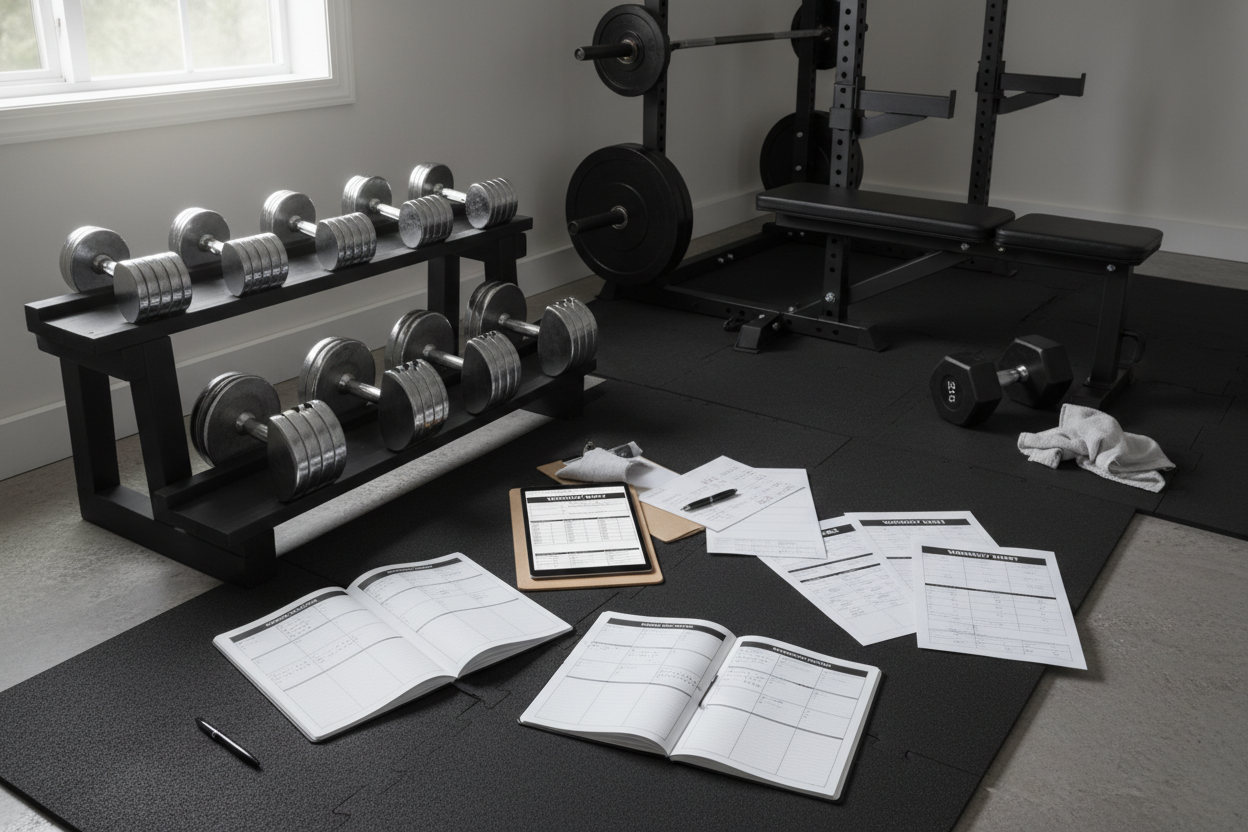
My ideal template includes space for the exercise name, the target sets and reps, the actual weight moved, and a column for RPE (Rate of Perceived Exertion). The most important part, however, is the 'Notes' section. This is where you write down things like 'elbows flared on set 3' or 'rack height was one hole too high.' These are the cues that actually improve your lifting over time, and they are usually buried under three menus in a standard app.
Plugging Your Split Into a Blank Paper Template
The beauty of a blank template is that it adapts to whatever program you are currently running. If you are moving away from random 'bro splits' and toward something structured, you can easily transcribe your routine onto the sheet. I usually spend Sunday night writing out my exercises for the week so I can just grab the clipboard and go when I hit the garage.
If you are looking for a proven structure to print out, The Ultimate Upper Lower Split Workout Plan Pdf For Hypertrophy is a perfect candidate for a grid format. It gives you enough volume to grow without being so complex that you need a calculator to find your working weight. Similarly, if you are focusing on specific weak points, you can use Chest Workout Pdf Plans For All Fitness Levels to fill in your accessory work columns. The goal is to spend your time lifting, not thinking about what comes next.
Surviving Sweat, Chalk, and the Home Gym Floor
Lifting is a dirty business. If you are training hard, you are dealing with sweat, magnesium carbonate, and the occasional spilled shaker bottle. Paper is surprisingly resilient if you treat it right. I highly recommend a cheap mini clipboard. It gives you a hard writing surface and keeps your sheets from getting crumpled in your gym bag.
In my home gym, I make it a point to keep my 'office' area separate from the lifting zone. I keep my clipboard and pen on a dedicated spot on my 6X8Ft Exercise Mat Yoga Mat Gym Flooring For Home Workout. Having a large, stable floor mat means I can set my gear down without it getting kicked around or lost under a pile of plates. It keeps the paper clean and ensures I actually record every set immediately after I finish it.
Routines Worth Putting Pen to Paper For
Do not waste your time tracking 'junk volume.' If you are going to take the time to use a physical log, make sure the program you are following is worth the ink. You want routines that prioritize compound movements and clear progression. The more 'fluff' a program has, the more annoying it is to track on paper.
Check out the Workout Hub for a collection of routines that actually make sense in an analog format. Whether you are into powerlifting, bodybuilding, or just general strength, find a plan that challenges you and print it out. There is something incredibly satisfying about looking back at a binder full of completed sheets six months from now and seeing exactly how much stronger you have become.
Personal Experience: The Day I Smashed My Screen
I used to be a die-hard app user. I loved the graphs and the estimated 1RM calculations. That changed when I was doing heavy dumbbell rows. I had my phone on the floor next to me to 'easily' log my sets. I finished a set to failure, dropped the 100-lb dumbbell, and it took a weird bounce right onto my iPhone screen. It was an expensive lesson in why glass and iron do not mix. Now, I use a $2 clipboard and a pencil. If I drop a weight on my paper log, I just get a new piece of paper. It is simpler, cheaper, and I am significantly more focused during my sessions.
FAQ
Is it harder to track long-term progress on paper?
Not at all. I keep my sheets in a simple three-ring binder. I can flip back three months and see exactly what I was benching in seconds. Apps often hide your history behind paywalls or confusing interfaces.
What if I don't know my percentages?
Print out a small 1RM percentage chart and tape it to the back of your clipboard. It is faster than opening a calculator app and keeps your phone out of your hand.
Should I use a pen or a pencil?
Pencil, 100%. Weights change, you might miscount a rep, or you might decide to swap an exercise mid-workout. Being able to erase keeps your log clean and readable.