Ditch the Curls: Best Weight Lifting Exercises for Beginners
I remember my first day in a commercial gym. I spent forty-five minutes doing concentration curls and tricep extensions because I thought that is how you got big. Total waste of time. If you want to actually build a physique that looks like it belongs in a gym, you need the best weight lifting exercises for beginners.
Stop scrolling Instagram for 'secret' variations. You do not need a cable machine set to a specific height to grow. You need a barbell, some heavy things to pick up, and a plan that focuses on the big movements.
Quick Takeaways
- Focus on compound movements that use multiple joints at once.
- Master the Goblet Squat before putting a barbell on your back.
- Consistency is more important than having a complex 6-day split.
- Safety gear like a rack is non-negotiable for solo home training.
Why Isolation Exercises Are a Trap for New Lifters
Isolation moves like bicep curls, calf raises, and pec decks are the sprinkles on a cake. But if you are a novice, you haven't even baked the cake yet. You only have a limited amount of 'recovery debt' you can spend each week. Spend it on the big movements.
Compound exercises recruit the most muscle mass and trigger the biggest hormonal response. Doing ten sets of curls might give you a pump for an hour, but doing five sets of heavy rows will actually make your back and arms grow for the long haul. Curls are fun, but they are a secondary priority.
The Core Four: The Real Best Weight Training Exercises for Beginners
There are hundreds of exercises, but they all boil down to four movement patterns: the squat, the hinge, the push, and the pull. These are the best weight training exercises for beginners because they translate directly to real-world strength.
If you can master a heavy hinge, you won't throw your back out moving a couch. If you can master a push, you’ll build a chest and shoulders that actually fill out a t-shirt. These movements are the foundation of every elite strength program on the planet.
The Goblet Squat (Before You Touch a Barbell)
Most beginners have terrible squat mobility. If I put a 45-lb bar on your back today, you would probably lean forward like a folding lawn chair. The Goblet Squat fixes this. By holding a weight at your chest, your center of gravity shifts, forcing your torso to stay upright.
It is the safest way to learn how to open your hips and keep your heels glued to the floor. Do not worry about the weight yet; worry about getting your thighs parallel to the ground. Once you can do 20 reps with a 50-lb dumbbell, you are ready for the rack.
The Bench Press or Floor Press
The bench press is the king of upper body builders, but it can be intimidating. If you are training alone in a garage, safety is your biggest hurdle. I have seen too many guys almost get pinned by a 135-lb bar because they didn't have safeties set up.
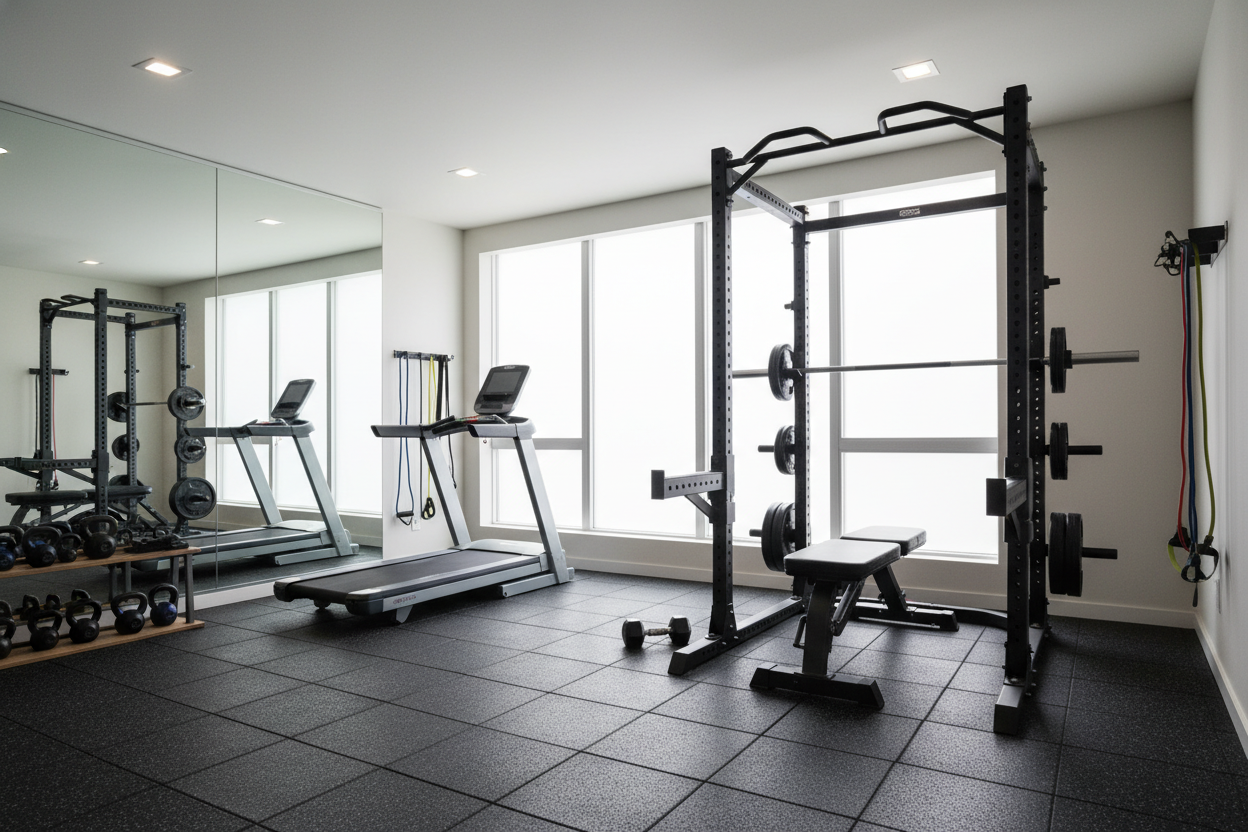
Investing in a power rack weight bench package is not just about the workout; it is about not dying in your basement. A solid rack with safety spotter arms lets you push to failure without fear. If you don't have a rack yet, stick to the Floor Press—it limits your range of motion so the bar can't crush your chest.
Putting It Together: The Best Weight Lifting Workout for Beginners
You do not need a different workout for every day of the week. An alternating A/B split is the best weight lifting workout for beginners. Workout A: Squat, Overhead Press, Rows. Workout B: Hinge, Bench Press, Pull-ups. Rotate these three times a week.
The biggest mistake I see is people changing their routine every fourteen days because they saw a new 'hack' on TikTok. You need to stop overthinking weight lifting training programs and just stick to the basics for at least six months. Simple works.
Do You Need Guided Equipment to Start?
Free weights are superior for building stability, but they have a steep learning curve. If you have a cranky lower back or old sports injuries, weight lifting machines can be a godsend. They allow you to push your muscles to failure without worrying about your form breaking down and causing an injury.
Machines like a leg press or a chest press are great supplements. Use them to add volume after you have finished your main compound lifts for the day. They are tools, not crutches.
What Gear Actually Matters for These Lifts?
You don't need a $3,000 treadmill or a vibrating massage platform. You need a barbell that won't bend, some iron plates, and a flat bench. When choosing the best strength and weight training equipment, prioritize the things you touch: the knurling on the bar and the stability of the bench.
Buy once, cry once. A cheap bench that wobbles when you have 150 lbs over your face is a recipe for a bad time. Get the basics right, and your home gym will last longer than your car.
My Personal Experience
When I started, I bought a cheap 'all-in-one' home gym from a big-box store. It had 15 different attachments and felt like it was made of soda cans. It shook every time I used it. I eventually sold it for pennies and bought a real power rack and a barbell. My strength exploded because I could finally focus on the lift instead of wondering if the equipment was going to snap.
FAQ
Do I need to lift every day?
No. For a beginner, three days a week is the sweet spot. Your muscles grow while you rest, not while you are lifting. If you lift every day, you'll just burn out and quit by week four.
What if I can't do a pull-up?
Start with lat pulldowns or 'negatives' where you jump to the top and lower yourself slowly. Everyone starts somewhere; don't let ego stop you from using an assisted machine or bands.
Should I use a weight belt?
Not yet. Learn to breathe and brace your core naturally first. A belt is a tool to push past plateaus, not a replacement for a weak midsection. Build the foundation first.