Why I Program This Full Body Weight Training Workout for Women
I remember scrolling through social media and seeing a 'leg day' that involved twelve different variations of a glute kickback using a cable machine. My first thought? That is a lot of sweat for very little return. If you are training in a garage or a spare bedroom, you do not have time for fluff; you need a full body weight training workout for women that actually moves the needle.
Quick Takeaways
- Focus on 4 foundational movement patterns: Squat, Hinge, Push, Pull.
- Heavy weight and mechanical tension beat high-rep 'toning' circuits every time.
- You only need about 60 minutes, three times a week, to see significant strength gains.
- Protect your home gym floor with high-density mats before you start dropping iron.
Why Most Female Routines Are Just Complicated Cardio
The fitness industry loves to sell women on 15-exercise circuits with 2-lb dumbbells. They call it 'sculpting,' but it is really just complicated cardio. If you are breathing hard but your muscles are not actually struggling to finish a set, you are not building strength. You are just getting tired.
A true full body strength training workout for women should be built around mechanical tension. That means lifting weights heavy enough that the last two reps of a set are a genuine challenge. When you prioritize building muscle, you are actually executing the most effective weight training workout for fat loss possible. Muscle is metabolically expensive; it requires more energy to maintain than fat, turning your body into a more efficient machine even when you are off the clock.
The 4 Non-Negotiable Movements
You do not need a 45-piece cable jungle. To hit every major muscle group, you just need to master four patterns. First, a squat variation (goblet squats or back squats). Second, a hip hinge (deadlifts or RDLs) to hammer the posterior chain. Third, a horizontal push like a bench press or floor press. Finally, a vertical pull like a pull-up or lat pull-down.
These movements trigger a systemic response that isolation moves like bicep curls just can't match. As the weights get heavier—and they should—you might find your grip or your back needs a little support. That is when I recommend picking up some essential strength training accessories like lifting straps or a 10mm lever belt. There is no shame in using gear to help you move more weight safely.
Setting Up Your Floor Space Properly
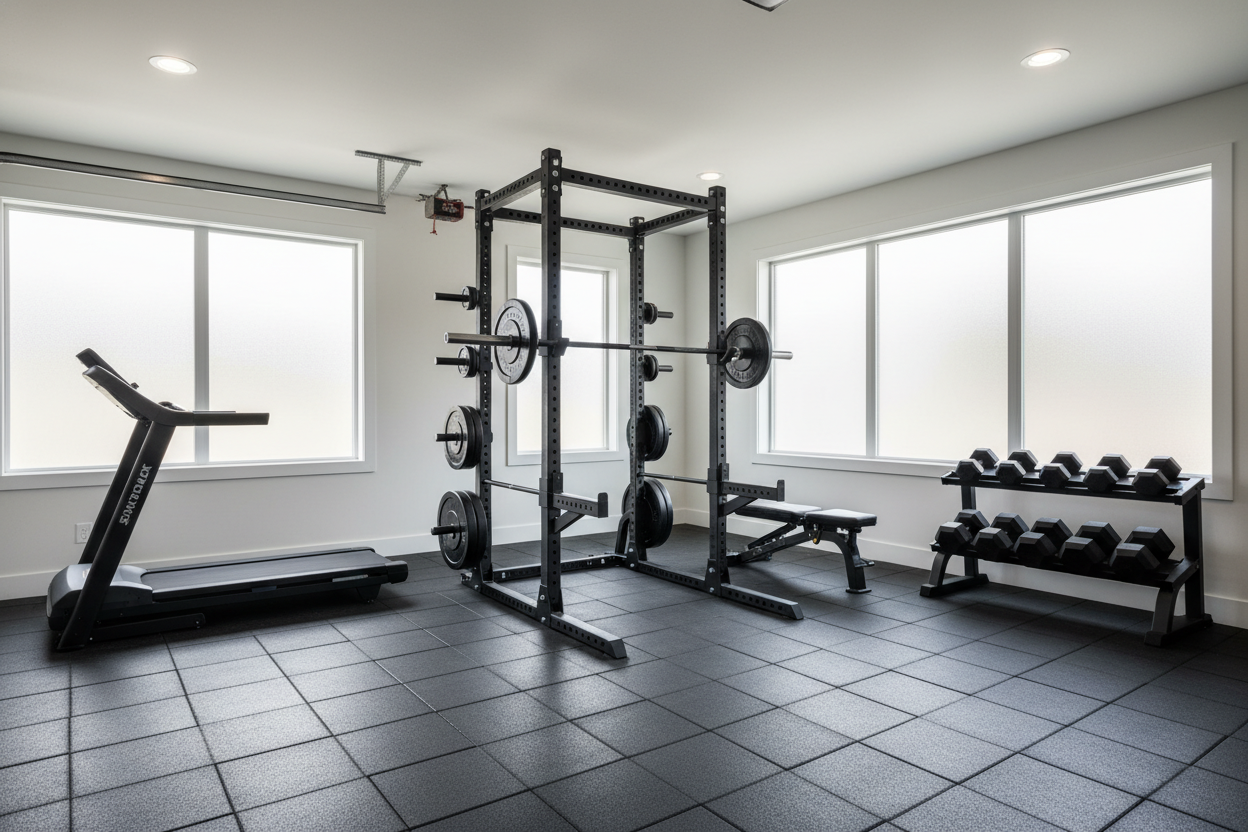
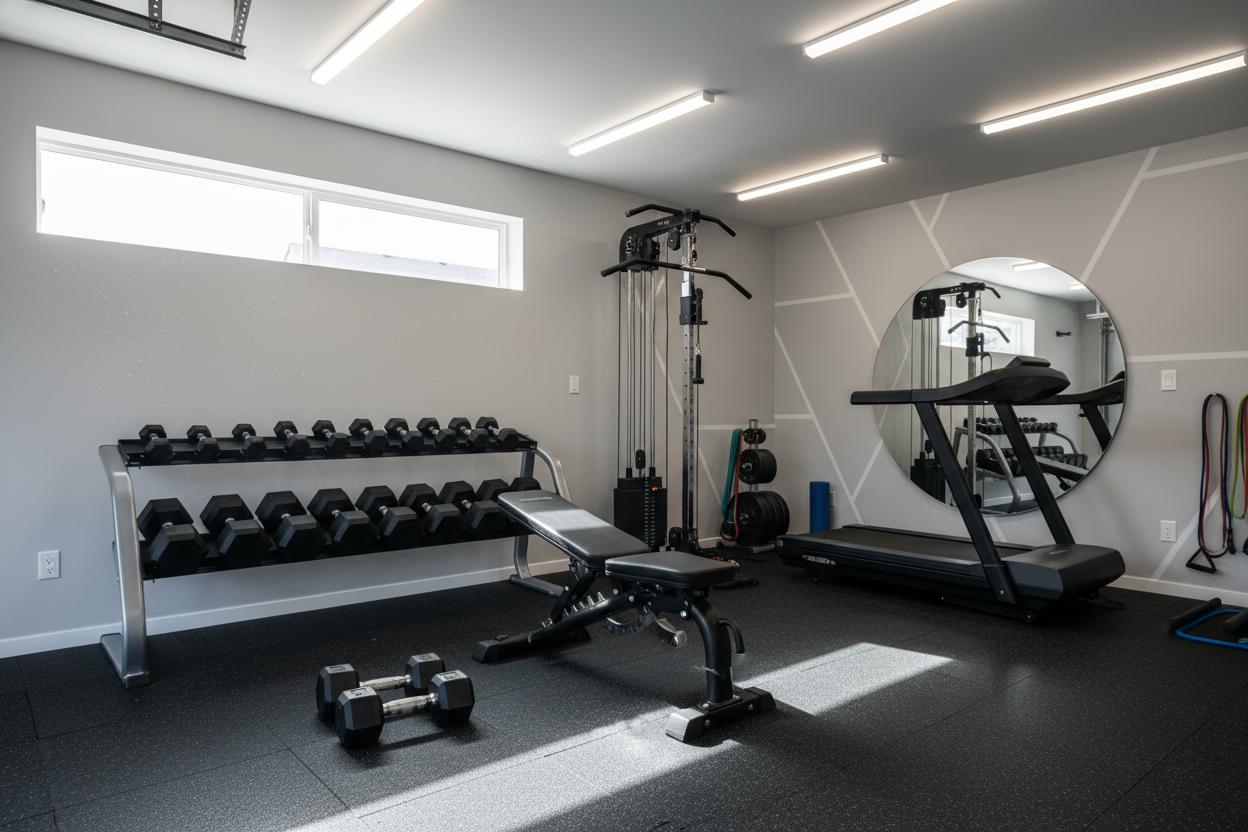
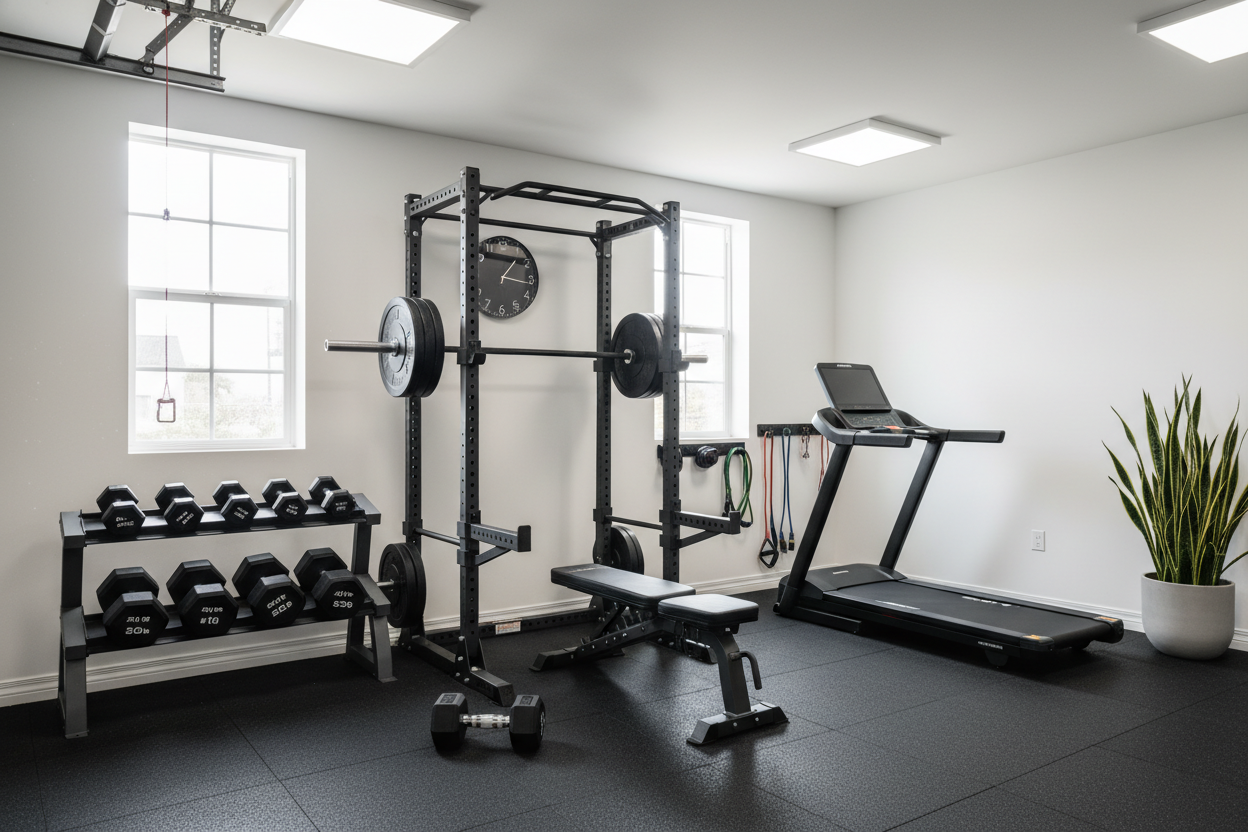
I have seen too many people start a heavy home routine only to crack a floor tile or dent their hardwood. If you are doing deadlifts or heavy goblet squats, you cannot just rely on a thin yoga mat. You need a dedicated barrier between your equipment and your foundation.
I personally use a high-density 3/4-inch rubber setup, but for most home users, a protective exercise mat for your floor is the minimum requirement. It dampens the noise—which your neighbors will appreciate—and keeps your dumbbells from sliding around when your hands get sweaty. Real specs matter here: look for something with a non-slip texture that won't compress under a 50-lb load.
How to Progress Without Buying the Whole Gym
The biggest mistake people make is staying with the same weights for six months. To get stronger, you must apply progressive overload. But what if you only have a limited set of dumbbells? You change the variables.
Try manipulating your tempo. Instead of just dropping the weight, take three full seconds to lower it. This increases 'time under tension' and makes a 20-lb weight feel like 40-lb. You can also decrease your rest periods or add a pause at the bottom of your squats. You do not always need more plates; you just need more intensity.
Where Does Conditioning Fit In?
I get asked about cardio constantly. 'Will lifting make me bulky? Should I run five miles after my squats?' The answer is usually no. If you spend all your energy on a treadmill, you will have nothing left for the heavy lifting that actually changes your body composition.
If you love the feeling of a high heart rate, save it for a non-lifting day. You can perform a dedicated high-intensity HIIT strength workout once or twice a week to build work capacity. Just don't let it cannibalize your recovery. Your muscles grow while you rest, not while you are pounding the pavement.
My Personal Experience
Years ago, I bought one of those 'as seen on TV' glute trainers. It was a plastic piece of junk that folded under my bed. I used it for three weeks, saw zero results, and almost gave up. It wasn't until I cleared out a 6x8 space in my garage and bought a real barbell that things changed. I realized that simple, heavy movements beat fancy gadgets every single time. My only regret? Not buying a proper floor mat sooner—I still have a divot in my garage floor from a dropped 45-lb plate.
FAQ
How many days a week should I do this?
Three days a week is plenty. Give yourself at least one day of rest between sessions so your central nervous system can recover from the heavy loads.
Do I need a squat rack?
A rack is safer for heavy back squats, but you can get a world-class workout using just dumbbells or kettlebells for goblet squats and lunges.
How long should I rest between sets?
For strength, aim for 90 seconds to 2 minutes. If you are ready to go in 30 seconds, the weight probably isn't heavy enough.