Full-Body Weight Training Workout for Fat Loss: The Truth
If you have hit a wall in your fitness journey, you are not alone. Many home gym owners find themselves trapped in an endless cycle of steady-state cardio and restrictive diets, watching their progress stall while their motivation plummets. The secret to breaking this plateau isn't spending more time on the treadmill—it is changing how you challenge your muscles.
Implementing a properly structured full-body weight training workout for fat loss is the single most effective way to transform your physique. By engaging multiple large muscle groups in a single session, you elevate your heart rate, build lean muscle, and create a metabolic afterburn that lasts long after you have racked the weights. In this guide, we will break down exactly how to set up your home gym and structure your routine for maximum results.
Key Takeaways
- Metabolic Boost: Compound lifts elevate your resting metabolic rate for up to 48 hours post-workout.
- Space Efficiency: You do not need a commercial gym; a basic rack, barbell, or adjustable dumbbells are plenty.
- Frequency Matters: Hitting every muscle group 3 days a week yields better fat loss results than traditional isolation splits.
- Progressive Overload: Adding weight or reps consistently is the true driver of long-term body composition changes.
Building the Foundation
Why Full Body Training Wins
When comparing training styles, full body weight training for weight loss consistently outperforms isolation routines for everyday athletes. A full body workout routine for weight loss forces your body to recruit more muscle fibers at once. Think about a heavy barbell squat compared to a seated leg extension. The squat demands core stabilization, upper back tension, and immense leg drive, burning significantly more calories per rep.
Equipping Your Space
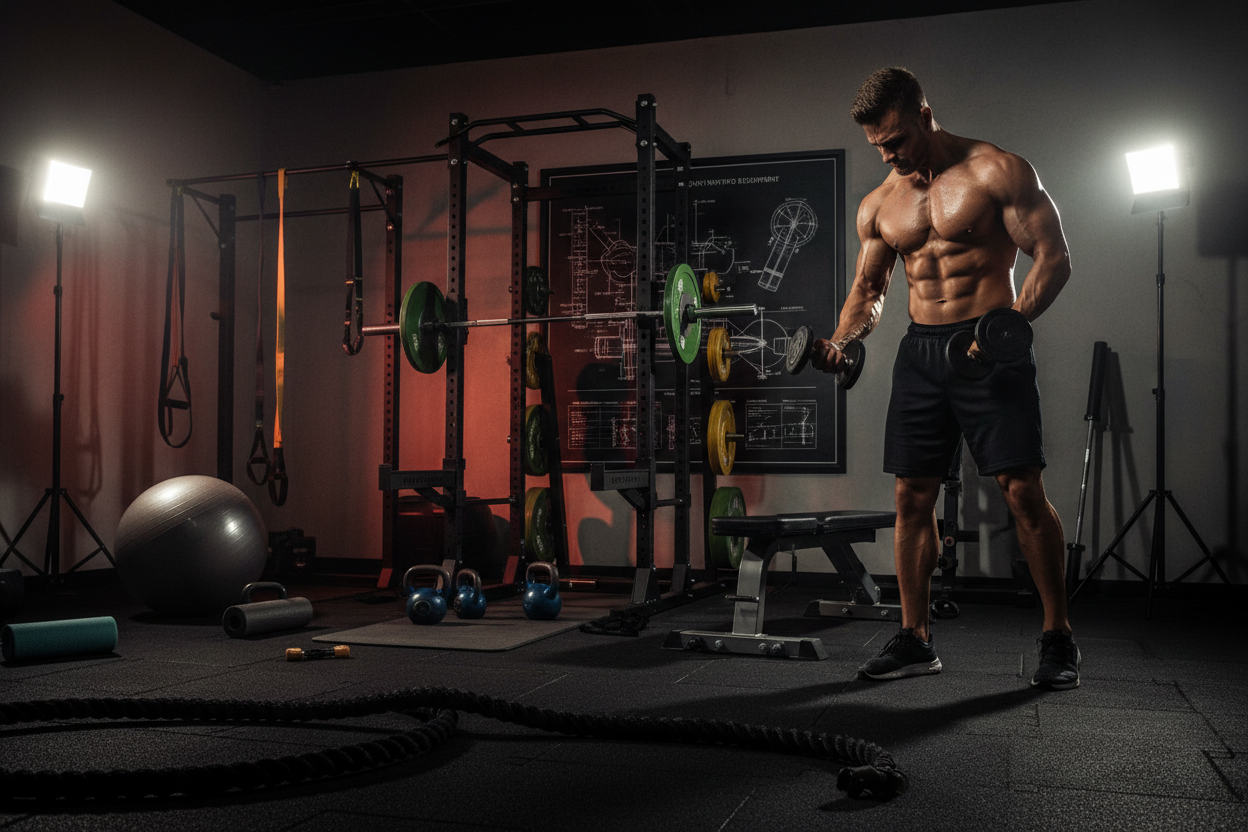
You do not need 500 square feet of commercial machines to execute this. For most North American garage or basement gyms, a sturdy power rack, a multi-grip barbell, and a set of bumper plates are the holy grail. If you are in a tight apartment, a high-quality pair of adjustable dumbbells (ranging from 5 to 80 lbs) and a foldable flat bench will allow you to perform 90% of the necessary movements while saving precious floor space.
The Programming Angle
Structuring Your Routine
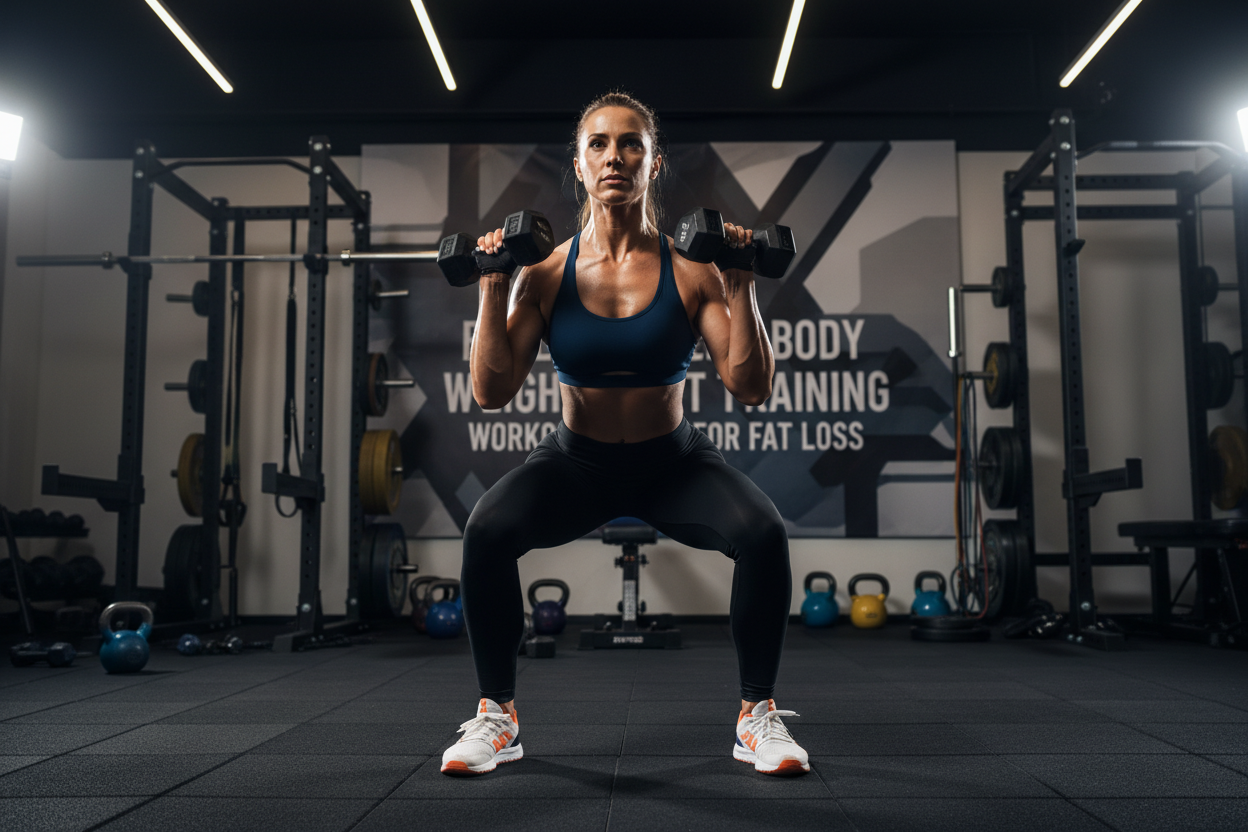
An effective full body weight training for fat loss protocol revolves around movement patterns rather than specific muscles. A standard session should include a squat variation, a hip hinge (like a deadlift or kettlebell swing), a horizontal push (bench press), a vertical pull (pull-ups or lat pulldowns), and a loaded carry. Keep rest periods strictly between 60 to 90 seconds to maintain an elevated heart rate while still allowing enough recovery to push heavy loads.
From Our Gym: Honest Take
When I first transitioned from a traditional 5-day bodybuilding split to a 3-day full-body routine in my 120-square-foot garage gym, I was skeptical. However, the efficiency was undeniable. I swapped my bulky isolation machines for a simple half-rack and an Olympic bar. One detail they rarely tell you: grip fatigue becomes a real issue when you are deadlifting, rowing, and doing pull-ups in the same 45-minute window. I had to invest in a solid pair of lifting straps and apply liquid chalk liberally. The knurling on my daily driver barbell is noticeably aggressive, and my chalked grip holds solid through heavy sets, but by the end of the workout, my forearms are torched. The trade-off? I dropped 14 pounds of stubborn fat in three months without adding a single minute of traditional cardio.
Frequently Asked Questions
How often should I perform this routine?
For optimal recovery and metabolic impact, aim for 3 non-consecutive days per week (e.g., Monday, Wednesday, Friday). This allows your central nervous system to recover while keeping your metabolism elevated.
Do I need heavy barbells to see results?
Not necessarily. While barbells are excellent for progressive overload, adjustable dumbbells or heavy kettlebells are perfectly viable for a home gym with limited square footage. The key is pushing close to muscular failure.
Will this make me bulky while trying to lose weight?
No. Bulking requires a significant caloric surplus. When eating in a slight caloric deficit, lifting heavy weights signals your body to retain lean muscle mass while burning stored body fat for energy.