Why I Never Buy Heavy Iron During an Equipment Exercise Sale
I spent three hours last night scrolling through a massive equipment exercise sale, and honestly, it made me angry. I’ve been building my home gym for a decade, and I’ve learned the hard way that a deep discount usually means a deep cut in quality. You see a flashy banner and think you’re getting a professional-grade rack for pennies, but often you’re just buying a fancy-looking clothes hanger. I’ve seen guys get excited over a $200 rack only to realize the uprights are basically soda cans once they try to re-rack a heavy set of squats.
Quick Takeaways
- Major sales often feature 'made-for-promo' SKUs with thinner steel.
- Avoid complex machines with pulleys or cables during deep discount events.
- Cast iron plates and simple benches are usually the safest bets.
- Always check the shipping weight; if it's lighter than the standard model, it's a downgrade.
The Dirty Secret Behind 'Doorbuster' Gym Deals
Here is the reality: many big-box fitness brands run fitness gear sales where the products aren't actually their standard inventory. It is a retail trick called 'made-for-outlet.' They take their best-selling power rack, swap the 11-gauge steel (which is about 3mm thick) for 14-gauge steel (about 2mm thick), and use cheaper hardware. On a screen, they look identical. In your garage, one feels like a tank and the other feels like it was made from recycled soda cans.
When you see a massive equipment exercise sale, you have to ask why the price dropped 60%. Steel prices don't fluctuate that much overnight. These brands are manufacturing lower-tier versions specifically for these promotional events. They know most people won't notice the difference until they try to bolt it down or load it past 300 pounds. If the SKU has a weird suffix or the 'regular price' seems inflated, you are likely looking at a downgraded model designed to hit a specific price point.
Why I Pay Full Price for the Heavy Stuff
Complexity is the enemy of cheap. If you are looking at gear with moving parts—pulleys, cables, or pivot points—relying on a weight lifting equipment sale is a recipe for a wobbly, unsafe workout. Cheap cables fray, and cheap pulleys seize up after three months of use. There is nothing worse than being mid-rep and having a cable catch because the manufacturer saved five bucks on a plastic bushing instead of using a sealed bearing.
I’ve learned to save my money and pay full price for high-quality weight lifting machines. When you are dealing with heavy load-bearing requirements, you want the peace of mind that the frame isn't going to twist. A quality piece of gear should last twenty years, not twenty workouts. Paying 20% more upfront is a lot cheaper than replacing a broken machine and paying for a trip to the chiropractor because a cheap bench collapsed under you.
The 3 Things Actually Worth Buying on Discount
Does this mean all fitness equipment on sale is junk? Not at all. You just have to know where the manufacturers can't easily cut corners. Cast iron plates are a great example. A 45-pound plate is a 45-pound hunk of metal. As long as the hole is centered and the weight is within a reasonable tolerance, there isn't much they can do to ruin it. If you find a deal on basic iron, buy as much as your floor can handle.
Simple attachments and basic benches are also safe bets. The Gxmmat adjustable weight bench is a solid example of a straightforward piece of gear that usually maintains its structural integrity even during a promotion. Look for items with fewer than ten moving parts. If it’s just steel, padding, and a few bolts, it’s hard for them to hide a 'downgrade' without it being incredibly obvious. I also keep an eye out for gym flooring and resistance bands during these events, as these are consumable items where the brand name matters less than the bulk price.
What to Do If Your Budget Is Maxed Out
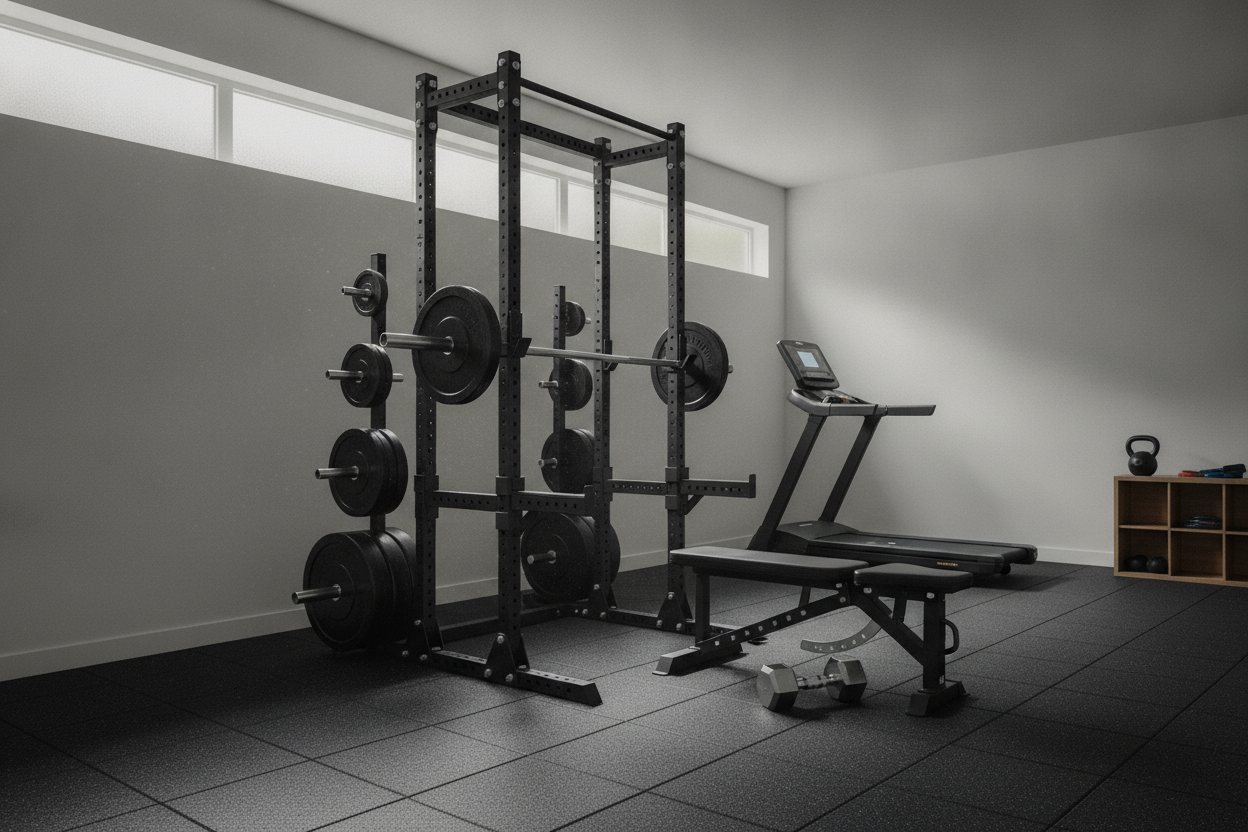
If you have $200 and you’re staring at a 'pro' power rack on sale, my advice is simple: don't buy it. That rack is a cage of lies. It will shake when you dip, it will slide when you rack, and it will eventually end up on Craigslist for $40. Instead of wasting money on dangerous, structurally compromised sales of exercise equipment, look at other ways to build strength.
You can get an incredible workout using exercise equipment that uses your body weight. A high-quality pull-up bar, a set of gymnastic rings, or a heavy-duty dip station will serve you better than a flimsy rack. These tools build real-world stability and strength without the risk of a structural failure. Once you’ve saved up enough for 11-gauge steel, then you buy the heavy iron. Until then, stay safe and stay stable.
How to Spot a Real Deal (And Ignore the Fakes)
To find a legitimate deal, you have to be a bit of a detective. First, check the shipping weight. If the standard version of a rack weighs 250 lbs and the sale version weighs 180 lbs, you know exactly where that weight went—it came out of the steel thickness. Second, look at the hardware. Real strength equipment uses 5/8-inch or 1-inch bolts. If you see tiny 1/2-inch bolts on a power rack, run the other way.
I always compare the exact SKU on the sale page to the manufacturer’s main catalog. If it’s a 'special edition' model only available during the sale, it’s a red flag. I’ve made the mistake of buying the 'budget' version before, and I regretted it the moment I tried to do a pull-up and the whole frame swayed six inches. Trust the specs, not the discount percentage.
Personal Experience: The $80 Bench Disaster
Back in 2016, I snagged a 'doorbuster' bench for $80 during a holiday sale. It looked great in the photos—slick black powder coat and thick padding. The first time I tried to bench 225, the backrest groaned, and I felt the frame twist to the left. I finished the set, walked it straight to the curb, and never looked back. That 'deal' almost cost me my rotator cuff. Since then, I’ve been a stickler for steel gauge and bolt size.
FAQ
Is 14-gauge steel ever okay for a home gym?
Only if you are a beginner lifting light weights or using it for very basic accessory work. If you plan on squatting or benching over 200 pounds regularly, 14-gauge steel will eventually feel unstable and unsafe. Stick to 11-gauge for your primary rack.
How can I tell if a sale is a 'made-for-outlet' product?
Check the model number. If it doesn't match the standard products on the brand's main website, or if it's missing features like numbered uprights or standard hole spacing, it’s likely a downgraded version made specifically for the sale.
Are dumbbells safe to buy on sale?
Solid hex dumbbells are usually safe. However, be careful with adjustable dumbbells on sale. If they use plastic internal gears instead of metal, they will shatter the first time you accidentally drop them. Always check the internal mechanism materials.