You're Overthinking How to Dumbbell (And Under-Executing)
I remember the first time I tried to build a home gym. I was scrolling through marketplace listings at 2 AM, comparing rusty 25-pounders to those shiny, overpriced adjustable sets that look like they belong on a spaceship. I thought the gear was the secret. I figured if I just bought the right heavy stuff, the muscle would follow. I was wrong. I spent three months swinging weights around with zero control, wondering why my elbows hurt more than my chest.
The truth is, most people fail at how to dumbbell because they treat the weight like an enemy to be conquered rather than a tool for tension. You aren't trying to move the weight from point A to point B by any means necessary. You're trying to make your muscles work as hard as possible throughout that entire path. If you're just looking for a sweat, go run a mile. If you want to actually change your physique, you need to stop overcomplicating the 'hacks' and start mastering the mechanics.
- Control the Eccentric: Never let gravity do the work on the way down.
- Brace Your Core: If your spine is moving, your target muscle isn't working.
- Root Your Feet: Your power starts at the floor, even for upper body moves.
- Protect Your Joints: Move in the scapular plane, not just straight out to the sides.
The Golden Rule of Iron: Tension Over Momentum
The biggest mistake I see beginners make when learning how to use dumbbells is turning every movement into a ballistic exercise. If you're bicep curling and your hips are thrusting forward like you're at a middle school dance, you aren't training your arms; you're training your ego. Muscle growth happens when you subject a muscle fiber to mechanical tension. When you use momentum to 'cheat' the weight up, you're literally stealing progress from yourself.
The secret isn't in the lift; it's in the lower. This is called the eccentric phase. If it takes you one second to press a dumbbell up, it should take you at least two to three seconds to bring it back down. This controlled descent creates micro-tears in the muscle that lead to growth. I’ve seen guys move 80-pounders with terrible form who have smaller shoulders than the guy meticulously controlling a pair of 40s. Don't be the guy who drops the weight after the 'hard' part of the rep is over. The hard part is only half the battle.
Focus on 'feeling' the muscle stretch. If you're doing a chest press, don't just bounce the weight off your torso. Slow down. Feel the pec fibers lengthening at the bottom. That’s where the magic happens. If you can't pause for a full second at the bottom of a rep, the weight is too heavy. Period. Strip the ego, drop 10 pounds, and actually learn to control the iron.
Forget Momentum: The Proper Way to Use Dumbbells
Let’s talk about the actual mechanics of the proper way to use dumbbells. It starts with your grip. Most people just loosely hold the handle. I want you to try 'white-knuckling' the weight. When you squeeze the handle hard, it triggers a process called irradiation—your nervous system recruits more surrounding muscles to stabilize the joint. A firm grip makes the weight feel lighter and keeps your wrists from flopping around like wet noodles.
Next, you need to understand bracing. Your body is a chain. If one link is soft, the whole system leaks power. Before you start any set, take a big breath into your belly (not your chest) and flex your abs like someone is about to punch you. This creates internal pressure that protects your spine. If you’re doing a standing overhead press and your lower back starts to arch, you’ve lost your brace. You’re no longer training your shoulders; you’re risking a herniated disc.
Isolation vs. Compound: Know the difference. When you're doing a row, your goal is to move your scapula, not just your hand. If you're doing a lateral raise, think about pushing the dumbbells 'out' toward the walls rather than 'up' toward the ceiling. Small mental cues like this change the mechanics from a jerky, momentum-based movement to a smooth, muscle-burning rep. If you find yourself needing a 'hitch' to get the weight moving, you're just throwing weight around to stroke your ego. Stop it.
Your Feet Dictate What Your Hands Can Do
You might think your feet don't matter during a seated shoulder press, but you'd be wrong. Your base of support is the foundation for every ounce of force you produce. I see people in the gym with their feet dancing around or tucked under the bench. This is a recipe for instability. Drive your heels into the floor. Imagine you're trying to push the floor away from you. This 'rooting' creates a stable platform that allows your upper body to exert maximum force. Even when lying on a bench, your legs should be active, driving your traps into the padding. If your base is shaky, your lift will be shaky.
How to Do Dumbbell Movements Without Wrecking Your Joints
One of the hardest lessons I learned was that my joints aren't invincible. I spent years flaring my elbows out at 90 degrees on chest presses because that's what I saw in old bodybuilding magazines. All I got for it was a nagging rotator cuff injury that took six months to heal. When you want to know how to do dumbbell presses correctly, you have to respect the scapular plane. Your elbows should usually be tucked at a 45-degree angle to your body, not flared out wide. This keeps the tension on the muscle and off the delicate connective tissue in your shoulder socket.
The same logic applies to your back. Whether you are doing a bent-over row or a deadlift variation, your spine must remain neutral. The second you round your back to reach for a weight that's too far away, you're asking for trouble. Always hinge at the hips first. If you want to learn how to press a dumbbell without back pain, you have to master the art of the 'ribs down' position. If your ribcage flares up toward the ceiling, your lower back is taking the load. Keep your core tight and your spine straight, and your joints will thank you when you're 50.
Tracking is another big one. Your joints should move in a natural arc. If a movement feels 'crunchy' or sharp, stop. There is no 'no pain, no gain' when it comes to joint health. Muscle burn is good; joint stabbing is bad. Adjust your hand orientation—sometimes switching from a palms-forward grip to a neutral (palms-facing) grip is all it takes to save your shoulders from unnecessary wear and tear.
The Dead-Simple Framework for How to Properly Use Dumbbells
You don't need a 12-page manual to get results. The how to properly use dumbbells framework is actually very simple: pick four to five big movements and get really good at them. Start with a hinge (like a Romanian deadlift), a push (chest or shoulder press), a pull (one-arm row), and a squat variation (goblet squat). If you master these four, you’ve covered 90% of your body’s functional needs. Don't get distracted by the 'exercise of the week' on TikTok.
Progressive overload is the only rule that matters. If you did 10 reps with 30 pounds last week, try for 11 reps this week, or 10 reps with 32.5 pounds. You don't need a fancy generic dumbbell training program to see progress; you just need a notebook and the discipline to do one more than last time. Most people jump from program to program because they get bored, but boredom is often where the growth happens. Stick to the basics until you can't progress anymore, then change one small variable.
Focus on compound movements first. These are exercises that use more than one joint. A goblet squat uses your ankles, knees, and hips. A bicep curl only uses your elbow. Do the big stuff when you have the most energy at the start of your workout. Save the isolation 'pump' work for the end. It's a simple hierarchy that has worked for decades, and it'll work for you if you actually stick to it for more than three weeks.
Protecting Your Floors While You Learn the Ropes
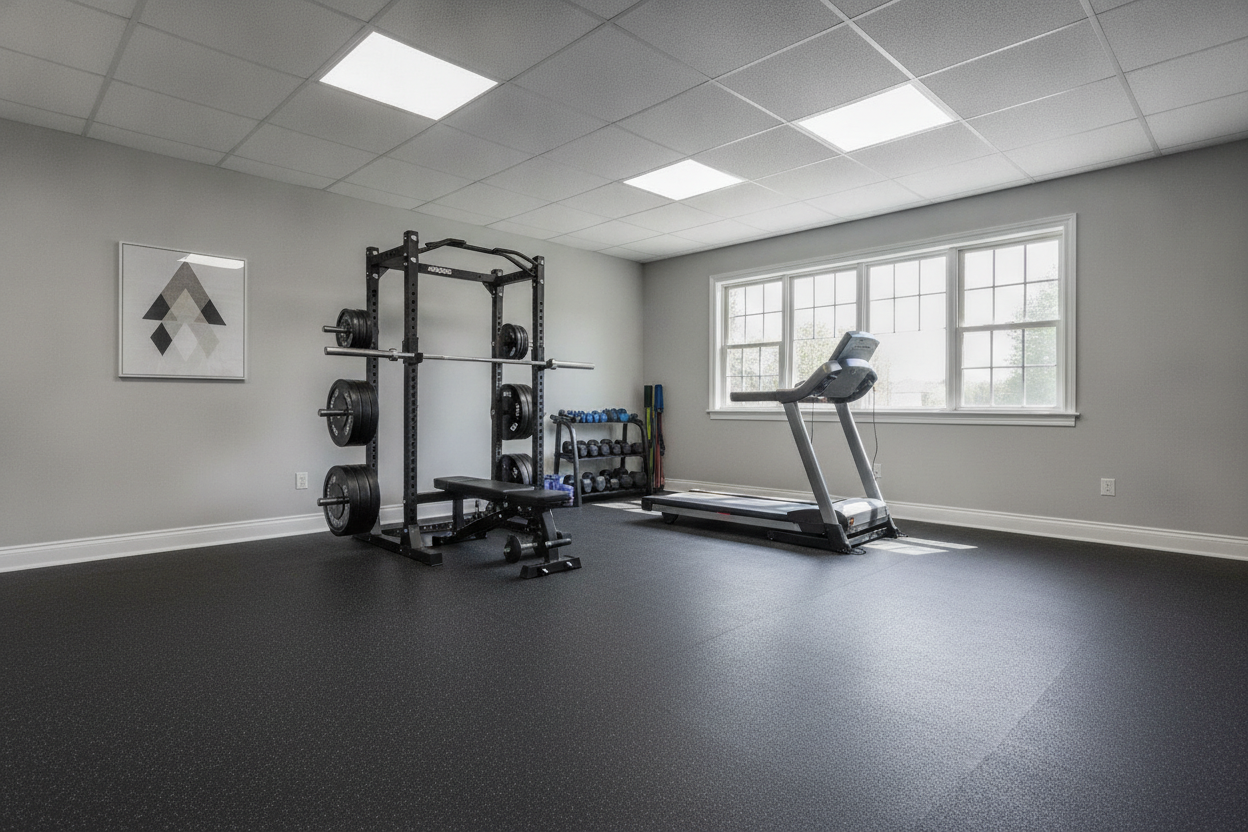
If you're training at home, you need to think about the environment. I learned this the hard way when I dropped a 50-lb hex dumbbell on my garage's bare concrete. Not only did I chip the concrete, but I also bent the internal steel handle of the dumbbell, making it permanently lopsided. Dumbbells are tough, but they aren't indestructible, and neither is your floor. If you're working in a spare bedroom or a garage, invest in some upgraded exercise mats to absorb the impact of a missed rep.
Even if you don't plan on dropping weights, the constant vibration of setting them down can crack tiles or wear down carpet. A good mat also provides better traction. There's nothing worse than your foot slipping during a heavy lunges because you're trying to lift on a dusty hardwood floor. Get a dedicated space, lay down some protection, and treat your equipment with a bit of respect. It’ll last a lifetime if you don't treat it like trash.
Personal Experience: The Ego-Lift That Cost Me Two Months
A few years back, I thought I was ready to jump from 60s to 80s on the flat bench press. I didn't have a spotter, and I didn't have a plan. I 'muscled' the weights up using every bit of momentum I could find. On the third rep, my left shoulder gave out because I wasn't bracing my core or pinning my shoulder blades. The dumbbell came crashing down, narrowly missing my face, and I felt a 'pop' in my chest. I was out of the gym for eight weeks. That mistake happened because I cared more about the number on the side of the dumbbell than the quality of the movement. Now, I never increase weight unless my current sets are perfectly controlled. Lesson learned.
Frequently Asked Questions
Are adjustable dumbbells better than fixed ones?
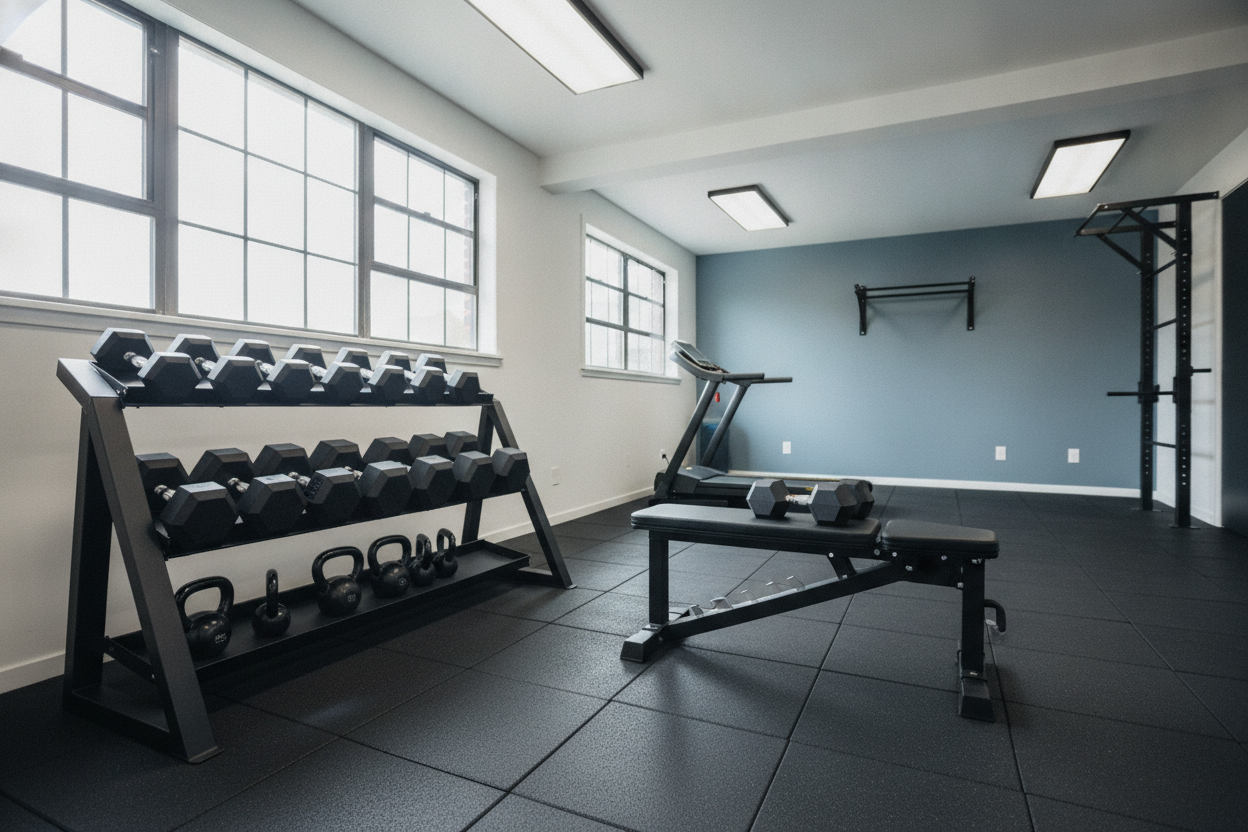
It depends on your space. Adjustables save a ton of room, but they can be clunky and have a 'clank' that fixed weights don't. If you have the budget and space, a rack of fixed hex dumbbells is the gold standard for durability and speed between sets.
How heavy should I start?
Start with a weight you can move for 12 clean reps with a 2-second pause at the bottom. If your form breaks down before rep 8, it's too heavy. If you can do 15 without breaking a sweat, it's too light.
Can I build muscle with only dumbbells?
Absolutely. Your muscles don't know the difference between a $2,000 cable machine and a hunk of iron. As long as you provide enough resistance and stay consistent, dumbbells are all you need to build a world-class physique.