Why Buying a Weight Lifting Set With Weights Is Usually a Trap
I remember the first time I tried to build a home gym. I was scrolling through local listings at midnight, looking for a deal, and I saw it: a 100-lb weight lifting set with weights for eighty bucks. I thought I’d struck gold. When it arrived, the 'weights' were actually plastic shells filled with gritty cement, and the bar was a hollow piece of pipe that felt like it would snap if I sneezed on it. I outgrew it in three weeks.
- Avoid Cement: Plastic-coated, sand-filled plates leak and are too bulky for heavy lifting.
- Olympic is King: Stick to 2-inch sleeve diameters; 1-inch 'standard' bars are a dead end.
- Rack First: Your weight set is only as safe as the steel holding it up.
- Buy Once: Quality iron or rubber bumpers will literally last your entire life.
The 'Beginner Bundle' Trap (And Why I Hate It)
Most big-box retailers sell a version of the 'starter' weight lift set that is designed more for a closet than a garage. They lure you in with a low price point and the promise of a complete kit. But here is the reality: those cement-filled plastic plates are massive. A 25-lb plastic plate is often as thick as a real 45-lb iron plate. This means you run out of 'real estate' on your barbell sleeves before you even hit a respectable deadlift. It’s a fast track to frustration.
Then there is the bar. Most cheap bundles come with a 1-inch diameter bar. These aren't compatible with 99% of the high-quality plates or racks on the market. If you buy a 1-inch home weightlifting set, you are locking yourself into an ecosystem of low-quality gear. When you eventually want to upgrade to a real power rack, none of your old plates will fit. You end up buying everything twice. I’ve seen guys try to squat 200 lbs on these hollow bars, and watching the steel whip and flex is enough to make any coach lose sleep. It is better to buy two real 45-lb plates and a decent bar than 300 lbs of plastic junk.
What Actually Makes a Complete Weight Lifting Set?
A legitimate weight room set isn't just about the total poundage; it’s about the specs. You want an Olympic barbell (20kg or 45lbs) with a 28mm to 29mm grip diameter. The sleeves—the ends where the weights go—should have a 2-inch diameter and rotate smoothly on bushings or bearings. This rotation is crucial because it prevents the spinning weight from twisting the bar in your hands, which is a one-way ticket to wrist tendonitis.
For the plates, you have two real choices: cast iron or bumper plates. Iron is classic, thinner, and makes that satisfying 'clank' that keeps you motivated. Bumper plates are made of dense rubber, allowing you to drop the bar without shattering your concrete floor. If you plan on doing cleans or snatches, bumpers are mandatory. If you are just benching and squatting, iron is fine. If you are still mapping out your floor plan and wondering how it all fits together, check our complete 2025 guide to home gym weight lifting to see how to balance your equipment with your available square footage.
The Bare Minimum You Need to Start Growing
If you want a weight lifting home set that actually builds muscle, stop looking for the cheapest option and start looking for the safest one. The centerpiece is the rack. A flimsy rack that sways when you re-rack a squat is a psychological barrier to heavy lifting. You won't push yourself if you don't trust the equipment. Look for a rack made of at least 14-gauge steel, though 11-gauge is the gold standard for anyone planning to lift over 400 lbs.
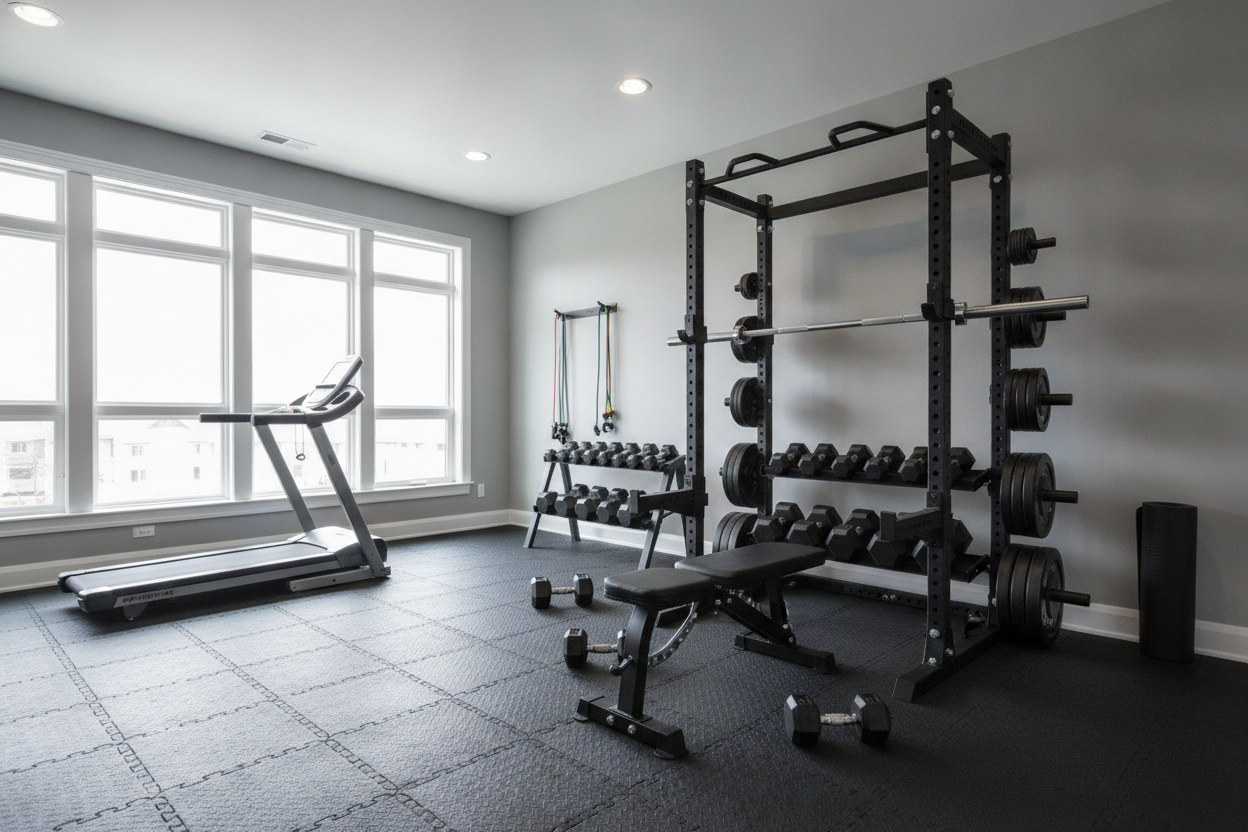
For an at home weight lifting set, I usually recommend a 160-lb or 230-lb starter kit of plates. This usually includes a pair of 45s, 25s, 10s, and some change plates. If you want to skip the guesswork of piecing it together, a power rack weight bench barbell bumper plate set gives you a professional-grade foundation without the headache of checking compatibility between five different brands. This kind of setup uses real steel and proper Olympic dimensions, meaning it grows with you. When you get stronger, you just buy more plates—you don't have to replace the whole room.
Bench and Rack Pairings That Won't Wobble
Your bench is the most underrated part of a complete weight lifting set. I’ve used benches that felt like sitting on a wet noodle. If the bench is too narrow (less than 10 inches), your shoulder blades won't have a stable platform to drive against during a press. If it's too light, the whole thing might tip when you’re trying to sit down with heavy dumbbells. You want a bench that weighs at least 50-60 lbs and has a tripod or wide-base design.
Stability is everything. You can find a matched weight set and bench that ensures the heights and weight capacities actually align. There is nothing worse than buying a rack and realizing your bench is too tall to let your feet touch the floor comfortably, or too short to reach the safety bars. A matched set ensures that when you’re under a heavy load, your focus is on the lift, not on whether the furniture is about to collapse under you.
When Should You Ditch Free Weights Entirely?
Despite my love for the barbell, it isn't for everyone. If you have chronic lower back issues or you are training in a very tight space where a 7-foot bar won't fit, a traditional barbell setup might be a mistake. For those with back issues or space constraints, weight lifting machines might be the smarter play. Selectorized systems or plate-loaded cable towers allow you to isolate muscles with a fixed path of motion, which is often safer for solo training sessions where you don't have a spotter.
My Biggest Gear Mistake
Years ago, I bought a 'bargain' barbell from a liquidator. It looked fine, but the first time I loaded it with 315 lbs for deadlifts, it developed a permanent bend. It stayed slightly curved, like a bow. Every time I tried to bench with it after that, the bar would try to rotate in my hands to the heavy side. It was dangerous and distracting. I ended up throwing it in the scrap heap. I spent $100 on that bar and $0 on the lesson: never skimp on the steel that goes over your chest.
FAQ
Is iron or rubber better for home gyms?
Iron is cheaper and thinner, so you can fit more weight on the bar. Rubber bumpers are quieter and safer for your floors if you plan on deadlifting or doing Olympic lifts. If noise is a concern, go with rubber.
Why are some barbells so much more expensive?
It comes down to steel quality (tensile strength) and the sleeve mechanism. Cheap bars use bolts that loosen; high-end bars use snap rings and bearings that stay smooth for decades.
Do I really need 300 lbs of weight to start?
Not necessarily, but most people hit a 135-lb squat or deadlift within their first month of training. Buying a 160-lb or 230-lb set saves you on shipping costs in the long run compared to buying pairs of plates individually.