Build True Strength With Exercise Equipment That Uses Your Body Weight
You don't need a garage full of iron plates or complex pulleys to build a physique capable of real-world performance. In fact, relying solely on machines often neglects your stabilizers, leaving you with "show muscles" that lack functional capability. This is why exercise equipment that uses your body weight remains the gold standard for functional hypertrophy.
Calisthenics is not just about doing push-ups on the floor. To truly trigger muscle growth, you need to manipulate leverage and angles. The right gear allows you to do exactly that, turning gravity into your toughest opponent.
Quick Summary: The Essentials
If you are looking for the most effective tools to enhance your calisthenics training, here is the breakdown of what actually works:
- Suspension Trainers (TRX/Rings): The most versatile bodyweight home gym equipment for instability training and core engagement.
- Power Towers: The ultimate all-in-one bodyweight workout station for vertical pulling and pushing.
- Parallettes: Crucial for increasing range of motion on push-ups and learning hand balancing without wrist strain.
- Doorway Pull-Up Bars: The entry-level staple for back development, though often limited in grip width.
- Weighted Vests: technically an accessory, but essential for progressive overload once you master the basics.
Why Leverage Beats Isolation
Machines isolate muscles; bodyweight gear integrates them. When you use a leg press, the machine stabilizes the weight for you. When you perform a pistol squat using a suspension trainer for balance, your nervous system must fire every stabilizer from your ankle to your core.
This is known as Closed Kinetic Chain (CKC) training. Your hands or feet are fixed in space, and your body moves around them. This recruits more muscle fibers and improves proprioception (your body's awareness in space) significantly better than static machinery.
The Suspension Trainer: King of Versatility
If you have limited space, a suspension trainer or a set of wooden gymnastic rings is the best bodyweight equipment you can own. The science here is simple: instability.
Because the straps move freely, your rotator cuffs and core must work overtime to prevent you from swaying. A standard push-up becomes a tremulous battle for stability. For home gyms, this offers the highest return on investment because it allows for pulling motions (rows, face pulls) that are otherwise difficult to do without weights.
The Power Tower: Your Vertical Anchor
For those with a bit more floor space, a power tower is the definitive bodyweight workout station. It usually combines a pull-up bar, dip handles, and a vertical knee raise station.
The advantage here is rigid stability. Unlike a doorway bar, which restricts your movement and risks damaging the doorframe, a power tower allows for explosive movements like muscle-ups or weighted dips. When looking for the best bodyweight workout equipment in this category, prioritize a wide base to prevent tipping during dynamic movements.
Parallettes: Saving Your Wrists
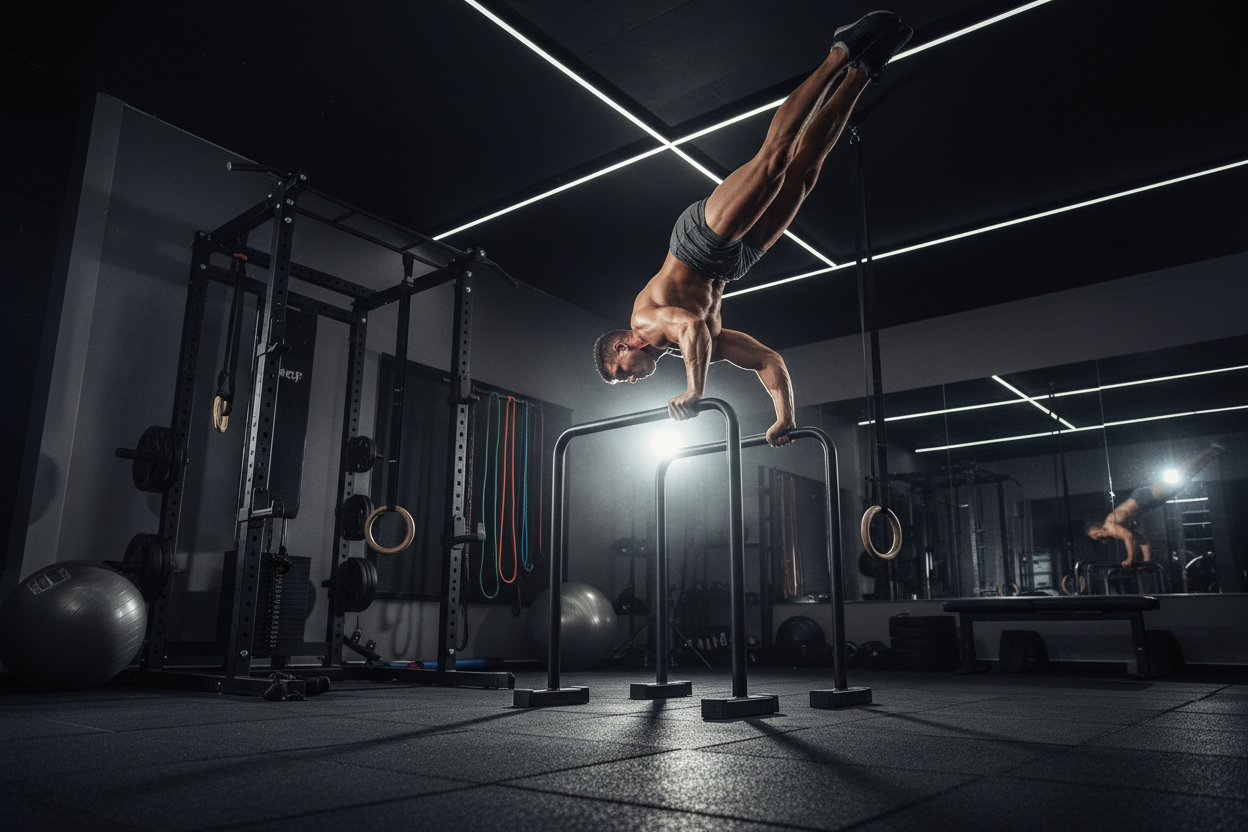
Floor calisthenics can be brutal on the wrists due to the 90-degree extension required for push-ups and planches. Parallettes offer a neutral grip, aligning the wrist and forearm.
Beyond comfort, they increase the Range of Motion (ROM). By elevating your hands off the floor, you can lower your chest past your palms during push-ups, increasing the stretch on the pectorals and stimulating more muscle growth.
My Personal Experience with exercise equipment that uses your body weight
I want to be transparent about the learning curve here. A few years ago, I transitioned from a commercial gym to a garage setup. I bought a cheap, "all-in-one" doorway bar and a set of plastic rings.
The first thing I noticed wasn't the strength gains—it was the humility. I could bench press 225 lbs, but I couldn't hold a support position on the rings for ten seconds without shaking violently. The plastic rings were a mistake; once your hands get sweaty, the texture becomes slippery, making the false grip nearly impossible to hold. I swapped them for wooden rings within a month, and the difference in grip traction was night and day.
Another detail spec sheets won't tell you: check the knurling or foam on your pull-up bar. I once used a power tower with smooth, painted metal handles. Without chalk, it was useless. I ended up having to wrap it in tennis grip tape just to get a decent session in. If you are buying gear, look for matte powder coats or high-density foam; otherwise, your grip will fail before your lats do.
Conclusion
Building a physique with bodyweight gear isn't about doing endless reps; it's about making the exercises harder through mechanical disadvantage. Whether you choose a simple set of rings or a full station, the goal is control.
Start with the basics. Master your own weight. Once you can manipulate your body through space with precision, you will possess a type of strength that iron alone cannot provide.
Frequently Asked Questions
Can I build significant muscle mass with just bodyweight equipment?
Yes, provided you use progressive overload. Instead of adding weight plates, you add difficulty by changing angles (leverage), decreasing rest times, or moving to unilateral (single-limb) variations to increase the load on the muscle.
What is the single best piece of bodyweight gear for small apartments?
Gymnastic rings or a suspension trainer are ideal. They can be hung from a sturdy door anchor or a ceiling hook, support hundreds of exercises, and can be stored in a drawer when not in use.
Is a power tower better than a wall-mounted pull-up bar?
It depends on your living situation. A wall-mounted bar is rock solid but requires drilling into studs. A power tower is freestanding and offers a dip station (which most wall bars lack), making it a more complete solution if you have the floor space.