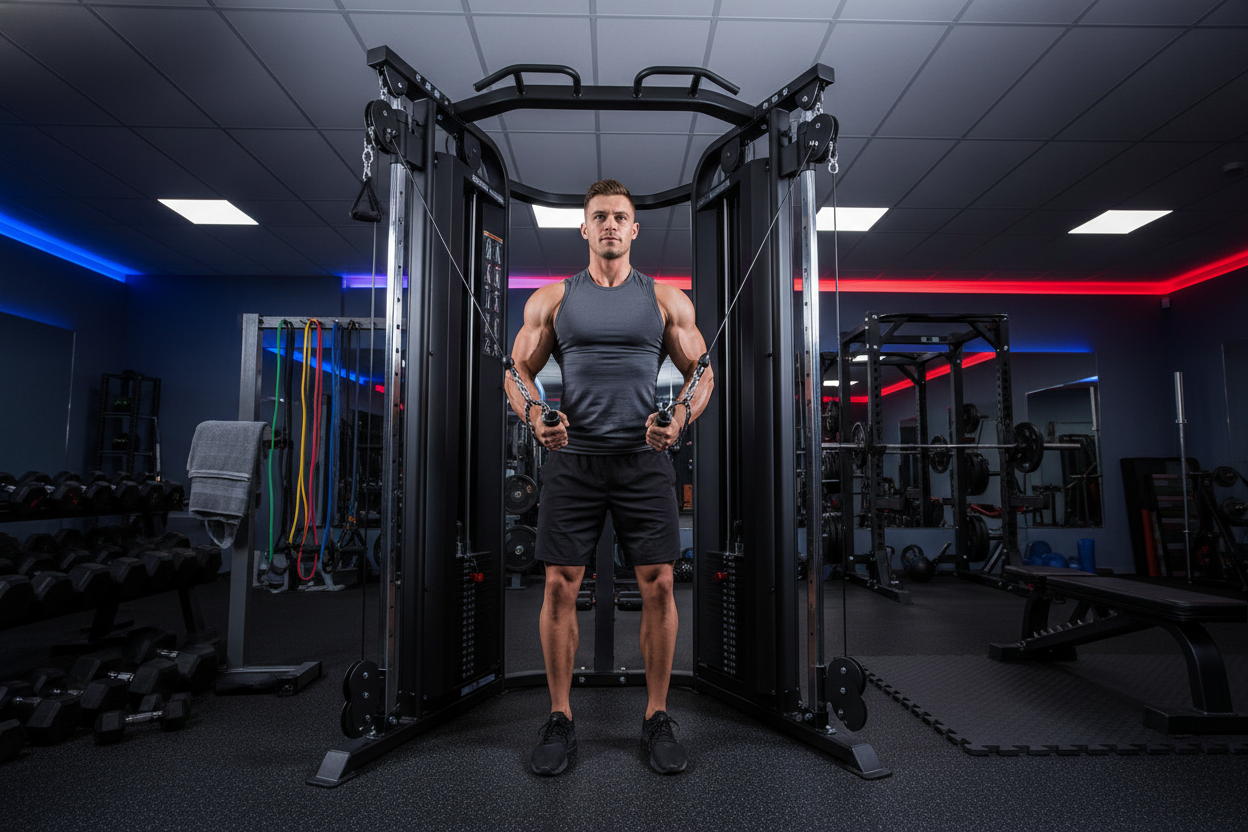
Cable Cross Machine For Sale: How to Avoid Costly Home Gym Mistakes
If you have ever hit a plateau with barbells and dumbbells, you know the frustration. Free weights are the undisputed kings of building raw strength, but they cannot replicate the constant, joint-friendly tension of commercial gym cables. Upgrading your home setup with a functional trainer is a game-changer, but navigating the market can be overwhelming.
When searching for a cable cross machine for sale, it is easy to get distracted by flashy features while overlooking critical specs like footprint, pulley ratios, and weight capacity. This guide will cut through the marketing noise, helping you choose a machine that maximizes your gains without swallowing your entire garage.
Key Takeaways
- Space is the deciding factor: True cable crossovers require massive width (often 10+ feet), whereas compact functional trainers save space.
- Pulley ratios matter: A 2:1 ratio is ideal for dynamic, fast-paced movements, while a 1:1 ratio is better for heavy, static lifts.
- Weight stack vs. plate-loaded: Selectorized weight stacks offer convenience and speed, but plate-loaded systems are significantly more budget-friendly.
- Dual-swivel pulleys: Look for aluminum or high-grade nylon pulleys with 180-degree swivel for maximum range of motion.
Decoding the Specs: What to Look For
Not all cable systems are created equal. Before you pull the trigger on a cable crossover machine sale, you need to understand the mechanics that separate entry-level racks from commercial-grade centerpieces.
Weight Stacks vs. Plate-Loaded Systems
Your budget and training style will dictate this choice. Plate-loaded machines utilize the Olympic weight plates you already own, making them highly cost-effective. However, selectorized weight stacks (using a pin to change weights) save crucial seconds during drop sets and super-sets. If you value training efficiency, the premium price of a dual weight stack is usually worth the investment.
Pulley Ratios Explained
This is where many home gym owners make a critical error. A 2:1 pulley ratio means moving 100 pounds on the stack only yields 50 pounds of actual resistance, but the cable travels twice as far. This is perfect for explosive movements, chest flyes, and sports conditioning. A 1:1 ratio provides true weight but shorter cable travel, which is better suited for heavy lat pulldowns and low rows.
Space Planning for Home Gyms
When browsing cable crossover machines for sale, the biggest hurdle is usually the footprint. North American garage and basement gyms are notorious for low ceilings and tight floor plans.
Garage vs. Basement Clearances
A traditional cable cross machine spans wide—sometimes up to 12 feet—to allow for deep chest flyes. If you are in a standard two-car garage, you might need to look at a compact functional trainer instead, which brings the pulleys closer together (around 4 to 5 feet wide). Additionally, always measure your ceiling height. Many basement gyms top out at 84 inches, while some commercial-grade towers require 90 inches or more of vertical clearance.
From Our Gym: Honest Take
We recently tested a highly rated mid-tier functional trainer that we picked up during a holiday sale. Overall, the versatility it added to our 400-square-foot garage gym was undeniable. The knurled aluminum D-handles felt fantastic, and the dual 160-pound stacks were buttery smooth right out of the box.
However, here is the honest caveat: Because it uses a 2:1 ratio, the 160-pound stack only provides 80 pounds of effective resistance per side. For heavy lat pulldowns and seated rows, I maxed out the stack within the first month. We had to purchase an aftermarket gym pin to add extra Olympic plates to the stack. If you are an advanced lifter, do not underestimate your strength—buy a machine with heavier stacks or ensure it has a 1:1 ratio for heavy back work.
Frequently Asked Questions
Are cable crossover machines worth the money?
Yes, if you value accessory work, isolation movements, and constant tension. They are unparalleled for targeting the chest, shoulders, and triceps safely, making them a phenomenal complement to a standard power rack.
How much space do I actually need?
For a traditional, wide-stance cable crossover, you need a space roughly 10 to 12 feet wide and 4 feet deep. For a compact functional trainer, a footprint of 5 feet wide by 4 feet deep is usually sufficient, plus room to stand and operate the cables.
Can you build muscle with just a cable machine?
Absolutely. While barbells are great for maximal strength, cables provide continuous tension throughout the entire range of motion, which is highly effective for muscle hypertrophy. You can perform full-body workouts including squats, rows, presses, and curls using only cables.