Why I Do All My Exercises for Scapular Rehab on the Floor
I spent three years thinking my bench press was stalled because of weak triceps. I bought every specialized bar and followed every powerlifting program on the internet, but the sharp pinch in my front delt never went away. It wasn't a chest issue, and it wasn't a shoulder issue—it was a total lack of control over my shoulder blades. Finding the right exercises for scapular health didn't happen while standing at a cable machine; it happened on my belly, face-down on a piece of rubber.
Quick Takeaways
- Standing scapular exercises allow for too much cheating through the lower back.
- Prone (face-down) holds isolate the mid-traps and rhomboids by removing momentum.
- You don't need heavy weights; bodyweight or 2.5-lb plates are usually plenty.
- Consistency in warm-ups beats a dedicated 'rehab day' every time.
The Day I Realized My Shoulders Weren't the Actual Problem
I was chasing a 315-lb bench and my front delts felt like they were being poked with hot needles every time I touched the bar to my chest. I assumed it was impingement. I did the standard internal and external rotations with a light band, but nothing changed. It wasn't until a physical therapist watched me move and pointed out that my shoulder blades were 'winging' like a bird about to take flight that I realized I had zero scapula stability.
The root of the problem was a lack of scapulothoracic strengthening. My big mirror muscles were doing all the work, while the stabilizers—the muscles that actually keep the joint seated—were essentially on vacation. I had to learn how to strengthen scapula muscles from scratch, and that meant moving away from the heavy racks and getting down on the floor.
Why Standing Scapula Exercises Are Usually Garbage
Most people do their scapular stabilizer exercises standing up. They grab a resistance band, do some pull-aparts, and call it a day. The problem? You're probably cheating. When you're upright, it's incredibly easy to arch your lower back or use your hips to create momentum. You think you're working your upper back, but you're actually just stressing your lumbar spine.
I found that switching to static exercises for shoulder health while prone was the only way to ensure I was actually hitting the target. When your chest is pressed against the ground, you can't use your legs to swing the weight. You're forced to use the scapular muscles to lift your arms. It’s a humbling experience that usually reveals just how weak your shoulder blade muscles actually are.
The 'Face-Down' Fix: 3 Movements That Actually Work
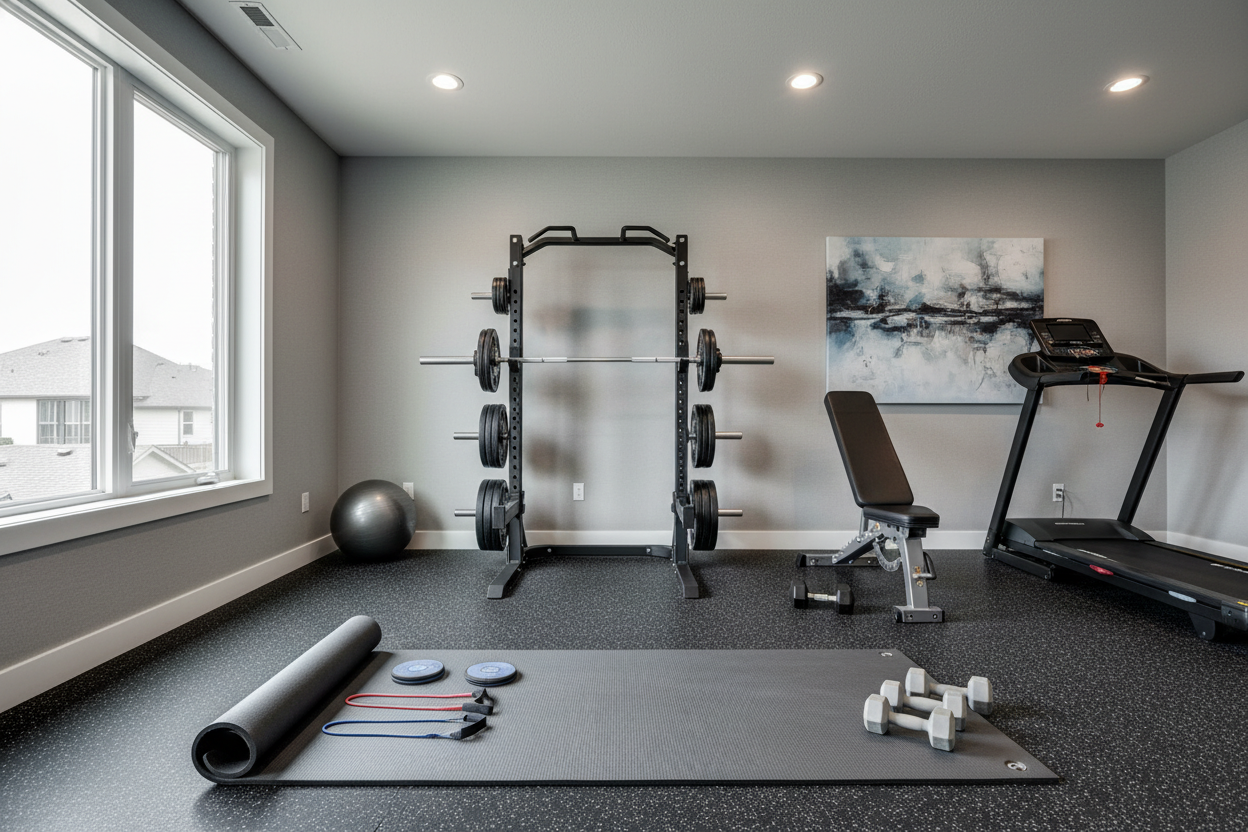
If you want to fix your scapular stabilization, you need to get comfortable on the floor. I stopped doing cable rows for 'rehab' and started focusing on scapular setting exercises while prone. Laying face-down on a large exercise mat for home gym is the gold standard because it provides enough cushion for your ribs and hips while giving you a stable base to work from.
The goal here isn't to move heavy weight. It's about scapula control exercises—learning how to move the bone independently of the arm. If you feel your upper traps shrugging up toward your ears, you're doing it wrong. Keep your neck long and focus on pulling the blades down toward your back pockets.
The Prone Y-T-W Hold
This is the holy grail of scapula exercises for pain. Laying face-down, you move your arms into the shape of a Y, then a T, and finally a W. This sequence targets the lower traps, mid-traps, and rhomboids. I usually hold each position for 10 seconds. If you can do three rounds of this without your shoulders burning like crazy, you're a better athlete than I was when I started. It’s the ultimate scapula workout for anyone who spends too much time hunched over a desk.
The Floor Scapular Push-Up
Unlike a standard push-up, you keep your elbows locked out the entire time. You're simply sinking your chest toward the floor by letting your shoulder blades come together (scapula adduction), and then pushing the floor away to spread them apart (scapula abduction). Doing this on a hard concrete floor is miserable for your wrists, so make sure you have decent gym flooring for home workout or a thick mat. This movement hits the serratus anterior, which is the 'secret sauce' for keeping your shoulders healthy during heavy presses.
How to Program Scapula Rehab Without Wasting Time
You don't need to spend 45 minutes on scapula training. I've found that the best way to stay consistent is to bake these into your warm-up. Whether it's a heavy squat day or a chest day for women and men alike, five minutes of prone holds will prime your nervous system and get your stabilizers firing.
I usually pick two movements and do 2 sets of 12-15 reps (or 30-second holds). My mistake for years was thinking I could just 'out-muscle' the pain with more rows. Real scapula strength comes from the small, boring movements that most people skip. Since I started doing these exercises for scapular stability, my bench has gone up, and more importantly, my shoulders don't feel like they're made of glass anymore.
FAQ
How often should I do scapular exercises?
If you're dealing with pain, do them every time you train as part of your warm-up. For general maintenance, 2-3 times a week is plenty to keep your shoulder blades moving correctly.
Do I need weights for scapula strengthening?
Rarely. Most lifters find that the weight of their own arms is enough to hit the scapular stabilizer muscles. If you must add weight, start with 1-lb or 2.5-lb plates. Anything heavier usually leads to shrugging.
Why does my neck hurt during prone exercises?
You're probably trying to look forward. Keep your forehead tucked or resting on a small towel. The movement should happen at the shoulder blades, not the neck.