Why the Standard 3x10 Bodybuilding Exercises Program Fails in a Garage
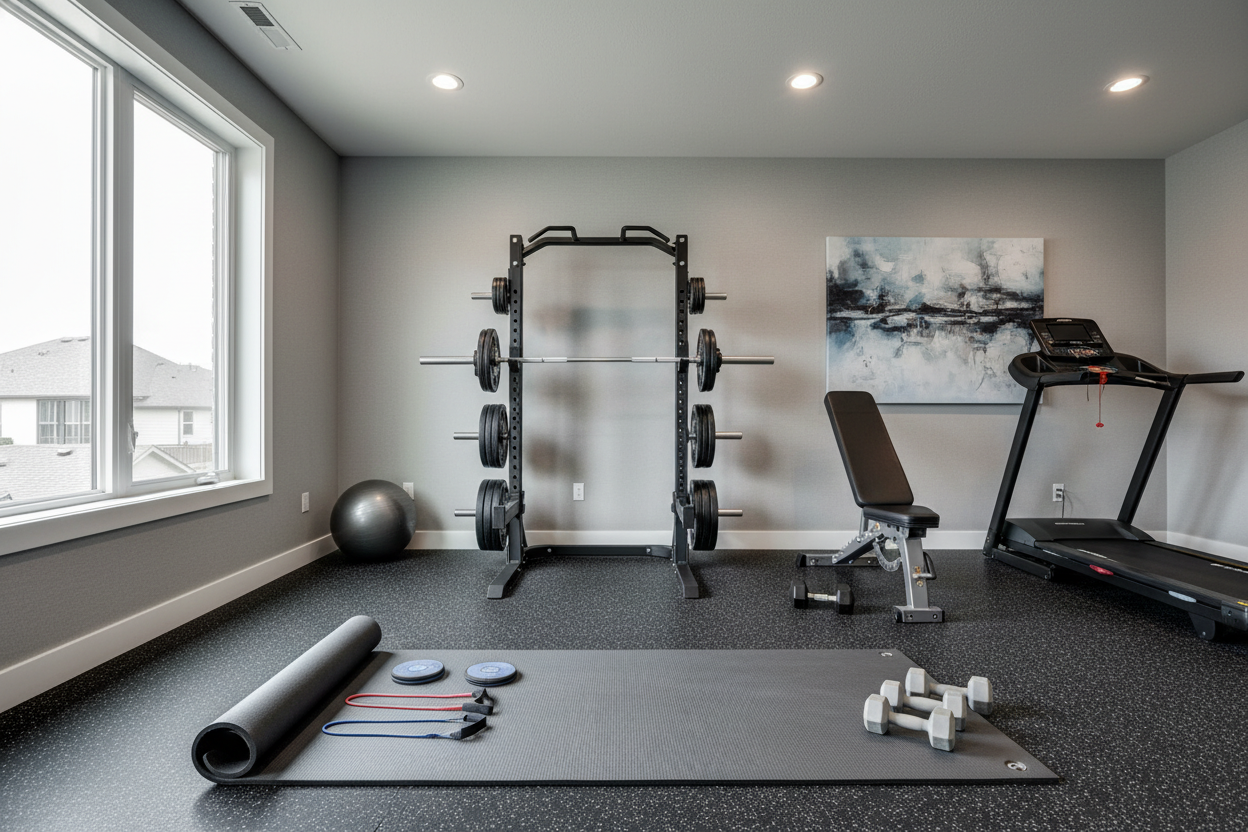
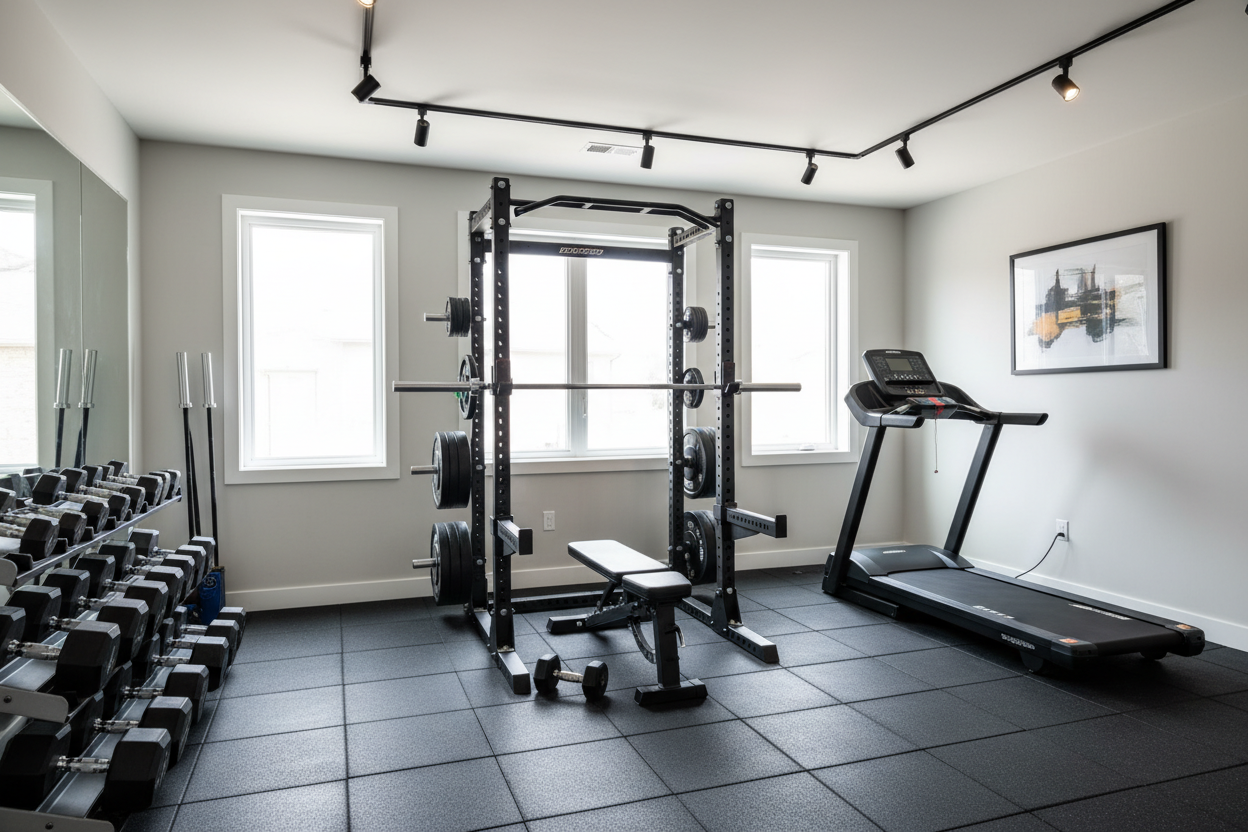
I remember the day I finally ditched my commercial gym membership. I was tired of the crowds and the broken cable machines, but I didn't realize my bodybuilding exercises program was about to hit a brick wall. I had a solid rack, a barbell, and a set of dumbbells, but the math that worked at the big-box gym suddenly felt impossible in my 400-square-foot sanctuary.
The problem wasn't my effort; it was the equipment. Most bodybuilding workout plans are written for people who have access to five different types of chest fly machines and dumbbells that go up in 2.5-pound increments. When you're training at home, you have to stop thinking like a commercial gym member and start thinking like a garage gym owner.
- Standard 3x10 sets lead to premature plateaus in a home gym.
- Equipment jumps (like 10lb dumbbell increments) require a wider rep range.
- Progression should be measured by 'Rep Horizons,' not just weight on the bar.
- Floor grip and grip strength become massive bottlenecks in high-rep home training.
Why Commercial Gym Math Ruins Your Garage Workouts
A standard training program for bodybuilding is built on the assumption of micro-loading. If you're at a Life Fitness-equipped facility, you can move a pin and add exactly 5 pounds to a lat pulldown. In your garage, you likely have a set of dumbbells that jump from 25s to 35s. That is a 40% increase in load. Trying to hit 3x10 with the 35s just because you finished the 25s is a recipe for a shoulder impingement or a bruised ego.
This is why most people stall out on a training plan bodybuilding routine within six weeks of moving home. You lack the 'bridge' weights. To fix this, you need to look at the Workout Hub for templates that aren't built on rigid, linear commercial math. You have to adapt your building body program to the tools you actually own, which usually means staying with the same weight for much longer than a magazine article suggests.
The 3x10 Trap That Keeps You Small
Sticking to a rigid 3 sets of 10 reps is the fastest way to ruin a muscle building program bodybuilding split. Think about how those sets actually go. If you know you have to hit 10 reps on set three, you inevitably sandbag sets one and two. You're leaving gains on the table to save energy for a spreadsheet goal.
Or, worse, you hit failure at rep 8 of your second set and feel like the entire workout was a waste. In a garage gym, 'failure' isn't the enemy—rigid numbers are. If you are following a training program for bodybuilding and you're obsessed with hitting a specific number, you're likely sacrificing intensity or form just to check a box. We need a more fluid way to track progress.
How to Use the 'Rep Horizon' in Your Bodybuilding Exercises Program
The fix is what I call the 'Rep Horizon.' Instead of increasing the weight every week, you expand your rep range. This is often called double progression. For example, instead of trying to jump from 30lb dumbbells to 40lb dumbbells for 10 reps, you stay with the 30s until you can perform 20 reps with perfect form on every set.
You only earn the right to grab the heavier iron once you hit the top of your rep ceiling across your entire bodybuilding lifting program. This ensures your tendons and ligaments are actually ready for the load. It turns a free bodybuilding plan into a long-term strategy rather than a weekly race to failure. You are building 'density'—doing more work with the same weight—which is a primary driver of hypertrophy that most garage lifters ignore.
Setting Your Floor and Ceiling Numbers
You need to set realistic boundaries based on the movement. For heavy compound lifts like a barbell row or overhead press, I like a floor of 6 and a ceiling of 10. For isolation work in a free bodybuilding workout program—think lateral raises or curls—you should thrive in the 12-20 range. If you can't do at least 12 reps with the next weight up, you haven't finished your business with the current weight yet.
Why High-Rep Sets Demand Better Ground Control
When you start pushing sets to 15 or 20 reps, things get messy. The metabolic stress is real, and your form starts to degrade. If you're doing Bulgarian split squats or heavy dumbbell RDLs on a dusty concrete garage floor, your feet are going to slide. I've seen more people miss reps because of a lack of traction than a lack of strength.
A slippery floor causes you to break form and shift tension away from the target muscle just to stay upright. This is why I tell everyone that flooring is a performance upgrade, not a luxury. I personally use a 6X8Ft Exercise Mat Yoga Mat Gym Flooring For Home Workout because it provides that 'tacky' grip you need when you're fighting for rep 19 and your legs are shaking. It's the foundation of any serious bodybuilder plan.
Surviving Grip Failure During High-Rep Work
The 'Rep Horizon' method has one major flaw: your grip will give out before your back does. If you're taking a set of rows to 20 reps, your forearms will be screaming by rep 14. If you stop there, your lats didn't actually get the stimulus they needed. This is where the 'purist' mentality fails.
Relying solely on raw grip strength in a bodybuilding training program is a mistake. You aren't training for a grip contest; you're training for muscle size. Are Straps Cheating Your Bodybuilding Muscle Building Program? Absolutely not. Use them on your top sets so your back actually reaches failure, rather than just your fingers.
Building Your Own Rep-Range Progression Template
To make this actionable, look at your current bodybuilding workouts free or paid. Take every accessory movement and assign it a range (e.g., 12-15 reps). Week 1, you might hit 12, 12, 10. Week 2, you aim for 13, 12, 12. You don't touch a heavier weight until you hit 15, 15, 15. This turns a simple bodybuilding planner into a roadmap for growth.
This method works for any bodybuilding workout program free or otherwise. It removes the frustration of not having 2.5lb plates and puts the focus back on effort. Can You Actually Get Big on a Free Bodybuilding Program? Yes, but only if you stop treating the rep counts like they are written in stone and start treating them like a horizon to be crossed.
Personal Experience: The 10-Pound Trap
I once spent three months trying to move from 35lb to 45lb dumbbells on incline presses. I kept trying to hit 3x10 because that's what my free bodybuilding training program said to do. I failed every single time at rep 6 or 7. My shoulders started aching, and I felt like a loser. It wasn't until I decided to stay at 35lbs and push for 18 reps that my chest actually started growing again. By the time I hit 3x18 with the 35s, the 45s felt like feathers. Don't rush the weight; own the reps.
FAQ
Is 3x10 bad for bodybuilding?
It's not bad, but it's incomplete. It doesn't account for the large weight jumps common in home gyms. Using a range like 8-12 is almost always superior for long-term progression.
How do I know when to increase weight?
When you can hit the maximum number of your rep range (your 'ceiling') for every single set prescribed for that exercise with perfect form.
What if my home gym only has heavy weights?
If your weights are too heavy for high reps, focus on slow eccentrics (lowering the weight) to increase time under tension. You can also use rest-pause sets to reach your total rep goal.