Why I Actually Recommend a Gym Machine Routine for Women
I remember watching a woman at my old commercial gym spend twenty minutes trying to set up a barbell hip thrust with foam pads, clips, and two benches. She looked miserable before she even started her first set. She could have hopped on the plate-loaded glute drive machine and been three sets deep into a better contraction by then. A gym machine routine for women isn't a 'soft' option or a cop-out; it's a strategic way to bypass the setup nonsense and actually move some serious weight.
Quick Takeaways
- Machines eliminate stabilization issues, letting you hit muscular failure safely.
- Standardized weight increments make tracking progressive overload effortless.
- Less 'gym anxiety' compared to the crowded, ego-driven power rack area.
- Fixed paths of motion are superior for hypertrophy (muscle growth).
The 'Free Weights Only' Lie We Tell Female Lifters
Social media has spent the last decade convincing everyone that if you aren't squatting a vibrating barbell or balancing on a BOSU ball, you aren't 'functional.' It is absolute garbage. Most people don't need to be professional powerlifters or circus performers. They want to look like they lift, feel strong, and protect their joints. Forcing a woman to master a complex barbell snatch before she's allowed to build her quads is just fitness gatekeeping.
This 'free weights or bust' mindset keeps women intimidated and stuck in the cardio section. When you are worried about your form breaking down or dropping a 45-lb plate on your foot, you won't push yourself. Machines remove that fear. They allow you to move heavy loads—which is the actual driver of muscle growth—without needing a PhD in biomechanics to stay safe.
Why Machines Actually Rule for Muscle Isolation
Biomechanics don't care about your 'hardcore' aesthetic. When you use a chest press or a hack squat, your brain doesn't have to waste energy on not falling over. This allows you to push the target muscle to 100% intensity. If you are just starting out, this is the blueprint for safe gains. You build a mind-muscle connection without the looming threat of a barbell crushing your windpipe.
By removing the need for stabilizer muscles to work overtime, you can create massive mechanical tension. In a seated row machine, your lats are the primary mover, and you aren't limited by your lower back giving out first. That is how you actually build a physique. It is about efficiency, not just looking 'tough' in the squat rack.
The No-BS Gym Equipment Workout for Women
Stop doing 30-rep sets of 'toning' exercises with pink dumbbells. If you want results, you need to stop guessing start lifting with intention. A heavy gym equipment workout for women focuses on the 8-12 rep range. Here is a 3-day split that hits everything:
- Day 1 (Lower Body): Leg Press (3x10), Leg Extensions (3x12), Seated Leg Curl (3x12), Machine Glute Kickbacks (3x15).
- Day 2 (Upper Body): Seated Chest Press (3x10), Lat Pulldown (3x10), Seated Cable Row (3x12), Machine Shoulder Press (3x10).
- Day 3 (Full Body/Accessory): Hack Squat (3x8), Assisted Pull-Up Machine (3xMax), Cable Face Pulls (3x15), Smith Machine RDLs (3x10).
Don't rush these. Control the eccentric (the way down) for two seconds, feel the stretch, and drive the weight back up. If the last two reps of your set aren't a struggle, the weight is too light. Move the pin down.
How to Progress Your Women's Gym Machine Workout Plan
The beauty of a women's gym machine workout plan is the data. You aren't guessing if your squat depth was the same as last week. The machine's path is fixed. To grow, you must apply progressive overload. If you did 80 lbs for 10 reps last Tuesday, you aim for 85 lbs this Tuesday. Or you do 80 lbs for 11 reps.
Write it down. Every commercial selectorized machine has a number or a weight on the stack. If you are using plate-loaded equipment, count the iron. I tell my clients to stay at a weight until they can hit the top end of the rep range (usually 12) with perfect form. Once you hit 12, add weight and drop back to 8 reps. Wash, rinse, repeat.
Building a Machine-Friendly Home Setup
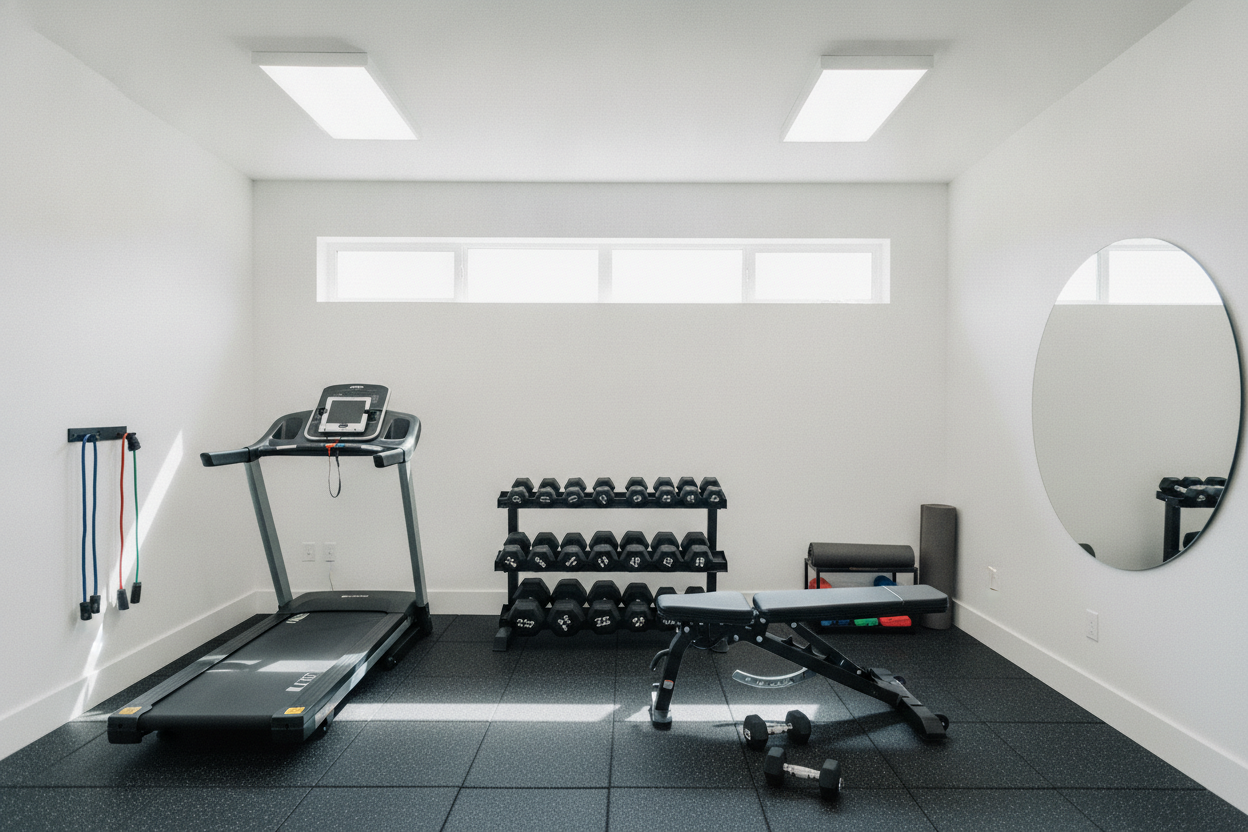
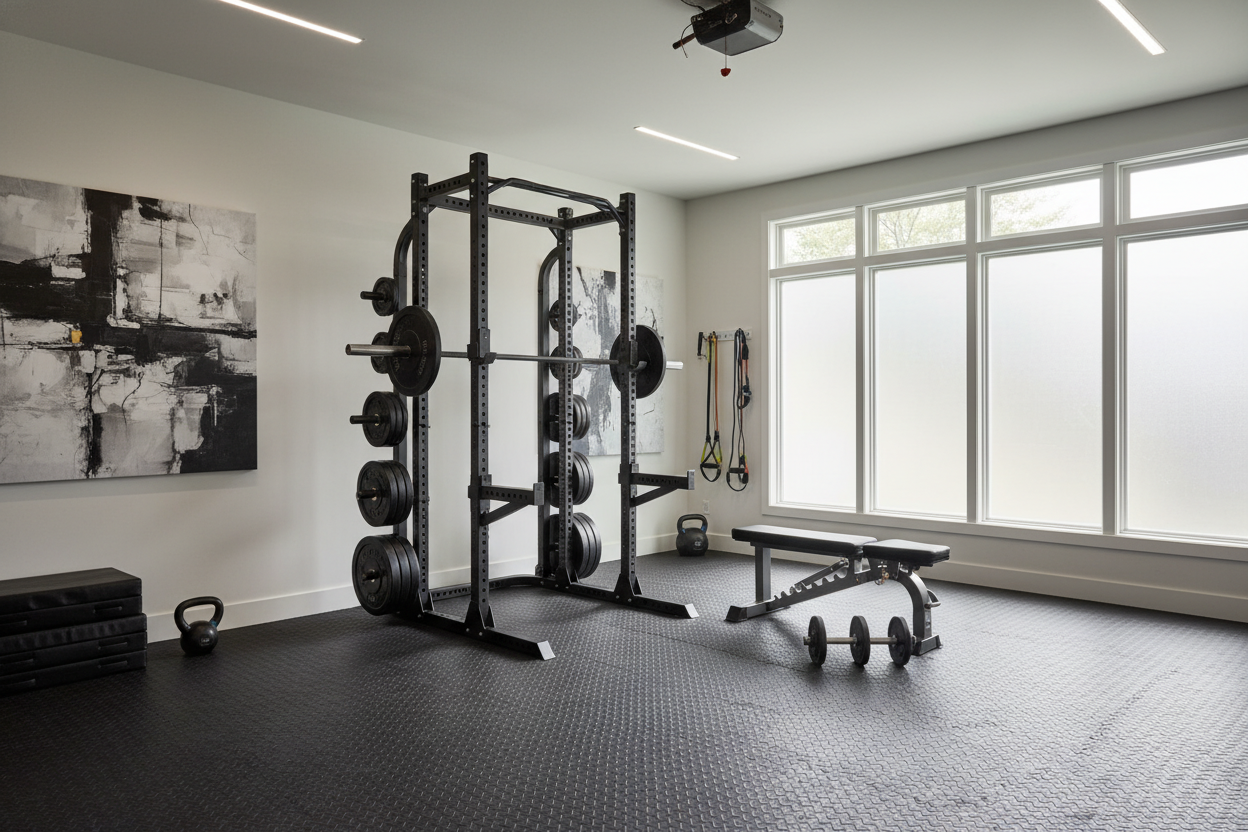
If the local big-box gym is too crowded, you can replicate this at home. You don't need twenty separate machines. A high-quality functional trainer or a Smith machine covers 90% of the exercises listed above. These units are heavy, though. I've seen people crack their garage concrete because they dropped a weight stack too hard without protection.
You need a large exercise mat for home gym use to distribute the footprint of heavy equipment. If you are going for a full-scale functional trainer with dual 200-lb stacks, don't skimp on the base. Get a dedicated gym flooring for home workout mat. It dampens the noise—your neighbors will thank you—and keeps the machine from sliding or marring your floors when you're grinding out that final set of rows.
My Personal Take
I spent five years as a 'free weights snob.' I thought machines were for people who didn't want to work hard. Then I hit a plateau and my left shoulder started acting up. I swapped my barbell bench for a prime-line chest press and my back squats for a heavy hack squat for six months. My quads grew more in that window than the previous two years combined. Why? Because I could finally push my muscles to absolute failure without my joints or balance being the limiting factor. I felt like an idiot for waiting so long to use the 'easy' machines.
FAQ
Will machines make me bulky?
No. 'Bulk' is a result of a massive caloric surplus. Machines simply build muscle tissue. Having more muscle actually raises your metabolic rate, helping you stay leaner in the long run.
Are machines safer than free weights?
Generally, yes. Because the weight is on a fixed track, there is no risk of the bar pinning you or falling sideways. You can safely train to failure without a spotter.
Can I do this routine every day?
No. Muscle grows while you rest, not while you're lifting. Stick to 3 or 4 days a week and give yourself at least 48 hours between hitting the same muscle groups.