Why Bumper Plates Aren't Always the Best Home Gym Weight
I remember the day my local commercial gym hiked its monthly dues to eighty bucks. I stood there, waiting twenty minutes for a squat rack while some kid filmed a TikTok, and I realized I was done. I went home and started hunting for the best home gym weight options, thinking I'd just buy whatever was cheapest and blackest. Big mistake. I ended up with a garage full of gear that didn't fit my bar, smelled like a tire fire, and took up way too much space.
- Iron plates save space but make a ton of noise.
- Bumper plates are essential for Olympic lifting but limit how much weight you can fit on the bar.
- Adjustable dumbbells are the ultimate space-savers but have more failure points.
- Flooring protection is not optional if you're dropping anything heavier than a 10-lb plate.
Stop Buying Gear Before You Define Your Training Style
I see it every week in the home gym forums: someone buys a 300-lb Olympic bumper set because it looks 'pro,' then realizes they only have space for a bench and some dumbbells in their spare bedroom. Or worse, a powerlifter buys thick, budget bumpers and runs out of sleeve space on their deadlift by month three. Finding high quality home gym equipment isn't about buying the most expensive thing on the market; it's about matching the tool to the task. If you're chasing a 500-lb squat, your needs are worlds apart from someone doing 20-minute metabolic conditioning circuits.
If you're focused on hypertrophy and bodybuilding, you likely don't need expensive competition bumpers. You need variety and increments. If you're training for a local CrossFit comp, iron plates are going to drive your neighbors insane and probably crack your foundation. Before you drop a grand on a setup that doesn't actually help you get stronger, check out this ultimate home gym weight equipment guide to see where your goals actually land. Buying random gear is the fastest way to a cluttered garage and a thin wallet. I've learned the hard way that a 'good deal' on gear you don't use is just expensive trash.
The Iron vs. Bumper Plate Debate (What Actually Matters)
The choice between cast iron and bumper plates usually comes down to two things: thickness and bounce. Cast iron is the old-school standard. It's thin, which means you can stack a ridiculous amount of weight on a single barbell sleeve. If you're pulling heavy deadlifts, iron allows the weight to stay closer to the center of the bar, reducing whip. But iron is loud. It clanks, it rattles, and if you drop it on a bare floor, you're looking at a foundation repair bill. It's the 'honest' weight, but it’s not neighbor-friendly.
Bumpers are made of high-density rubber. They're designed to be dropped from overhead, making them non-negotiable for snatches and cleans. However, because they're rubber, they're thick. A standard 45-lb budget bumper can be three inches wide. If you've got a standard barbell, you might max out at 405 lbs before you run out of room for collars. Quality home gym equipment should solve problems, not create new ones. If you want the best of both worlds, look for 'urethane' plates or 'competition' bumpers. They're thinner than standard rubber but still offer that floor-protecting bounce. Just be prepared to pay a premium for that engineering.
Are Adjustable Dumbbells the Ultimate Space Saver?
If you're working in a 10x10 spare room, a full rack of hex dumbbells is out of the question. That's where adjustable systems come in. I've tested the best weight equipment for small spaces, and adjustables are a mixed bag. The high-end models can replace 15 to 20 pairs of dumbbells, taking up only a few square feet. This specific type of new home gym equipment has come a long way from the rattling plastic toys of the 90s.
But here's the catch: they have moving parts. Whether it's a dial, a pin, or a twisting handle, those mechanisms can fail if you're the type of lifter who likes to 'trash' their weights after a heavy set of chest presses. Traditional loadable dumbbell handles—where you manually slide small plates onto a mini-bar—are much more durable and cheaper, but they're a pain to change between sets. If your training involves supersets, the dial-system is worth the investment. If you're on a budget and don't mind the extra 60 seconds of work, loadable handles are bulletproof.
Why You Should Avoid Cheap Sand-Filled Weights
You'll see these at big-box stores: plastic-coated weights filled with sand or concrete. They're cheap, and they look fine in the store. Don't do it. They are the 'fast fashion' of the fitness world. Because they're filled with loose material, they are significantly bulkier than metal. A 20-lb sand-filled dumbbell is often the size of a 50-lb pro-style dumbbell, which ruins your range of motion. The best quality home gym equipment is always solid. Sand leaks, plastic cracks, and eventually, you'll just be sweeping your 'weights' off the floor with a vacuum.
How to Navigate the Top Home Gym Equipment Brands
Sifting through the marketing hype of various home gym equipment brands is a full-time job. You have the 'Big Three'—Rogue, REP, and Titan—who dominate the space for a reason. Rogue is the gold standard for American-made durability, but you pay for the name. REP Fitness has cornered the market on 'value-premium' gear, especially their machined iron plates which are incredibly accurate. Titan is the king of the budget-conscious lifter, though their quality control can occasionally be a roll of the dice.
When you're looking to buy, don't just pay MSRP. I always tell people to hunt for home gym equipment deals during the 'Black Friday in July' sales or the traditional November windows. You can often snag high-end machined plates for the price of 'seconds' if you time it right. Also, don't sleep on local marketplaces. People buy high-end weights as New Year's resolutions and sell them for pennies on the dollar by April. That's how I scored my first set of calibrated plates.
Protecting Your Floors (Because Weight Will Drop)
It doesn't matter if you buy the most expensive urethane plates in the world; if you drop them on a concrete slab or hardwood, something is going to break. Usually, it's the floor. Protecting your foundation is non-negotiable. I've seen guys crack their garage slabs because they thought one layer of carpet was enough. It's not. You need high-density rubber that can disperse the force of a 200-lb bar hitting the ground.
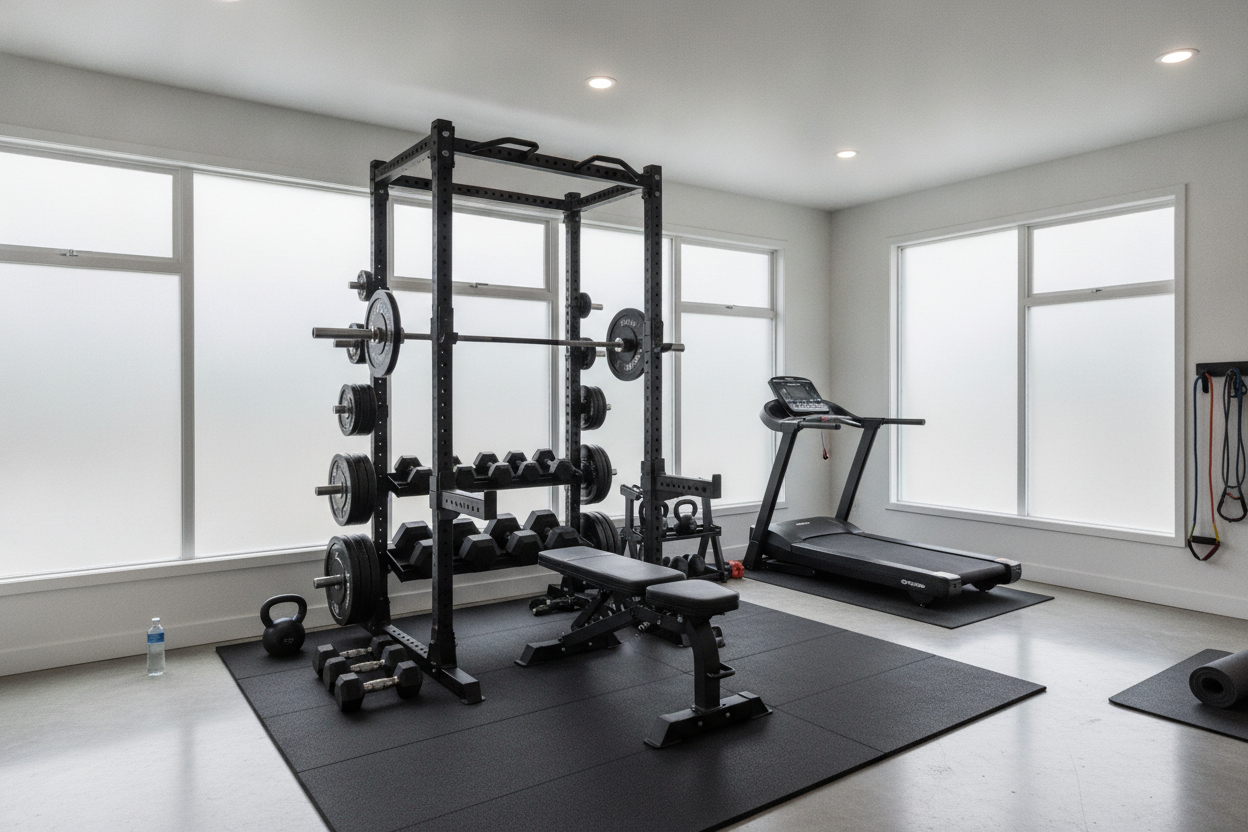
I recommend a dedicated gym flooring for home workout setup that uses at least 3/4-inch rubber. Horse stall mats from a tractor supply store are the old-school garage gym secret, but they smell like a stable for weeks. If you're training indoors, get a precision-cut gym mat that won't off-gas. This isn't just about the floor—it's about your joints and your gear. Proper flooring dampens the vibration, which keeps your bolts from loosening on your power rack and keeps your neighbors from calling the cops during your 6 AM deadlift session.
My Personal Lesson in Gear Failure
I once bought a set of loadable dumbbell handles that were 20 inches long. I thought I was being smart by getting the 'extra long' version so I could load them up to 100 lbs each. The first time I tried to do overhead presses, the ends were so long they hit each other at the top of the movement, nearly knocking me out. I realized then that 'heavy' isn't the only spec that matters—dimensions and ergonomics are just as vital. I sold them a week later and bought a compact set of adjustables. Learn from my ego; buy the gear that fits your space, not just your strength.
Home Gym Weight FAQ
Is cast iron louder than rubber?
Absolutely. Iron has a distinct 'clank' that many lifters love, but it carries through walls. If you have kids sleeping nearby or neighbors in an apartment, go with rubber-coated plates or bumpers.
Do I need calibrated plates?
Unless you're a competitive powerlifter where every gram counts, no. Standard cast iron can have a weight tolerance of +/- 3%, while calibrated plates are dead-on. For 99% of us, that 1-lb difference doesn't matter.
Can I use bumper plates on a cheap barbell?
You can, but bumpers are wider, which puts more leverage on the ends of the bar. If you're dropping heavy bumpers on a cheap, 'mystery-meat' bar from a big-box store, expect the sleeves to start bending or the bearings to seize up pretty quickly.