Why You Will Outgrow the Best Equipment for Home Workout in 90 Days
I remember the first time I tried to build a gym in my spare bedroom. I spent three hours scrolling through Amazon, looking for a bargain, and ended up with a pair of 15-pound neoprene dumbbells and a door-frame pull-up bar. Two weeks later, the dumbbells felt like I was lifting air, and the pull-up bar had effectively turned my door trim into splinters. Finding the best equipment for home workout routines isn't about finding what's cheap or what's popular on Instagram; it's about finding gear that won't be obsolete by the time you finish your first twelve-week program.
- Prioritize Scalability: If the weight doesn't go up, your progress goes sideways.
- Think in Footprints: Choose gear that offers multiple movements per square foot.
- Buy for Your Future Self: Buy the weight you'll need in six months, not the weight you can lift today.
- Invest in the Foundation: High-density flooring saves your joints and your subfloor.
The 90-Day Trap of 'Beginner' Fitness Gear
Most people start their home gym journey by buying for the person they are today. They pick up a fixed 20-pound kettlebell or a set of light resistance bands because that’s what feels 'challenging' during a twenty-minute YouTube session. But here is the reality of human physiology: newbie gains are a hell of a drug. In your first three months of consistent training, your central nervous system becomes exponentially more efficient. You will get stronger faster than at any other point in your life.
If you buy fixed-weight gear, you are essentially buying a countdown timer. That 20-pound kettlebell becomes a paperweight the moment you can swing it for 25 reps without breaking a sweat. This is why most 'beginner' bundles are a waste of money. You need the best exercise equipment for home that allows for linear progression. If you can't add five pounds to the movement next week, you aren't training; you're just exercising. There is a massive difference between the two when it comes to changing how you look and feel.
What Actually Makes the Best Piece of Exercise Equipment for Home?
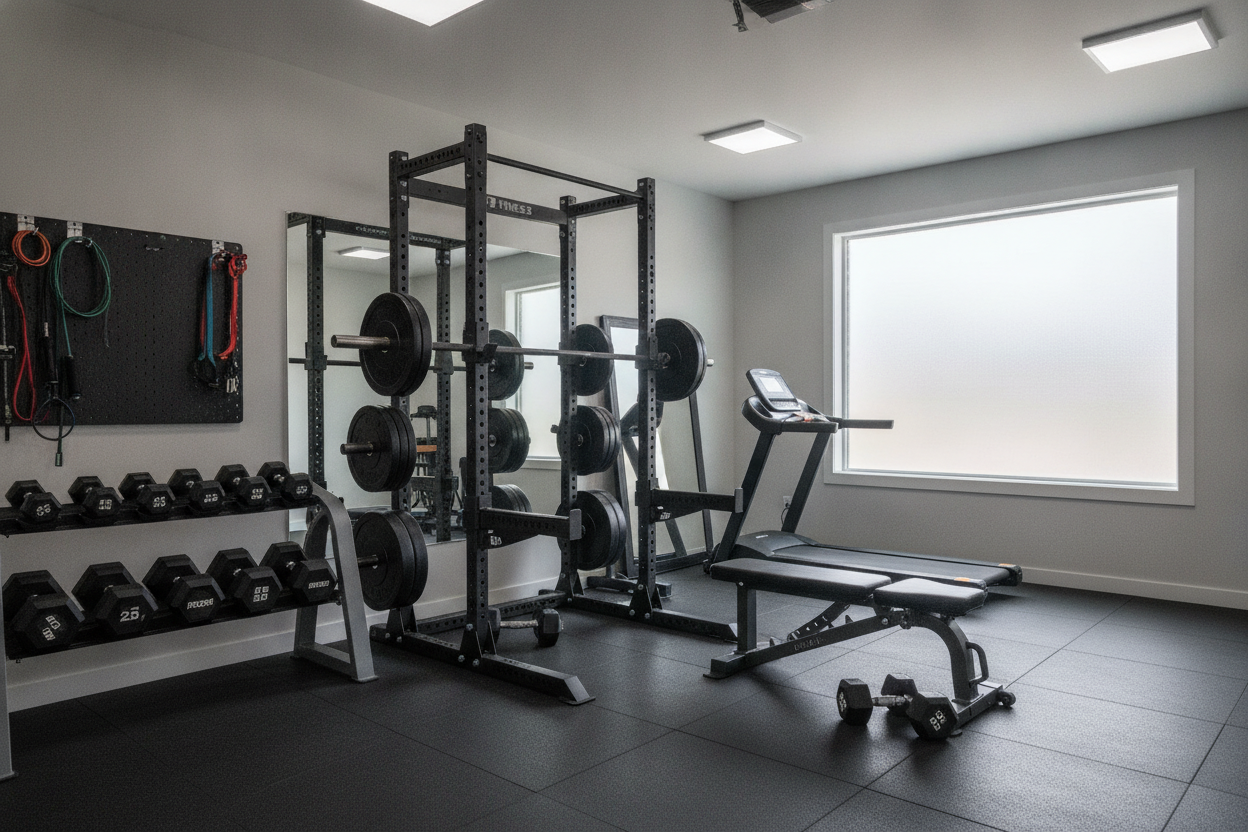
Scalability is the only metric that matters. When I evaluate a new piece of kit, I ask: 'Can I still use this when I'm 20% stronger?' This is why a modular power rack or a set of heavy adjustable dumbbells will always beat a standalone leg extension machine. The best piece of exercise equipment is one that adapts to your growth. For a home setup, you want gear that uses standard Olympic plates or has a wide adjustment range.
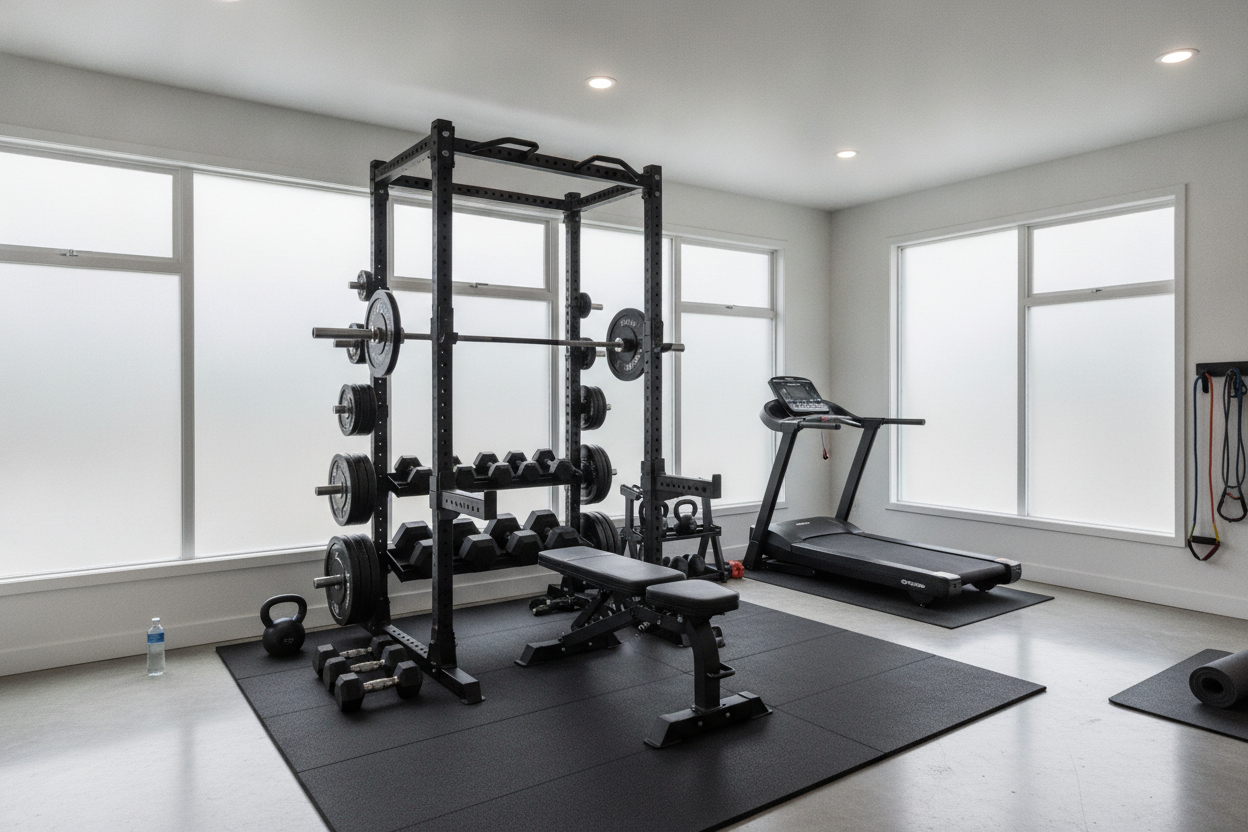
Modular equipment also allows you to add attachments over time. I started with a basic squat stand and eventually added a lat pulldown attachment and a landmine station. This approach spreads the cost out while ensuring every best piece of exercise equipment for home you buy serves a long-term purpose. Avoid anything made of thin-walled plastic or 'proprietary' weight systems that force you to buy their specific, overpriced add-ons later.
Adjustable Dumbbells: The Undisputed Kings of Space
If you have less than 50 square feet to work with, adjustable dumbbells are non-negotiable. They are the foundation of the best in home exercise because they replace an entire wall of fixed weights. I personally prefer the iron-style plate-loaded ones or the high-end 'click' selectors that go up to at least 80 pounds. A 50-pound set is fine for curls, but you’ll outgrow it for chest presses and rows within a single season of heavy lifting.
Loadable Lower Body Machines That Don't Eat Your Garage
Training legs at home is usually where people quit and head back to the commercial gym. You can only do so many air squats before you get bored. To see real hypertrophy, you need the best leg exercise equipment for home, which usually means a high-quality squat rack or a compact, plate-loaded leg press. If space is tight, a loadable sissy squat bench or a heavy-duty sandbag can provide the stimulus you need without requiring a 10-foot ceiling.
Protect Your Joints (And Your Subfloor)
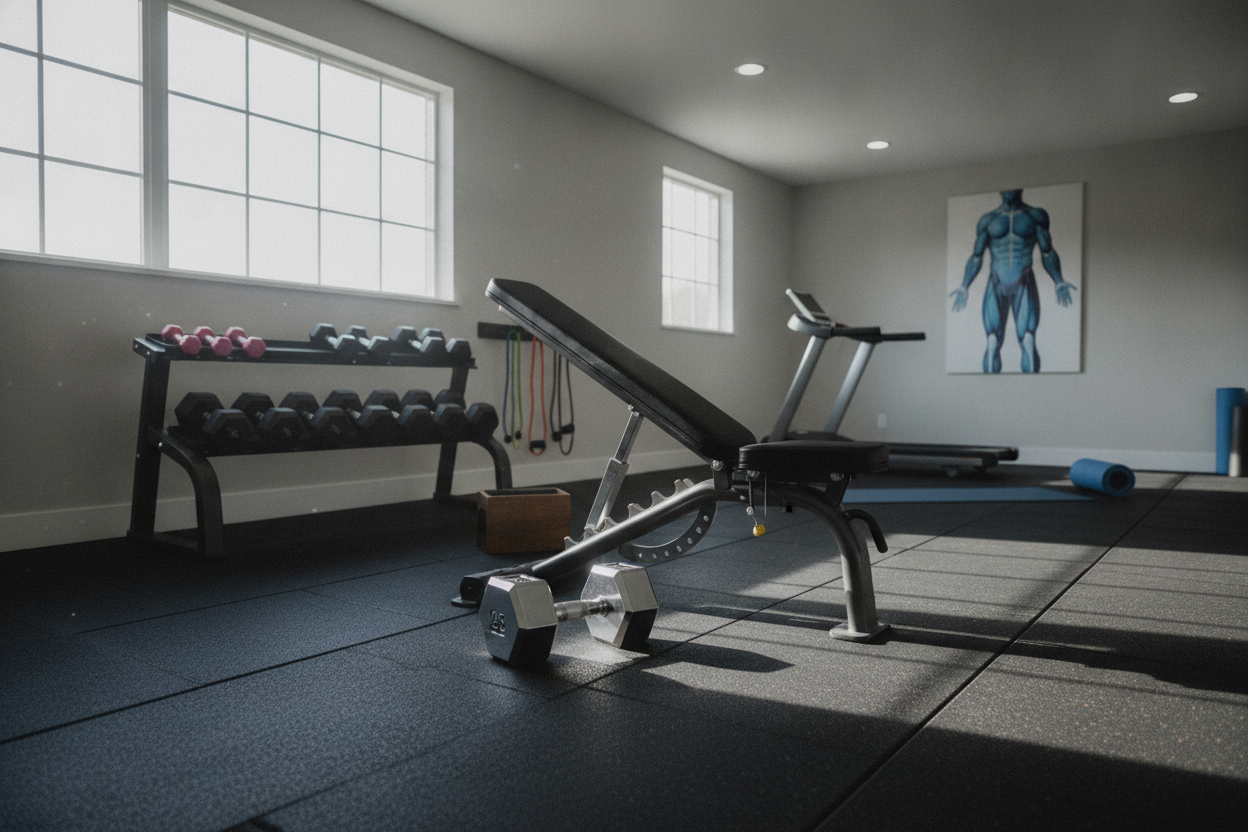
As you get stronger, the stakes for your floor get higher. Dropping a 45-pound plate on bare concrete or hardwood isn't just loud—it's a structural liability. You need dedicated gym flooring for home workout zones that can handle the shock. I’m not talking about those thin, squishy foam tiles that pull apart like puzzle pieces the moment you try to do a burpee. You need high-density rubber.
If you're covering a basement or a garage, a large exercise mat for home gym use provides the necessary Shore A hardness to keep your feet stable during heavy squats while muffling the vibration of a deadlift. Thicker is usually better—aim for at least 8mm to 10mm if you plan on using anything heavier than a pair of 30-pounders. Your knees and your downstairs neighbors will thank you.
The 'Buy Once, Cry Once' Rule for Home Gyms
The best exercise equipment to have at home is the stuff you only have to buy one time. It is tempting to buy the $150 barbell set from a big-box retailer, but when that bar starts to permanently bend under 200 pounds, you'll realize you just rented a bad product for a few months. Buy 11-gauge steel. Look for bronze bushings in your bars. Check the weight capacity on your bench—if it’s rated for less than 600 pounds (user weight plus lift weight), skip it. Investing in quality from day one is the only way to ensure your home gym doesn't end up on Facebook Marketplace by next summer.
Personal Experience: My $300 Mistake
Early on, I bought a 'pro' folding bench because I wanted to save space. It felt fine during assembly, but the first time I tried to incline press 185 pounds, the whole frame wobbled like a Jenga tower. I didn't finish the set because I was too busy worrying about the bench collapsing. I sold it for $40 and bought a heavy-duty flat bench that weighed twice as much. I lost $260 in the process. Don't be me. Buy the heavy stuff first.
FAQ
How much space do I really need for a home gym?
You can get a world-class workout in an 8x8 foot area. The key is using vertical storage and adjustable weights rather than fixed machines.
Are resistance bands a good substitute for weights?
Bands are great for accessory work and rehab, but they are difficult to track for progressive overload. Use them as a supplement, not the foundation.
What is the most important piece of gear to buy first?
A solid set of adjustable dumbbells or a high-quality barbell and plates. These offer the most versatility for every muscle group in the body.