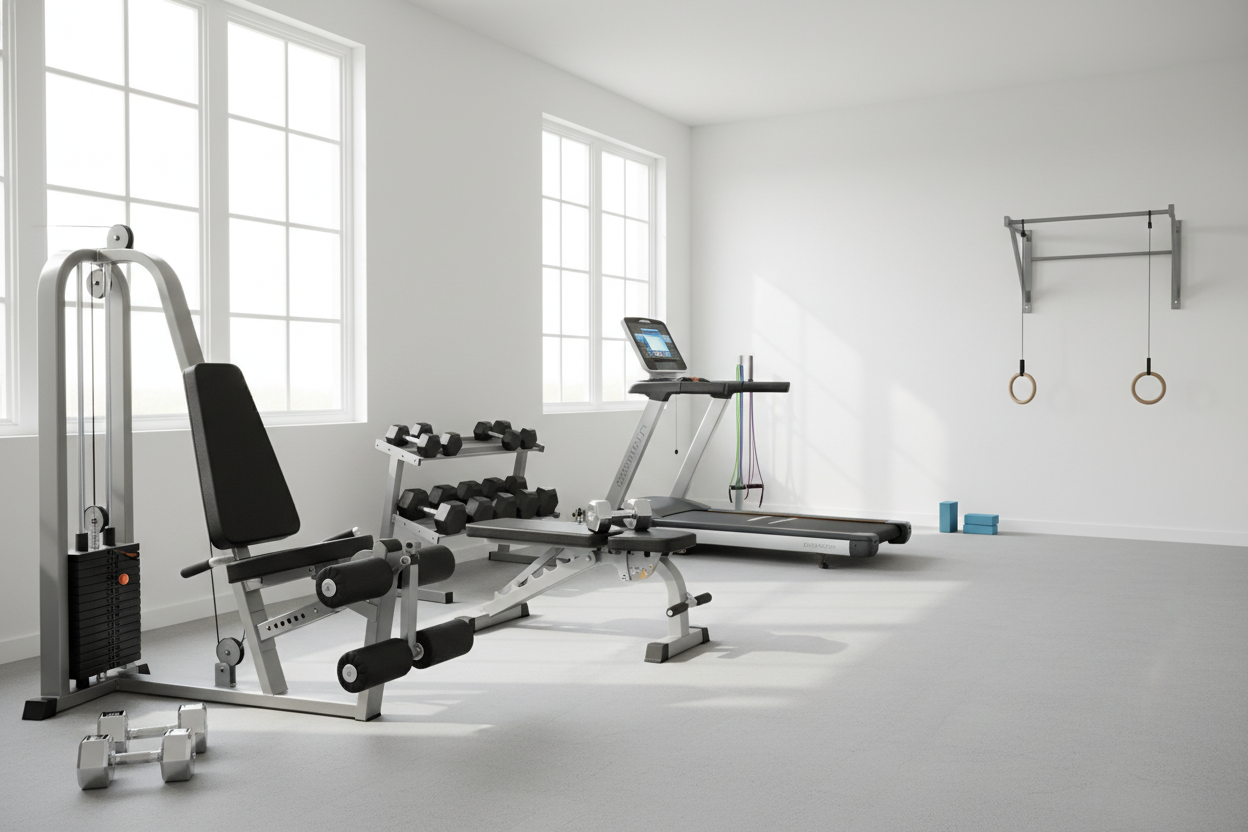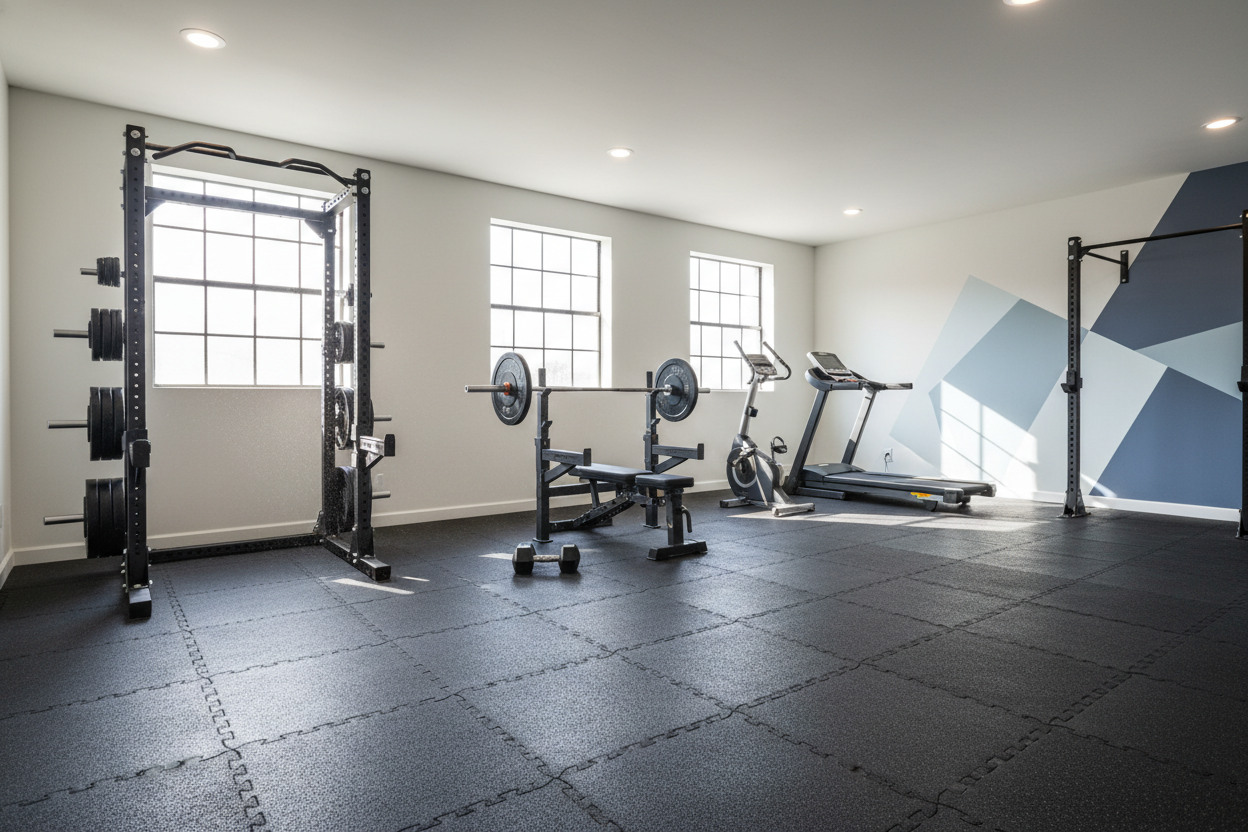
Why a Slippery Floor Ruins Your Home Gym Upper Body Workout
I spent months stuck at a 225-lb bench press, convinced my triceps were the weak link. I bought specialized bars, messed with my grip width, and hammered accessory work until my elbows screamed. Then I realized the real culprit: my feet were sliding two inches forward every time I tried to drive the weight up. My home gym upper body workout was failing because I was basically trying to fire a cannon from a canoe.
If you are training on raw concrete or those cheap, squishy foam tiles from the big-box store, you are bleeding power. You cannot generate force if your base is shifting. A stable floor is the most underrated piece of equipment in your arsenal.
Quick Takeaways
- Leg drive is responsible for up to 15% of your bench press power.
- Raw concrete and dust create a 'skating rink' effect that kills stability.
- High-density rubber flooring provides the friction needed to lock your shoulder blades into the bench.
- A 6x8 ft footprint is the minimum space required for a safe, stable bench setup.
Your Bench Press Is Only as Strong as Your Floor
Most lifters think the bench press is just a chest and triceps move. They are wrong. When you are pushing heavy iron, your body needs to act as a single, rigid unit. If your bench moves or your feet lose their grip, that rigidity vanishes. I have seen guys wonder why their shoulders hurt, only to realize their bench is slowly rotating during their sets because the floor has zero grip.
Raw garage concrete is notorious for this. Even if it looks clean, a fine layer of dust acts like ball bearings under your feet. Cheap foam tiles are even worse—they compress under load, making it feel like you are lifting on a mattress. You need a high-friction surface that bites back when you dig your heels in.
Why Leg Drive Dictates Your Home Gym Upper Body Workout
Leg drive is the art of pushing your feet into the floor to drive your upper back into the bench. This creates a rock-solid platform and helps maintain your spinal arch. If your feet slip, you lose that tension, your chest collapses, and the weight feels ten pounds heavier instantly. This is why an upper body workout home gym session often feels 'off' compared to a commercial gym with professional rubber flooring.
It is not just about the bench, either. Standing overhead presses require your glutes and quads to be locked. If your shoes are sliding on a slick surface, your core has to work double-time just to keep you upright, leaving less energy for the actual lift. You want your floor to be the last thing you think about when you have 200 pounds over your face.
How to Lock Down Your Bench (and Your Feet)
The fix is simple: stop treating flooring as an afterthought. You need a dedicated, high-density surface that covers the entire footprint of your movement. I always recommend a Large Exercise Mat For Home Gym that is thick enough to absorb vibration but firm enough that it does not 'squish' under your heels.
I have found that a 6X8Ft Exercise Mat Yoga Mat Gym Flooring For Home Workout is the perfect size for a standard power rack or a standalone bench setup. It gives you enough runway so that your bench stays put, and your feet stay on the same grippy material. At 7mm or thicker, these mats provide enough 'bite' for your sneakers to lock in without feeling like you are standing on a sponge. If you can move your bench by nudging it with your foot, your floor is too slick.
My Go-To Upper Body Workout Home Gym Blueprint
Once your floor is sorted, you can actually train with intensity. Here is how I structure a session when I know my base is locked in:
- Paused Bench Press: 3 sets of 5. Focus on driving your heels through the floor the moment the bar touches your chest. If you feel your lats engage, you are doing it right.
- Strict Overhead Press: 3 sets of 8. Squeeze your glutes and keep your feet rooted. No 'dancing' with your feet to find balance.
- Weighted Pull-Ups: 3 sets to failure. Even here, a stable landing surface matters for safety when you drop off the bar.
- Chest-Supported Rows: 4 sets of 12. Use the floor to brace your legs and prevent your torso from swinging.
This routine relies on total body tension. Without a grippy floor, you will end up cheating the movement or cutting your sets short because you feel unstable.
When to Add Machines to Your Upper Body Days
Free weights are king for building that raw, stabilizing strength, but there comes a point in the workout where your central nervous system is fried. That is when I move to machines. Using a cable system or a smith machine allows you to push to absolute failure without worrying about dropping a barbell on your neck.
If you have the space, check out this guide on the Top 10 Full Body Workout Machines For A Complete Home Gym. Adding a functional trainer or a lat pulldown machine lets you get that high-volume pump after your heavy, floor-dependent compound lifts are done. It is the safest way to finish off your chest and shoulders when your stabilizing muscles are spent.
Personal Experience: The Yoga Mat Mistake
Early on, I tried to save money by putting two cheap yoga mats under my bench. It was a disaster. Not only did they move independently of each other, but they actually made the bench *less* stable because the rubber was too soft. I almost dumped a set of 90-lb dumbbells when the mat bunched up under my left foot. I learned the hard way: buy a single, solid piece of high-density flooring and stop overthinking it. It is a one-time purchase that protects your floor and your joints.
FAQ
Is 7mm thick enough for a home gym floor?
For upper body work and general lifting, yes. 7mm high-density rubber provides excellent grip and enough protection for most dumbbell work. If you are dropping 400-lb deadlifts regularly, you might want to layer it over plywood or go with 3/4-inch horse stall mats.
How do I stop my bench from sliding on concrete?
The best way is to place it on a dedicated rubber gym mat. If you are in a pinch, you can wipe the rubber feet of your bench with a damp cloth to remove dust, but a high-friction mat is the only permanent solution.
Does leg drive really help the bench press?
Absolutely. It creates a stable arch and transfers force from the ground through your hips and into your upper back. This shortens the bar path and allows you to use your lats more effectively to stabilize the weight.