Why Most Elderly Leg Exercises Won't Fix the Senior Shuffle
I remember watching my dad start to take those short, choppy steps—the kind where the feet barely leave the hardwood and every rug becomes a potential trip hazard. It is a gut-punch because you realize their world is getting smaller. Most people call it 'getting old,' but after a decade of testing gear and coaching, I know it is usually just muscle atrophy disguised as a birthday. If you are looking for elderly leg exercises, you have to stop thinking about 'maintenance' and start thinking about rebuilding.
Quick Takeaways
- The 'senior shuffle' is caused by weak quads and glutes, not just age.
- Seated, unweighted exercises rarely translate to better balance or walking.
- Weight-bearing movements like box squats are the gold standard for independence.
- Stability and a non-slip surface are non-negotiable for home training.
The 'Senior Shuffle' Isn't Inevitable (It's Just Weak Quads)
When someone develops a shuffling gait, it is often because their quadriceps—the big muscles on the front of the thighs—have lost the power to lift the foot clearly off the ground. This loss of stride length is a hallmark of sarcopenia, or age-related muscle loss. It is not just about looking fit; it is about gait mechanics. When your quads and glutes go quiet, your body compensates by taking smaller, flatter steps to stay stable.
Targeted leg workouts for elderly individuals need to focus on force production. If you can't push off the ground with authority, you're going to shuffle. Reclaiming that stride requires more than just 'staying active.' It requires specific resistance that forces those muscle fibers to wake up. I have seen 80-year-olds go from a hesitant shuffle back to a confident stride just by waking up their posterior chain.
Why Seated Leg Extensions Are Wasting Your Time
Go into any senior center and you will see people doing seated leg lifts with zero resistance. While moving is better than sitting still, these lower body exercises for seniors often fail the 'real life' test. Life happens while you are standing. Sitting in a chair and kicking your legs out does nothing for your balance, your bone density, or your ability to stabilize your hips when you trip over a curb.
Unweighted, non-functional movements do not provide the stimulus needed to trigger muscle growth or bone strengthening. To actually see a change, you need standing or weight-bearing movements. You need to fight gravity. If an exercise doesn't require you to manage your own body weight, it probably isn't going to help you get out of a low car seat or climb a flight of stairs.
3 Leg Strengthening Exercises for Seniors That Actually Translate to Real Life
If you want to stop the decline, you need a routine that mimics the movements you do every day. These are the best leg exercises for seniors because they focus on functional strength rather than just 'burning calories.'
The Box Squat (Your 'Get Out of the Chair' Muscle)
The box squat is the king of quad exercises for seniors. Find a firm chair or a weight bench. Stand in front of it, reach your hips back, and slowly lower yourself until your glutes touch the surface. The key is the 'eccentric' phase—the way down. Don't just 'plop' down. Controlling that descent builds massive strength in the quads and prevents the common 'senior plop' where you lose control halfway to the seat.
The Supported Reverse Lunge (For Stair Climbing Power)
Lunges are intimidating, but they are the premier lower extremity exercises for elderly folks who want to conquer stairs. Stand next to a sturdy kitchen counter or a power rack for support. Step one foot back and drop your back knee toward the floor as far as is comfortable. Use the counter to help you push back to a standing position. This single-leg focus fixes muscle imbalances that lead to falls.
The Glute Bridge (Rebuilding the Posterior Chain on the Floor)
Strong glutes are the engine of the human body. Lie on your back with your knees bent and feet flat. Lift your hips toward the ceiling until your body forms a straight line from knees to shoulders. This builds the hip extension strength needed to stand up straight and walk without a hunch. If getting on the floor is tough, you can do these on a firm mattress, though a floor is always better for stability.
Setting Up a Safe Space to Train at Home
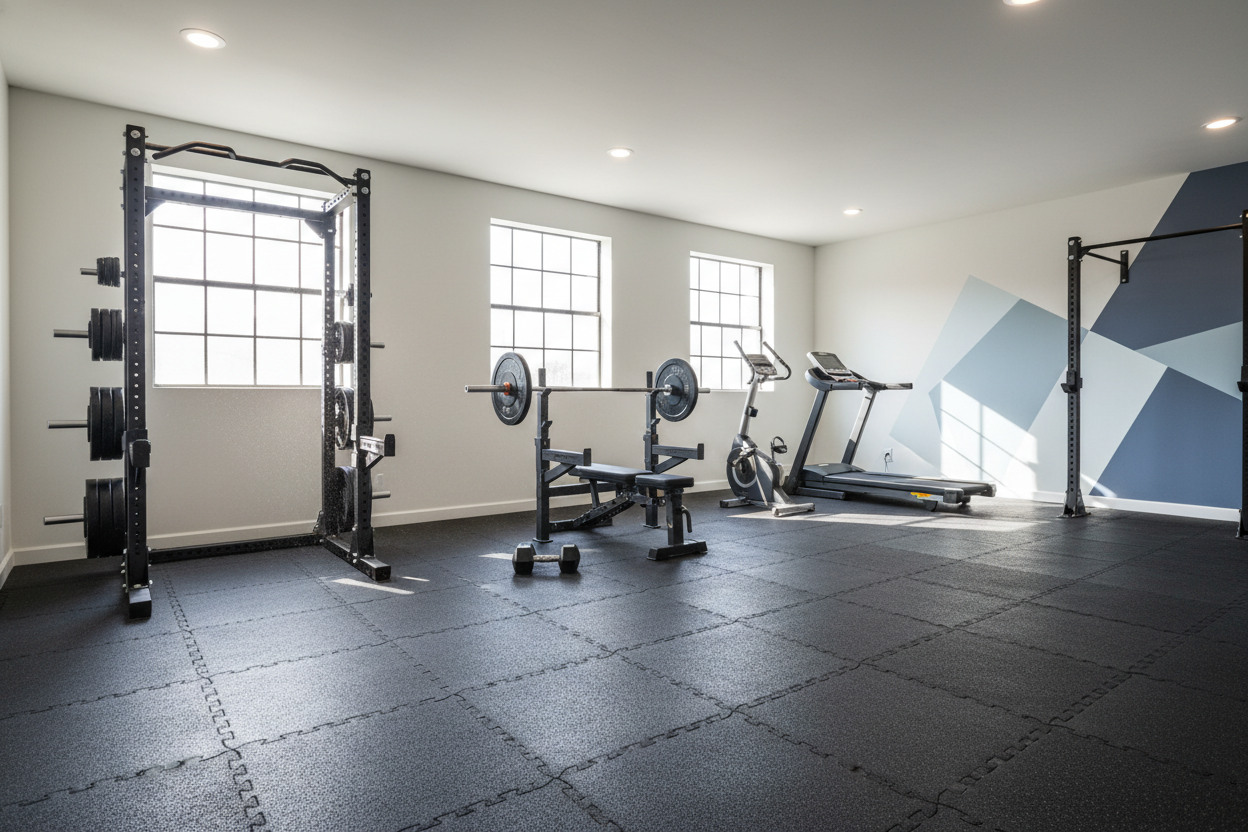
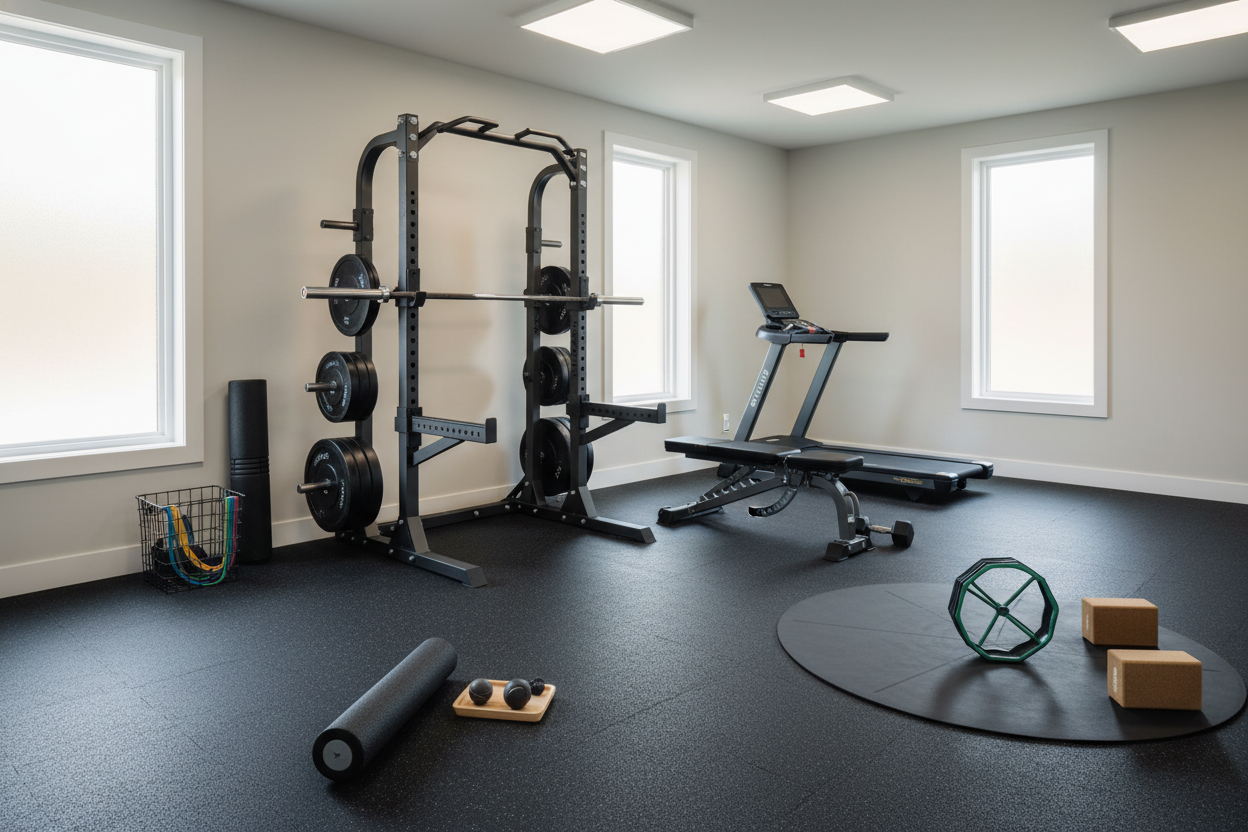
You cannot train effectively if you are terrified of slipping. Most home floors are too slick for lunges. I always recommend clearing a dedicated space and laying down a large exercise mat for home gym use. You need a surface that 'bites' back when you push against it.
If you have the room, a 6x8ft exercise mat is the sweet spot. It is wide enough that you won't step off the edge during a reverse lunge, and it provides enough padding for those glute bridges without being 'mushy.' Remove any throw rugs or clutter in this zone. A clear, high-traction space is the difference between a productive workout and a trip to the ER.
How Often Should Older Adults Train Their Legs?
Leg strength training for seniors doesn't require a daily grind. In fact, that is a recipe for joint pain. Aim for two to three sessions per week. Your muscles need 48 hours to recover and actually build the new tissue you're asking for. If you feel 'beat up' rather than 'worked out,' back off the volume but keep the frequency. Consistency beats intensity every single time in the long run.
Personal Experience: The 'Aha' Moment
I once worked with a client named Jim who was 74 and convinced his 'bad knees' meant he could never squat again. He was using a walker for anything longer than a trip to the mailbox. We started with box squats to a very high bench—literally just a 4-inch range of motion. Within three months, he was squatting to a standard chair height and had ditched the walker for a cane. He didn't have 'bad knees'; he had 'quiet muscles' that had forgotten how to support his joints. The biggest mistake I see is people giving up because of a little creaking in the joints. Move through the range you have, and the range you want will follow.
FAQ
Can elderly regain leg strength?
Absolutely. Muscle tissue responds to resistance regardless of age. While a 70-year-old might not build muscle as fast as a 20-year-old, the physiological process of hypertrophy still works. You can significantly increase strength in as little as 6-8 weeks.
What are the best exercises for weak legs in the elderly?
Focus on the 'Big Three': Box squats for quad power, supported lunges for balance and stair climbing, and glute bridges for hip stability. These movements cover the major muscle groups used in walking and standing.
Is it safe to do leg exercises at home?
Yes, provided you have a stable support (like a countertop or heavy table) and a non-slip floor. Always start with a smaller range of motion and increase depth only as your confidence and strength grow.