Upper/Lower Full Body 3-Day Split for Home Gyms
Balancing muscle growth, recovery, and a busy home schedule can be challenging for strength trainees. An upper/lower full body 3-day program offers a practical compromise by combining targeted regional lifting sessions with a balanced all-around session. Rather than cramming high fatigue into back-to-back workouts, an upper/lower full body 3-day schedule provides enough stimulus to stimulate key muscle groups while leaving open days for physical recovery.
For lifters who train in a garage or spare room, this format brings structural clarity. Utilizing an upper/lower full body 3-day routine keeps workouts efficient, simplifies warm-ups, and organizes your space around a predictable set of primary movements throughout the training week.
Understanding the Upper/Lower Full Body 3-Day Plan
The standard concept behind the upper/lower full body 3-day layout is simple: dedicate one session to pushing and pulling with the torso and arms, allocate a second session to the hips and legs, and finish with a session that unites the entire kinetic chain. By organizing work this way, an upper/lower full body 3-day schedule achieves balanced frequency without demanding four or five separate training sessions every single week.
Many lifters discover that an upper/lower full body hybrid keeps training fresh. Alternating focused localized work with general full-body demands prevents mental burnout. Moreover, an upper/lower full body 3-day model ensures that major movement patterns get revisited frequently enough to refine lifting technique and reinforce stable motor patterns over time.
Why Choose an Upper/Lower Full Body Hybrid Over a Regular 3-Day Plan?
An upper/lower full body hybrid provides higher targeted training volume for specific regions than standard whole-body workouts while still preserving the frequency benefits of whole-body lifting. Traditional three-day routines often cycle identical full-body sessions, which can leave smaller muscle groups understimulated or lead to joint irritation from repeating the same heavy setups three times weekly. In contrast, an upper/lower full body 3-day hybrid allows focused attention on upper body movements during one session, dedicated attention on lower body movements in another, and a comprehensive stimulus to close the loop.
Using an upper/lower full body 3-day system also permits lifters to manage training volume across the week with precision. You can push hard on specialized compound lifts during isolated days, then blend lighter variations and multi-joint builders during the final session.
Structuring Your Weekly Schedule and Rest Days
A dependable weekly schedule is the foundation of any sustainable 3-day split. Because heavy compound lifts demand systemic energy, interspersing dedicated rest days between active sessions preserves energy reserves and supports steady joint recovery. In an upper/lower full body 3-day routine, spacing your workouts evenly ensures that fatigue from one day does not blunt performance in the next.
How Do You Structure an Upper/Lower Full Body 3-Day Split?
You structure an upper/lower full body 3-day split by scheduling workouts on non-consecutive days, typically placing your upper body session first, followed by a dedicated lower body day, and concluding with a comprehensive full body session. A common weekly schedule assigns training to Monday, Wednesday, and Friday, leaving Tuesday, Thursday, and the weekend open for active recovery, light mobility, and rest days.
Here is an example layout for an upper/lower full body 3-day calendar:
- Monday: Upper body day emphasizing horizontal and vertical pressing and pulling.
- Tuesday: Rest and light movement.
- Wednesday: Lower body day highlighting squat and hinge patterns.
- Thursday: Rest and mobility work.
- Friday: Full body workout linking upper and lower compound patterns.
- Saturday & Sunday: Rest days for systemic and joint recovery.
For additional perspective on balancing multi-day setups at home, you can review our guide to beginner three-day lifting routines to compare structural approaches.
Day-by-Day Exercise Selection for Balanced Volume
Selecting appropriate movements ensures that an upper/lower full body 3-day rotation hits all primary muscle groups evenly. The goal is to prioritize compound lifts that provide substantial stimulus before rounding out sessions with purposeful accessory movements.
Day 1: Upper Body Day Focus
The first workout of this 3-day split concentrates on the chest, back, shoulders, and arms. Lifters typically open with a horizontal press such as the dumbbell bench press or a flat barbell press. Moving to an adjustable bench allows you to alter angles for incline presses, targeting upper pectoral fibers and anterior shoulders.
Pairing these pushing motions with horizontal rows, pull-ups, and a standing overhead press ensures balanced development around the shoulder girdle. Because this session avoids lower body fatigue, lifters can sustain high intensity through their accessory movements without draining systemic power.
Day 2: Lower Body Day Focus
The midweek session shifts completely to hip and knee mechanics. The cornerstone of this day often revolves around barbell squats, which recruit the quads, glutes, and core. Following squats, trainees can introduce deadlift variations like Romanian deadlifts to place emphasis on the hamstrings and posterior chain.
To explore specialized leg equipment and dedicated lower-body configurations, explore our curated lower body machines for home spaces. Complementing primary compound lifts with lunges, calf raises, or split squats on this lower body day rounds out the weekly lower-half stimulus while giving the torso a complete break.
Day 3: Full Body Workout Focus
The final lifting session of your upper/lower full body 3-day split brings everything together. A well-designed full body workout combines moderate-intensity compound movements from both regions. Trainees can pair front squats or trap-bar pulls with overhead press variations and chest-supported rows.
By revisiting both upper and lower patterns in this unified session, the upper/lower full body 3-day plan maintains muscular frequency across the body. You can examine detailed exercise pairings for upper and lower sessions to see how supersetting complementary lifts keeps session duration concise.
Home Gym Equipment Placement and Workspace Setup
Executing an upper/lower full body 3-day program in a residential setting requires thoughtful equipment placement. Because your training switches between heavy squats, floor presses, and pulling movements, arranging your room logically prevents wasted setup time between sets.
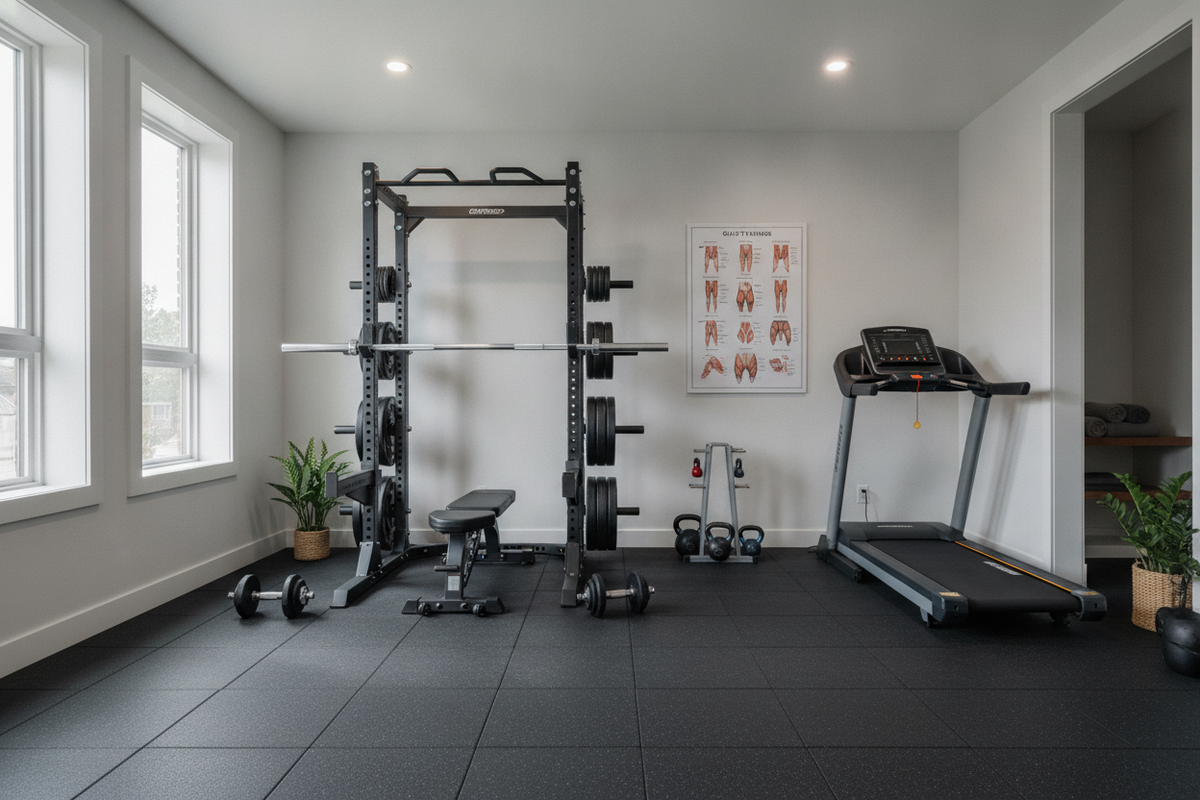
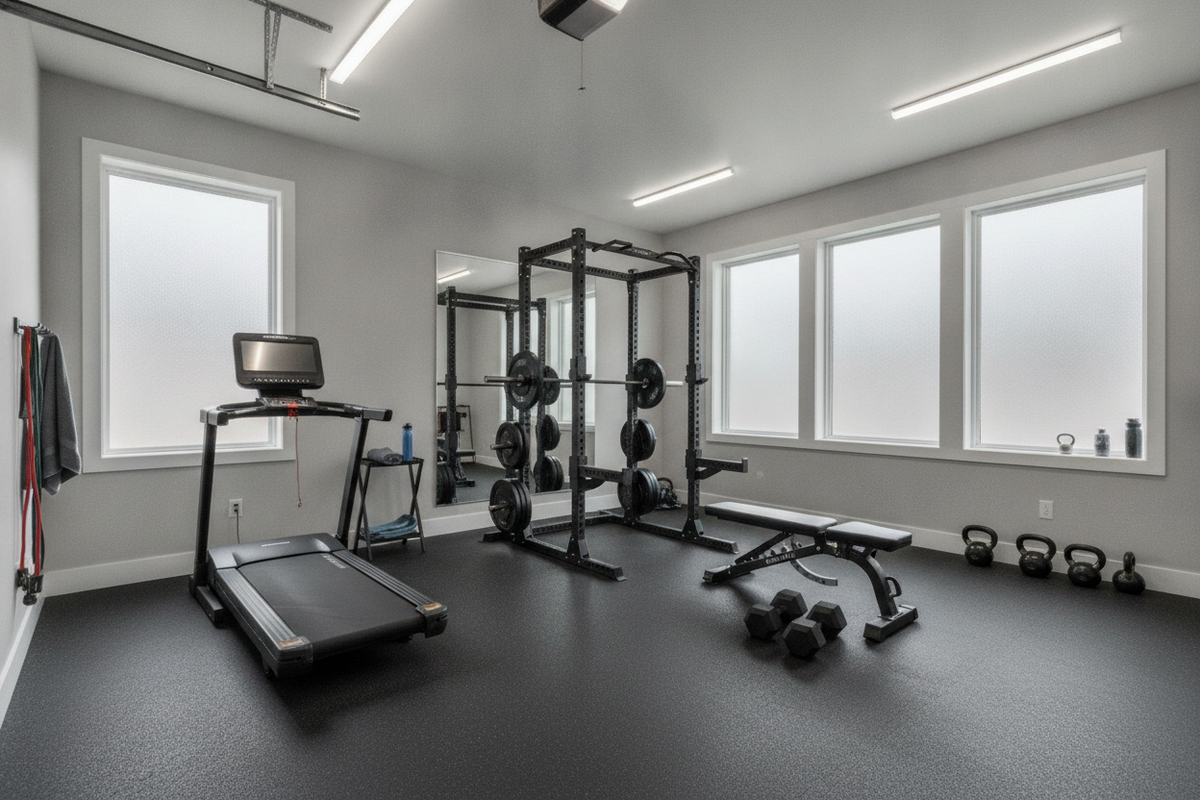
Position your squat rack where there is ample overhead clearance for pull-ups and an overhead press. Place your adjustable bench nearby so it can slide smoothly into the rack for bench presses or be rolled out for dumbbell bench press variations. Keeping free weights, collars, and resistance bands within arm's reach streamlines transitions across your 3-day split and keeps walkways clear of hazards.
Gym Flooring and Floor Protection Under Heavy Loads
High-quality gym flooring is essential when running an upper/lower full body 3-day program. Heavy barbell squats, dumbbell bench press drops, and repeated deadlift variations place intense pinpoint pressure on underlying residential floors. Installing thick, resilient rubber workout mats absorbs mechanical energy, disperses load weights, and delivers critical floor protection for concrete or hardwood subfloors.
Beyond structural defense, dense rubber workout mats provide dependable traction during dynamic foot adjustments. Whether planting your feet during an overhead press or setting your stance for heavy pulls, non-slip gym flooring keeps your base stable throughout every rep of your upper/lower full body hybrid schedule.
Managing Progressive Overload and Joint Recovery
Long-term success with an upper/lower full body 3-day split depends on managing progressive overload thoughtfully. Rather than forcing aggressive weight increases every session, focus on small increments in load, additional repetitions, or improved control over the eccentric phase of each lift.
A thorough warm-up routine is equally important. Prioritize dynamic hip mobility, thoracic spine rotations, and gradual warm-up sets before loading your heavy compound lifts. Paying close attention to warm-up routines and respecting planned rest days will sustain healthy progress, safeguard joint recovery, and keep your upper/lower full body 3-day training engaging and productive for months to come.