
Glute Chart: Guide to Muscles and Training
A detailed glute chart provides an essential roadmap for anyone looking to build balanced lower-body strength, improve athletic performance, and support posture. Whether you train with heavy free weights or focus on mat routines at home, understanding how your posterior chain is structured allows you to select movements with greater purpose. Rather than simply guessing which lifts produce results, consulting a visual reference helps you direct tension to the right areas while maintaining healthy joints.
Understanding the Glute Chart and Muscle Layout
When you look at an anatomical glute chart, you will notice that the buttocks are not a single mass of tissue. Instead, they consist of three layered muscle groups that work in coordination during daily movement and strength training. Referencing a exercises targeting different glute muscles reference shows how each muscle layer contributes to posture, walking, and lifting.
What muscles are shown on a glute chart?
A standard glute chart displays three distinct muscles: the gluteus maximus, the gluteus medius, and the gluteus minimus. Each muscle originates along the pelvis and attaches to the femur, creating a coordinated system responsible for movement and stabilization.
The gluteus maximus is the largest and most superficial muscle in the group. It forms the bulk of the visual shape and acts as the primary driver for hip extension, propelling the body upward from a squat or forward during a sprint. The lower portions of the gluteus maximus tie into the hamstring complex, while the upper fibers integrate near the pelvic crest to assist in outward hip rotation.
Sitting higher on the pelvis and partially beneath the largest layer is the gluteus medius. This fan-shaped muscle is primarily responsible for hip abduction, which draws the leg away from the midline of the body. It also keeps the pelvis level whenever you stand on one foot. Deep beneath the medius lies the gluteus minimus, the smallest of the three. The gluteus minimus works alongside the medius to provide rotational control and critical hip stability during gait and single-leg drills.
Reading a Glute Diagram Female Layout
Many lifters specifically search for a glute diagram female illustration because pelvic structure often influences how movement is felt across the hips. A wider pelvic structure alters the angle at which the femur meets the hip joint. Consequently, studying a glute muscles diagram female reference helps explain why slight shifts in foot stance, hip width, and toe flare can dramatically alter muscle activation during common lifts.
In a typical glute diagram female guide, the upper shelf of the hip highlights the lateral position of the gluteus medius and gluteus minimus. These tissues are frequently referred to as the upper glutes in strength training circles. Developing these lateral areas supports a balanced, rounded appearance while actively protecting the knees from caving inward during squats.
Conversely, the lower glutes correspond to the bottom fibers of the gluteus maximus where they approach the hamstring insertion. A clear glute muscles diagram female helps lifters recognize that training the posterior chain requires varying your angles. Relying strictly on symmetrical, forward-facing movements often leaves the lateral stabilizers underdeveloped, which can compromise overall pelvic function.
Why is the gluteus medius important in hip stabilization?
The gluteus medius prevents the opposite side of the pelvis from dropping when walking, running, or standing on a single leg. When this muscle is strong, it maintains level pelvic alignment, preventing excessive strain on the lower back, hips, and knees. Consulting a glute chart frequently reveals just how much surface area the gluteus medius occupies along the outer crest of the hip, reinforcing why dedicated abduction work is crucial.
Targeting Each Section from Your Glute Chart
Once you understand the anatomy laid out on a glute chart, you can design a balanced workout routine that targets every angle. A comprehensive training plan should address both forward-and-back extension movements as well as lateral and rotational exercises.
Which exercises target the upper versus lower glute muscles?
Exercises emphasizing lateral hip abduction and external rotation target the upper glutes, while deep hip extension movements primarily engage the lower glutes. Blending both movement types ensures full development across all three gluteal muscles.
To target the main body of the gluteus maximus, movements centered on powerful hip extension are paramount. The standard glute bridge and the elevated hip thrust place high tension on the muscle at full lockout. Reviewing a barbell glute bridge guide helps lifters refine their form to ensure the hips, rather than the lumbar spine, drive the load upward. Performing kneeling kickbacks on the floor allows for isolated extension with a focused mind-muscle connection at the peak contraction.
For the gluteus medius and gluteus minimus, your routine must feature dedicated hip abduction. Classic floor exercises such as side-lying leg raises and clamshells isolate these smaller lateral fibers effectively. Adding a light loop resistance band around the thighs or above the knees during a glute bridge or bodyweight squat increases demands on the upper glutes, forcing the gluteus medius to fire continuously to keep the knees aligned over the toes.
To help balance your sessions, consider this simple exercise mapping based on your glute chart:
- Gluteus Maximus Focus: Barbell hip thrust, bodyweight glute bridge, and controlled kneeling kickbacks targeting peak extension and the lower glutes.
- Gluteus Medius Focus: Mat-based side-lying leg raises, banded lateral walks, and slow clamshells to build lateral strength and hip stability.
- Gluteus Minimus Focus: Single-leg floor holds, internal-rotation kick variations, and high-repetition abduction movements through a strict range of motion.
Floor Setup and Mat Selection for Glute Workouts
A successful glute routine relies heavily on proper body positioning, which makes your training surface an important factor. Many of the most effective isolation drills on a glute chart—including bridges, kickbacks, and side-lying abductions—are performed directly on the floor. In my experience, a slippery floor ruins glute activation faster than heavy weight ever could.
How does gym flooring affect floor-based glute exercises?
Gym flooring provides the traction and shock absorption necessary to maintain proper body mechanics during ground-based movements. Without a stable foundation, your feet can slip during bridging drills, shifting tension away from the glutes and into the lower back or hamstrings.
Using a dedicated exercise mat provides firm cushioning beneath sensitive pressure points such as the hips, knees, and elbows. When executing kneeling kickbacks, a thin yoga mat often fails to prevent uncomfortable knee pressure, which disrupts your focus and limits your working range of motion. Upgrading to a resilient, high-density dense foam mat distributes body weight evenly, protecting the joints so you can focus entirely on muscular contraction.
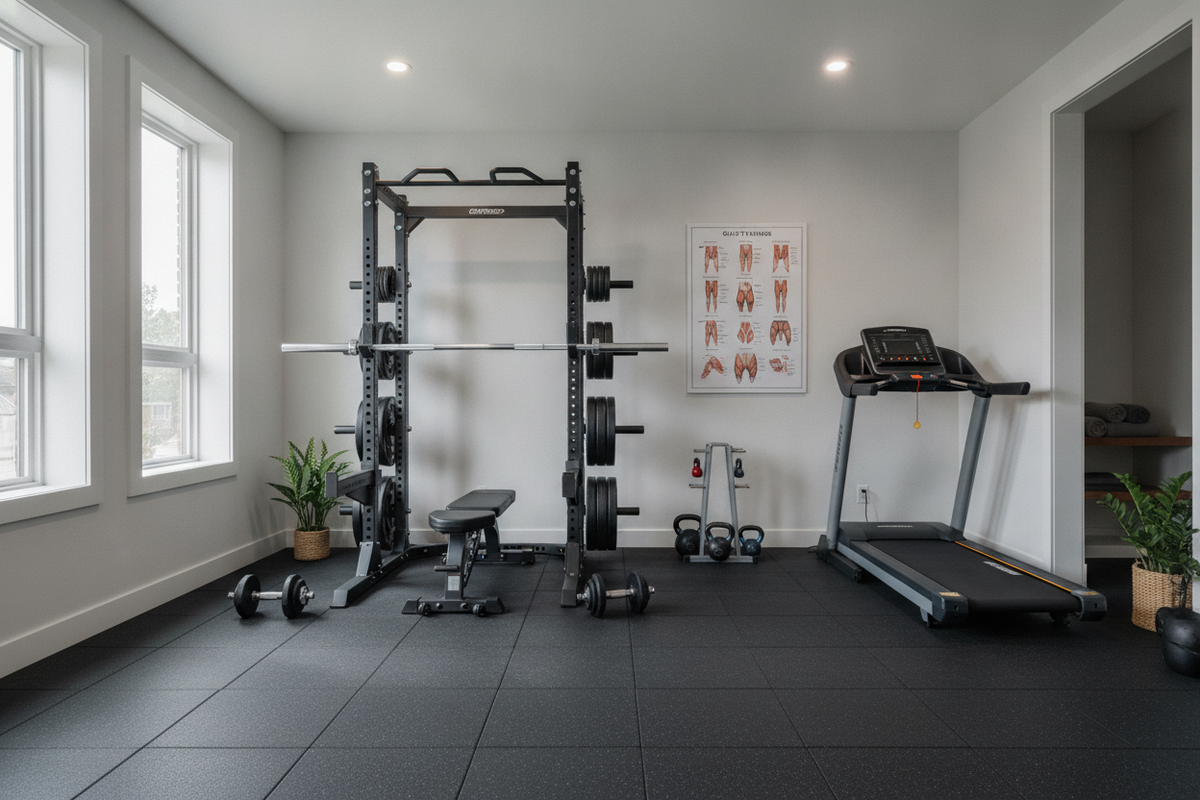
For dedicated home training spaces, installing quality home gym flooring creates a dependable foundation for both bodyweight drills and loaded barbell work. A non-slip surface ensures your heels stay anchored during a heavy hip thrust or dynamic glute bridge. A secure surface also preserves strict pelvic alignment, preventing unwanted hip twisting or asymmetric pushing that can occur on slick hardwoods or shifting carpets.
Common Glute Training Mistakes and How to Fix Them
Even with a reliable glute chart on hand, minor technical errors can prevent you from feeling the targeted muscles work. Recognizing these common pitfalls ensures your training remains safe and productive.
The most frequent error during hip extension drills like the glute bridge is overextending the lumbar spine. When lifters attempt to push their hips as high as possible, they often arch their lower back instead of hinging from the hips. To fix this, focus on maintaining neutral pelvic alignment, drawing the ribcage down, and finishing the movement with a deliberate squeeze of the gluteus maximus rather than hyperextending the spine.
Another common mistake occurs during lateral glute exercises like clamshells or side-lying leg raises. Lifters often roll their hips backward to make the exercise feel easier, which shifts tension onto the hip flexors and away from the gluteus medius. Keeping the hips stacked vertically and placing your top hand on the pelvis ensures that the movement isolates the upper glutes throughout the intended range of motion.
Finally, do not underestimate the value of deliberate tempo. Rushing through repetitions with momentum robs the gluteus minimus and smaller stabilizers of meaningful work. Slowing down your floor exercises, pausing at the top of each contraction, and incorporating a light resistance band builds a stronger mind-muscle connection. By pairing the visual clarity of a glute chart with supportive home gym flooring and intentional technique, you can develop balanced lower-body strength and long-term joint resilience.


