Exercises That Target Different Glute Muscles: Complete Movement Framework and Home Setup
Understanding Gluteal Anatomy: Maximus, Medius, and Minimus Roles
Building balanced lower-body strength requires selecting exercises that target different glute muscles rather than relying on a single movement pattern. The posterior chain contains three primary gluteal segments, each operating across distinct planes of motion and mechanical functions. Understanding these distinct divisions allows lifters to organize a comprehensive routine that addresses both raw power output and joint stability.
The largest segment, the gluteus maximus, serves as the primary driver for sagittal hip extension and external rotation. It generates propulsion when standing from a deep squat, locking out a deadlift, or driving the hips upward during a bridge. Above and along the lateral crest of the pelvis sit the gluteus medius and gluteus minimus. These upper and lateral muscles execute hip abduction, internally or externally rotate the thigh depending on hip angle, and maintain level pelvic alignment during unilateral stance. For detailed breakdowns of multi-angle development, consult our all three glute guide. Mapping out proper glute exercises muscle groups ensures no functional zone remains understimulated.
Exercises That Target Gluteus Maximus: Hip Extension and Deep Stretch Vectors
Developing the gluteus maximus requires training the muscle through both lengthened and shortened structural positions. Different exercises apply peak mechanical tension at varying points along the hip range of motion.
- Barbell and Dumbbell Hip Thrusts: This movement loads the gluteus maximus in its fully shortened position at terminal hip extension. Setting the shoulder blades against a secure bench and driving through the heels allows the lifter to tuck the pelvis at the top of each repetition without overarching the lumbar spine.
- Romanian Deadlifts (RDLs): Hinges emphasize the lengthened position of the gluteus maximus under load. By pushing the hips rearward while maintaining a neutral spine and soft knee bend, tension concentrates along the gluteal fold and upper hamstrings.
- Deficit Bulgarian Split Squats: Elevated rear-foot split squats create significant hip flexion depth, loading the gluteus maximus through a substantial range of motion while simultaneously demanding dynamic single-leg balance.
Integrating both thrusting and hinging patterns provides balanced mechanical tension across the complete fiber layout of the gluteus maximus.
Exercises That Target Gluteus Medius and Minimus: Abduction and Rotational Control
The upper and lateral glutes require movements in the frontal and transverse planes to achieve complete stimulation. When structuring a glute workout for all three muscles, abduction and anti-rotation movements must complement linear hip extension.
- Lateral Band Walks: Placing resistance bands around the feet or above the knees forces the gluteus medius to contract continuously against inward hip collapse while stepping laterally across a level floor.
- Side-Lying Hip Abductions and Clamshells: Performing controlled lateral leg raises with the pelvis tilted slightly forward isolates the gluteus medius and minimus, reducing unwanted compensation from the tensor fasciae latae.
- Curtsy Lunges: Stepping rearward across the midline of the body stretches the lateral hip muscles under load, requiring strong gluteus medius recruitment to stabilize the knee and pelvis on the return drive.
- Single-Leg Romanian Deadlifts: While the working leg undergoes hip extension, the gluteus medius and minimus work as stabilizers to keep the pelvis square to the floor, resisting rotational torque.
Designing a Complete Glute Workout for All Three Muscles
A balanced training session or weekly split blends multi-joint compound builders with unilateral stability exercises and high-tension isolation finishers. Structuring your programming systematically ensures all regions receive adequate volume without causing excessive localized joint stress. Additional training structure concepts can be explored through our dedicated workout resource.
Consider organizing a training template using the following sequential categories:
- Primary Compound Lift: Begin with a heavy hip extension exercise, such as a barbell hip thrust or Romanian deadlift, focusing on strict hip lockouts and full muscular contraction.
- Unilateral Strength Movement: Transition to single-leg variations, such as Bulgarian split squats or step-ups, to challenge pelvic balance and address side-to-side strength discrepancies.
- Targeted Abduction and Rotation: Complete the session with lateral band walks, cable kickbacks, or side-lying leg raises to thoroughly engage the gluteus medius and minimus.
Executing exercises that target different glute muscles across alternating heavy and moderate resistance days supports balanced muscular development and joint integrity.
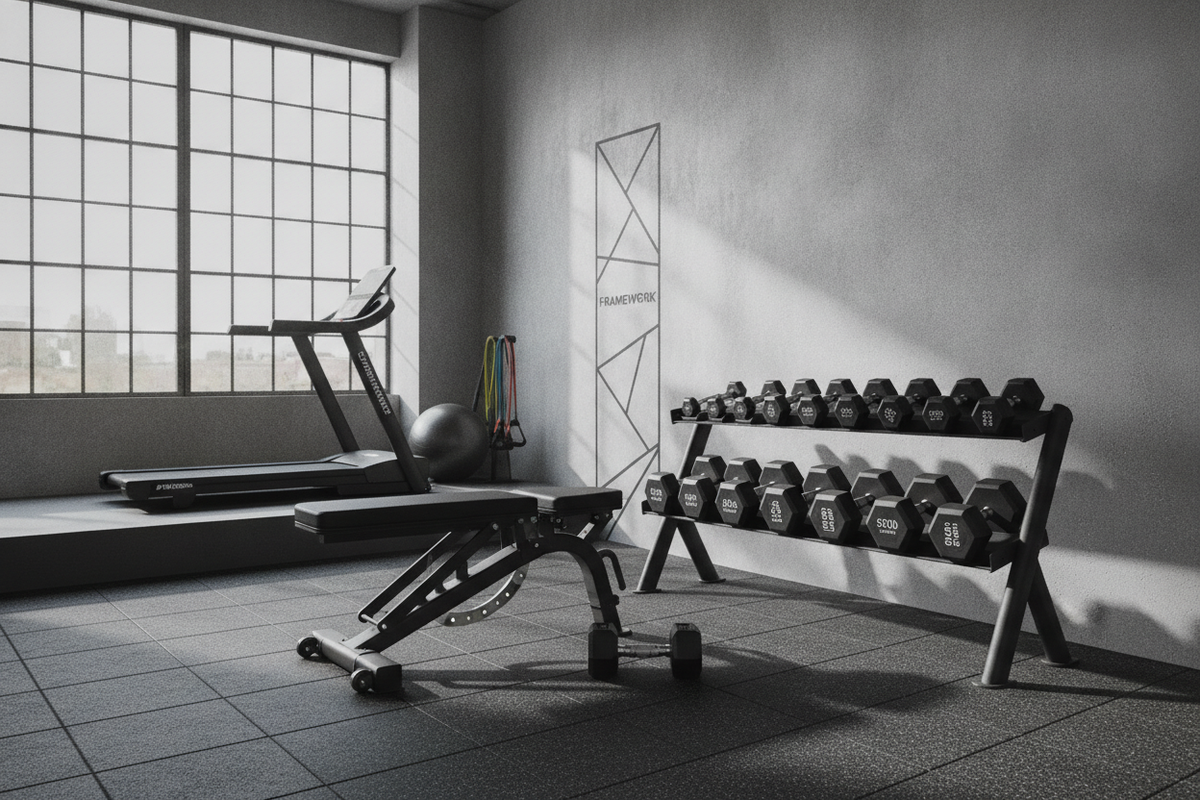
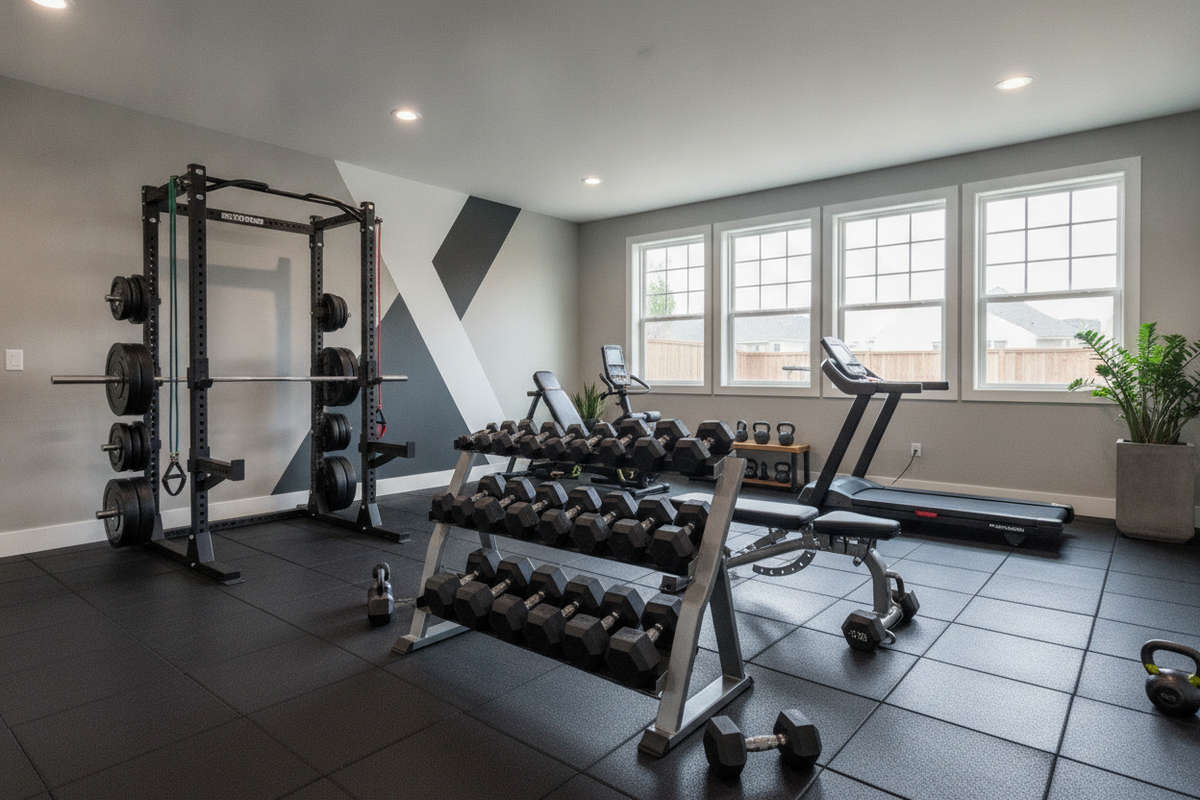
Home Gym Flooring and Equipment Layout for Heavy Glute Training
Executing heavy hip thrusts, dynamic lunges, and stability drills at home demands a secure foundation. Standard residential floors can be slick or prone to denting, which compromises technique during heavy lifts. Integrating a high-density workout product like a large exercise mat establishes a stable, non-slip base for all lower-body movements.
Proper flooring serves several practical functions during intense lower-body training:
- Bench Anchoring: During hip thrusts, horizontal driving force can cause weight benches to slide across smooth flooring. A textured mat surface provides traction that keeps the bench firmly seated.
- Foot Traction: Lateral band walks, lunges, and split squats require a grippy foundation to prevent foot slippage under lateral shearing forces.
- Joint Cushioning: Floor-based exercises like quadruped kickbacks, kneeling hip extensions, and side planks require adequate padding to protect the knees and elbows from hard subfloors.
- Subfloor Protection: Heavy dumbbells and barbells used for deadlifts and hip thrusts require resilient surface absorption to prevent floor scuffing and impact wear.
Common Technical Pitfalls and Activation Checklists
Executing glute exercises muscle groups effectively requires vigilant attention to form. Small alignment shifts can divert tension away from the glutes and place unnecessary stress on the lower back or knees.
Maintain the following form cues during your sessions:
- Avoid Lumbar Hyperextension: At the top of hip thrusts and deadlifts, ensure the movement finishes with a neutral spine and posterior pelvic tilt rather than arching the lower back.
- Maintain Foot Tripod Pressure: Distribute weight evenly across the heel, base of the big toe, and base of the pinky toe during squats and lunges to maintain stable kinetic alignment.
- Prevent Knee Valgus: During squats and thrusts, actively track the knees in line with the middle toes, engaging the lateral glutes to prevent inward knee collapse.
- Control the Eccentric Phase: Lower weights with deliberate control to maximize mechanical tension during the stretch phase of each repetition.