Complete Body Workout Plan for Home Gym Setup
Establishing a consistent complete body workout plan allows you to train every major muscle group efficiently without needing a commercial gym membership. By focusing on multi-joint compound movements and smart scheduling, a home-based complete body workout plan builds dependable functional strength while fitting into a busy routine. Whether you are outfitting a spare bedroom or a corner of your garage, pairing your training structure with proper floor cushioning creates a safe, durable environment for long-term consistency. To explore additional schedule templates and exercise libraries, review our curated workout hub before getting started.
Structuring Your Complete Body Workout Plan at Home
Designing a sustainable complete body workout plan requires balancing work volume across the entire body in each session rather than dividing efforts by isolated body parts. In a full body fitness plan, every session stimulates your upper body, lower body, and midsection, allowing you to build well-rounded athletic capacity. Unlike split routines that target single areas on dedicated days, a complete body workout routine provides frequent practice for foundational lifts, helping you refine form and maintain training momentum over time.
How do I structure a complete body workout plan for home training?
You structure a complete body workout plan for home training by pairing one lower-body push, one lower-body pull, one upper-body push, one upper-body pull, and a core exercise within each session. This balanced framework prevents muscular imbalances and keeps workouts time-efficient. A well-organized full body workout regimen also lets you alternate exercise order between sessions, ensuring you do not always perform the same heavy movement when fatigue is highest. Following a total body workout guide helps you track these rotations systematically so that no major movement pattern gets neglected.
Balancing Fundamental Movement Patterns
To keep your complete body workout plan effective, center your sessions on the primary human movement patterns: squating, hinging, pushing, pulling, and carrying. When these movement patterns form the foundation of your full body program workout, you build coordinated strength that transfers directly to everyday physical tasks. Rotating variations across the week—such as alternating between horizontal and vertical pushing—keeps joint stress distributed evenly while keeping workouts mentally engaging. Many lifters find that mastering these movement patterns through bodyweight exercises before adding external load establishes a reliable foundation for lifelong strength training.
How many days a week should you do a complete body workout routine?
You should do a complete body workout routine three non-consecutive days per week to give your muscles and joints time to rest between sessions. Managing training frequency this way ensures you can bring focused effort to each workout without accumulating excessive fatigue. In any full body fitness plan, planned recovery days between workouts are just as critical as the lifting sessions themselves. On alternating recovery days, light walking, mobility drills, or gentle stretching keep your body moving without interfering with tissue repair. This consistent training frequency makes a complete body workout plan far easier to sustain over months and years than grueling daily splits.
Core Exercises in a Complete Body Workout Routine
A reliable complete body workout routine relies on proven compound movements that deliver maximum muscular engagement in minimal time. By selecting versatile exercises that can be performed using bodyweight, resistance bands, or free weights, you can easily progress your complete body workout plan as your capabilities improve. If you are just beginning your fitness journey, reviewing our starter guide to full body exercises can help you master introductory positioning before advancing to heavier resistance.
Lower Body Push and Pull Movements
Lower body exercises form the physical anchor of any total body workout routines. Goblet squats provide an exceptional squatting option for home lifters, loading the legs and core effectively while encouraging an upright torso posture. Lunges and split squats challenge unilateral stability and balance, identifying side-to-side discrepancies that bilateral squats might mask. For the posterior chain, Romanian deadlifts and hip bridges emphasize the hinge pattern, strengthening the hamstrings and glutes. Executing goblet squats and deadlifts requires dependable foot traction on the floor surface, as shifting feet can compromise lifting mechanics and reduce power output.
Upper Body Strength, Push-Ups, and Dumbbells
Upper body compound movements complete the physical balance of your full body program workout. Push-ups serve as the quintessential horizontal pressing movement, developing chest, shoulder, and tricep strength while teaching rigid core stability. You can modify push-ups by elevating your hands or adding pauses at the bottom position to match your current ability. For overhead strength, standing overhead presses challenge the shoulders and upper back while demanding trunk control. Pairing overhead presses with bent-over rows ensures balanced shoulder joint dynamics by developing the upper back and latissimus dorsi. Utilizing dumbbells and resistance bands for bent-over rows lets you adjust grip angles and resistance curves easily. If you have limited time on certain days, our 20-minute full body workout guide shows how to condense these compound movements into a quick, low-friction session.
Setting Up Gym Flooring and Subfloor Protection in a Home Gym
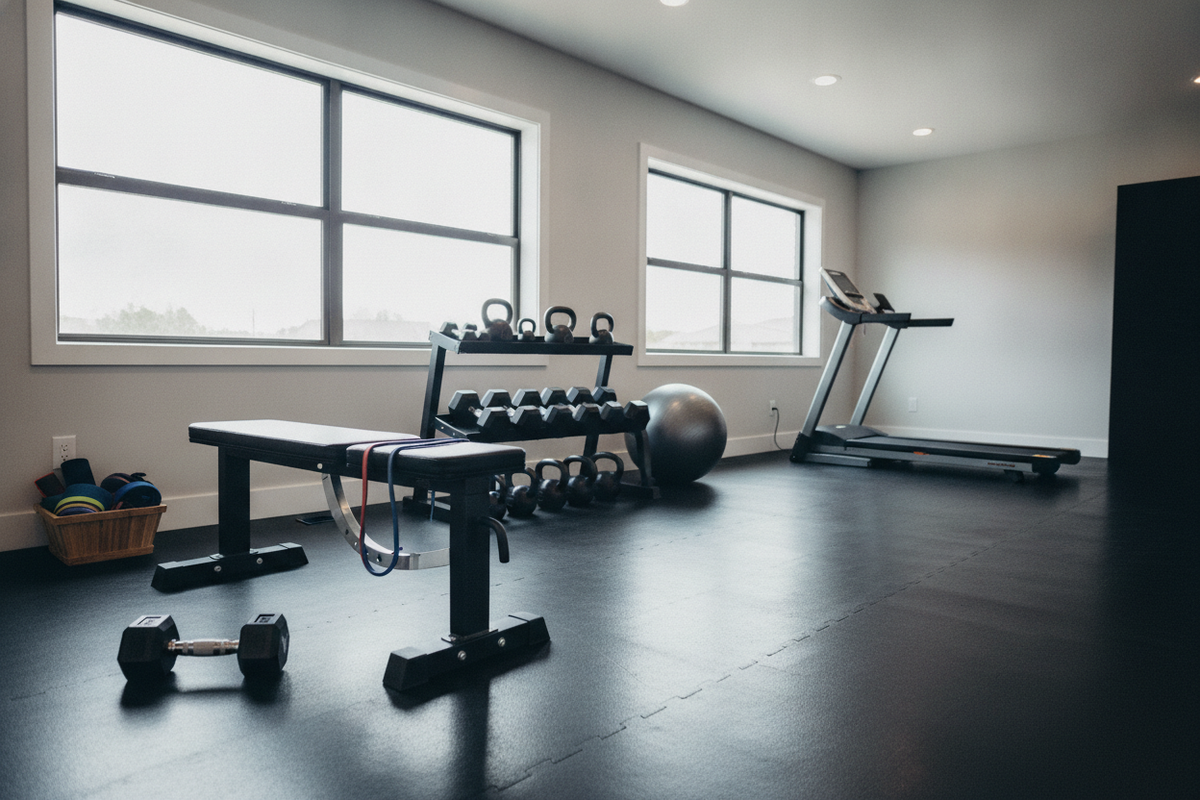
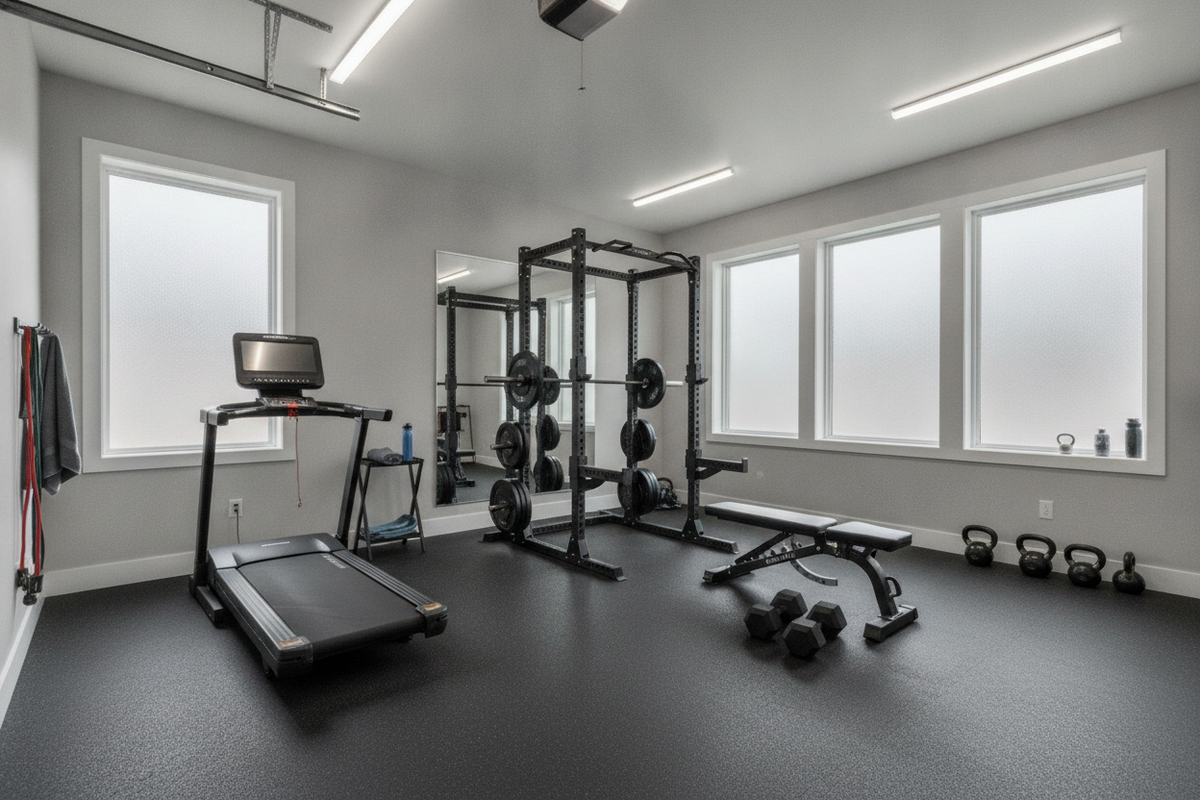
Creating an inviting home gym involves more than picking up a few weights; your workout surface directly influences your comfort, floor longevity, and overall exercise execution. When performing a complete body workout plan, you frequently transition between standing lifts, kneeling lunges, and prone floor holds. Hard tile, concrete, or laminate floors can cause joint discomfort and risk surface cracking when handling weights. Installing dedicated gym flooring transforms raw residential space into a secure, functional training zone.
What gym flooring is best for a home total body workout routine?
The best gym flooring for a home total body workout routine is a dense foam mat or high-density rubber mat that delivers firm foot stability alongside protective floor cushioning. A proper non-slip workout mat prevents sliding during dynamic lunges and provides reliable foot traction when pressing overhead. Subfloor protection is essential in any home strength training area, as setting down dumbbells or kettlebells repeatedly can crack underlying tiles or dent hardwood. High-density gym flooring absorbs localized impacts, distributes equipment pressure evenly, and muffles ambient sound throughout your home. Investing in quality subfloor protection safeguards your property while giving you peace of mind during intense sets.
For dedicated home training zones where you perform both weighted lifts and ground work, laying down a durable 6x10ft exercise mat gym flooring creates an expansive padded surface that protects residential floors from dropped weights and sweaty sessions.
Selecting Large Exercise Mats for Circuit Transitions
A frequent frustration during a complete body workout routine is running out of floor space when alternating between upright and horizontal drills. Traditional narrow mats require you to constantly step off the padding during wide squats or multi-directional lunges. Utilizing large exercise mats provides a seamless, continuous footprint where you can transition instantly from push-ups to dumbbell rows without readjusting your stance. Generously sized large exercise mats accommodate a wide variety of total body workout routines, allowing room for you and your equipment on a unified, supportive surface. If your workouts incorporate mobility flows alongside strength work, our 6x10ft yoga and exercise mat offers the generous space and surface texture needed for fluid multi-directional movement.
Equipment Placement and Care in Your Home Gym
Proper equipment placement keeps your home training space safe, inviting, and uncluttered. When your workout zone is orderly, executing each phase of your complete body workout plan becomes effortless and enjoyable.
Arranging Dumbbells and Free Space for Fluid Workouts
Strategic equipment placement prevents tripping hazards and maintains clear movement pathways. Store your dumbbells, resistance bands, and kettlebells along the perimeter of your training area, keeping the central surface completely open. When moving through a total body workout guide, you need unobstructed room to extend your arms, step into lunges, and recline for core exercises. Keeping weights neatly organized off the primary workout zone also protects your non-slip workout mat from unnecessary indentations between sessions. A well-planned layout lets you transition smoothly between exercises, keeping your rest intervals focused and your training tempo steady.
Routine Cleaning and Mat Surface Care
Maintaining your home gym surfaces preserves their slip resistance and keeps your training environment fresh. Sweat, dust, and shoe debris can accumulate on a dense foam mat over time, reducing surface grip. Wipe down your workout mat after each session using a soft microfiber cloth and a mild soap-and-water solution or a gentle, non-bleach equipment cleaner. Avoid harsh solvents or abrasive scrubbers, which can degrade the protective top layer of your gym flooring. Allowing the surface to air dry completely before rolling or storing gear ensures your equipment stays hygienic and ready for the next session of your complete body workout plan.
Conclusion: Sustaining Your Complete Body Workout Plan
Executing a complete body workout plan at home provides a direct, practical route to building total-body strength, improving movement quality, and establishing a consistent fitness habit. By centering your workouts on fundamental movement patterns, respecting your recovery days, and investing in protective gym flooring, you create a sustainable routine that fits your lifestyle. Commit to regular training frequency, maintain your home gym space with care, and let your complete body workout routine support your health for the long haul.