Types of Workouts: Guide to Training at Home
What Are the Main Types of Workouts?
The main types of workouts divide into four practical categories: resistance training for building strength, cardiovascular exercise for endurance, high-intensity intervals for conditioning, and mobility work for joint health. Understanding these core types of workouts allows you to plan your training week with clear purpose. When designing a home gym, knowing how these different types of workouts function helps you choose the right gear and surfaces for each session. Engaging with a variety of workouts keeps daily exercise mentally refreshing while developing distinct physical attributes across the entire body.
Many people start their fitness journey wondering what kinds of workouts fit best into a tight schedule. Balancing multiple types of fitness training ensures that you develop cardiovascular stamina without neglecting muscular support. Whether you use dumbbells, jump ropes, or bodyweight exercises, exploring different workout types helps prevent training plateaus. By looking closely at each discipline, you can select the specific types of workout routines that align with your available space and personal goals.
Strength Training and Muscle Training Types
When organizing resistance training, lifters often rely on distinct muscle training types to achieve steady progress. Traditional strength training focuses on multi-joint compound lifts—such as squats, presses, and deadlifts—that challenge large muscle groups under load. In contrast, hypertrophy-focused exercise routines isolate individual muscles to build size, while calisthenics emphasizes body control through pull-ups, push-ups, and dips. Exploring our guide to full body workout routines offers useful perspective on how full-body sessions compare against traditional split schedules.
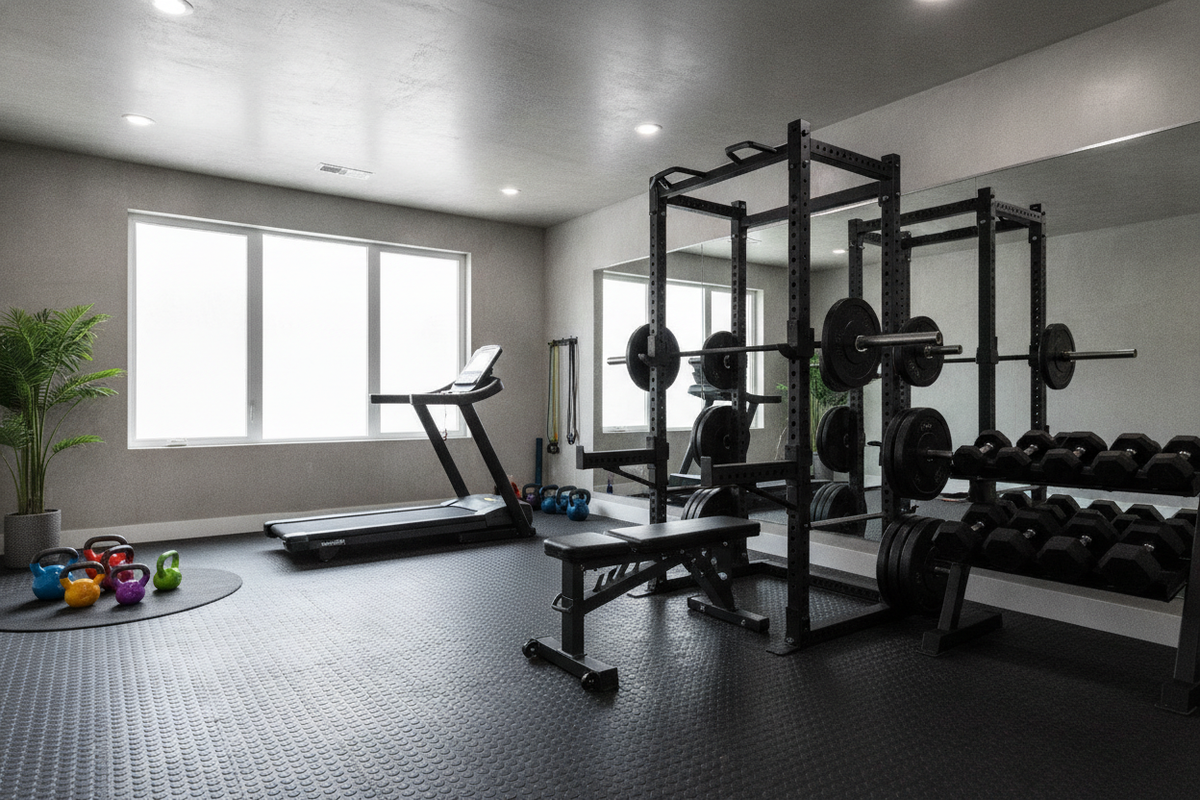
Executing heavy strength training at home requires sensible room protection and thoughtful equipment placement. Iron weights and steel racks exert concentrated pressure on floors. Without adequate subfloor protection, accidental drops or heavy rack legs can crack tile or gouge hardwood. Laying down resilient home gym flooring creates a dependable boundary between heavy iron and residential floors, allowing you to lift with confidence during intense types of workouts.
Cardio and Workout Methods for Conditioning
Conditioning relies on dynamic workout methods that elevate your heart rate through continuous or interval movement. Steady-state cardiovascular exercise, such as rowing, cycling, or brisk jumping jacks, establishes a solid endurance base. For faster paced training, high-intensity interval training alternates bursts of maximum exertion with brief recovery periods. These different types of workouts challenge your heart and lungs efficiently, making them popular types of workouts for busy home exercisers.
Dynamic conditioning often involves plyometrics, such as burpees, tuck jumps, and lateral skater bounds. These explosive movements generate noticeable joint impact upon landing. Practicing high-impact drills on hard concrete or thin rugs can lead to physical discomfort over time. Installing an oversized surface, such as a 6x10ft exercise and yoga mat, provides cushioning that helps soften joint impact while offering reliable traction and grip during lateral shuffles.
Flexibility, Core, and Low-Impact Exercise Routines
Low-impact sessions are vital types of workouts that build balance, flexibility, and core stability without heavy loads. Dedicated mobility work, gentle yoga flows, and mat Pilates fall into this category. These kinds of workouts help you maintain comfortable ranges of motion, counteracting the stiffness that can develop from sedentary desk work or heavy resistance training. Incorporating low-impact exercise routines into your calendar supports long-term physical durability.
Floor-based training places distinct demands on your workout surface. Holding planks or kneeling during yoga poses requires cushioning beneath the palms, wrists, and knees. A dense foam mat absorbs pressure points far better than standard flooring alone. Furthermore, having a wide, non-slip base allows you to extend your arms and legs fully without slipping off the edges, making these restorative types of workouts far more comfortable and effective.
Which Workout Types Are Best for Home Fitness Setups?
The workout types best suited for home training are those that maximize open floor space and utilize versatile tools like dumbbells, bands, and calisthenics. You do not need a room full of commercial machines to perform different types of workouts effectively. With free weights, bodyweight exercises, and a jump rope, you can transition smoothly across multiple kinds of workouts within a single modest room.
To make the most of your room, prioritize flexible equipment placement and broad floor coverage. Browsing a large exercise mats collection helps you select a foundation that accommodates both heavy weights and open-floor conditioning. A high-grade large exercise mat protects subfloors from dropped hand weights, prevents equipment from shifting, and delivers the traction and grip you need for quick directional changes across varied types of workout routines.
Building a Sustainable Weekly Routine
A well-structured weekly routine balances high-effort lifting with active recovery to keep your body feeling capable and fresh. Rather than repeating the exact same session every day, distribute different workout types across the week. For example, pairing three days of strength training with two days of conditioning and two days of dedicated mobility work creates a balanced calendar. Our hybrid exercise routine guide illustrates how to adapt structured gym programs to versatile home setups.
Varying your workout methods also helps manage cumulative joint impact. Following a strenuous session of plyometrics or heavy lifting with gentle active recovery or bodyweight exercises gives your connective tissues time to adjust. As you evaluate different types of workouts for your household, consider how proper room protection, subfloor protection, and a supportive dense foam mat can make your home gym flooring welcoming for all types of fitness training year-round.
Ultimately, rotating through a variety of workouts keeps training engaging and rewarding. By testing different workout types and adjusting your weekly routine to match your schedule, you can create a sustainable habit that delivers lasting physical vitality in the comfort of your home.