I Ditched Bro Splits for an All Over Body Workout Gym Routine
I remember standing in front of a chipped dumbbell rack on a random Tuesday, staring at my triceps in the mirror and wondering why I was spending 60 minutes on a muscle the size of a potato. I was following the classic 5-day bodybuilding split—chest Monday, back Tuesday, legs Wednesday—and I was perpetually exhausted but somehow stayed the same size. My strength plateaued because I was only hitting each muscle group once a week. If life got busy and I missed a session, that body part didn't see a weight for another 14 days. That's when I realized the all over body workout gym approach wasn't just for beginners; it was the missing link for my recovery and growth.
- Frequency is King: Hitting a muscle 3 times a week beats hitting it once with 20 sets.
- Time Efficiency: You get more done in three 60-minute sessions than most people do in five.
- Recovery: Compound movements trigger a better hormonal response without frying local muscle tissue.
- Foundation: A solid floor setup is non-negotiable for the mobility work that keeps you lifting heavy.
Why I Stopped Training One Muscle Group a Day
The traditional 'bro split' is a massive waste of time for the average lifter. Unless you have the recovery capabilities of a pro bodybuilder, your muscles are usually recovered and ready to go again 48 to 72 hours after a workout. By waiting a full week to hit your chest again, you're leaving growth on the table. I found that my energy levels plummeted by the fourth exercise of a single-muscle day. By the time I got to cable flyes, I was just going through the motions.
Switching to a higher frequency model changed everything. Instead of doing 15 sets of chest once a week, I started doing 5 sets of chest three times a week. The quality of those sets skyrocketed. I was fresh for every bench press session. This shift requires a total rethink of your weekly training schedule to maximize your limited time in the garage. Adopting an all over body workout gym strategy allowed me to stop living at the squat rack and start actually seeing progress again. I stopped feeling like I was constantly playing catch-up with my own calendar.
The Anatomy of a Quick Full Body Gym Workout
To make this work, you can't waste time on concentration curls or calf raises until the big work is done. Every session needs to be built around the 'Big Five' movement patterns: a squat variation, a hinge (like a deadlift or kettlebell swing), a horizontal push (bench or push-ups), a vertical pull (pull-ups or rows), and a carry. If you hit these five, you've hit every major muscle group in the body.
A quick full body gym workout doesn't mean you're rushing; it means you're being surgical. I usually start with a heavy squat or deadlift. These are the big movers that demand the most focus and energy. From there, I pair a push and a pull into a superset. For example, I’ll follow a set of overhead presses with a set of weighted pull-ups. This keeps the heart rate up and ensures I’m not sitting on a bench scrolling through my phone for three minutes between sets. You can easily get through 25 high-quality sets in under an hour if you stop treating the gym like a social club.
How to Sequence Your Exercises Without Gassing Out
Sequencing is where most people fail when they try a quick full-body workout gym session. If you try to max out your deadlift after doing four sets of heavy rows, your grip will fail and your back will be too fatigued to maintain form. The rule is simple: Heavy, central nervous system (CNS) taxing lifts come first. These are your squats, cleans, and deadlifts. They require the most stabilization and the highest level of technical proficiency.
After the primary lift, move to your secondary compound movements. If you started with a heavy back squat, follow it up with a dumbbell bench press and a seated row. Save the isolation work—the stuff that makes your arms look good in a t-shirt—for the final ten minutes. By the time you get to bicep curls or lateral raises, your nervous system can be fried, but your local muscles still have enough juice for a pump. This hierarchy ensures you're moving the most weight when you're the most fresh, which is the only way to build real-world strength.
Why Your Core and Mobility Work Demands Better Ground Support
One thing I learned the hard way is that a true full-body routine requires a lot of floor time. You aren't just sitting on a bench; you're doing Turkish get-ups, bird-dogs, and deep lizard lunges to keep your hips from locking up after all those squats. Trying to do a plank or a heavy core circuit on bare concrete is a recipe for bruised elbows and a skipped workout. You need a dedicated space that actually supports your joints.
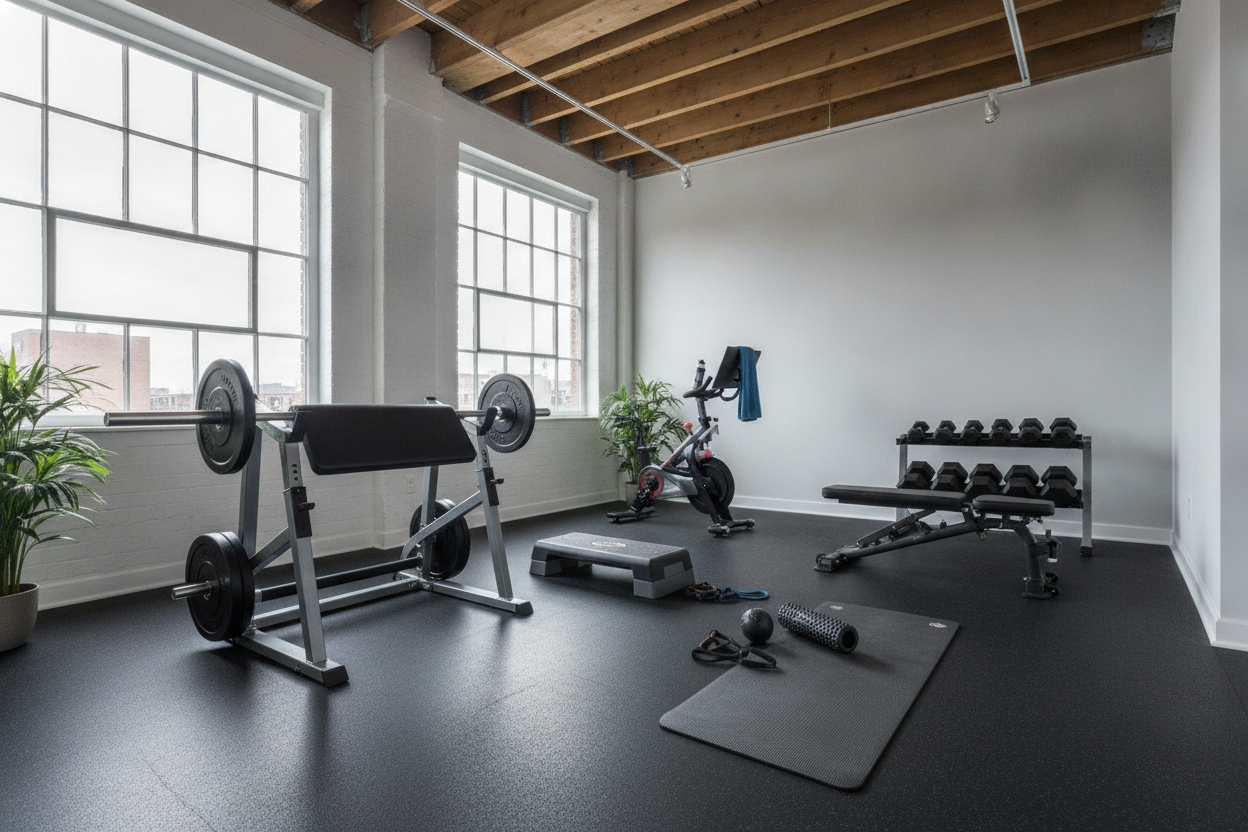
I eventually invested in a large exercise mat for home gym use, and it was the best $150 I ever spent on my recovery. Having a thick, high-density surface means I actually do my warm-ups instead of rushing straight to the bar. If you have the space, a 6x8ft exercise mat is the gold standard. It’s large enough to drop for a set of burpees or dynamic stretching without sliding across the floor like those cheap interlocking foam tiles. It provides the grip you need for mountain climbers and the cushion you need for your spine during hollow holds.
A 3-Day Blueprint for an Effective Quick Full-Body Workout Gym Plan
If you're ready to ditch the split, here is the template I’ve used to maintain a 400lb squat while working 50 hours a week. Perform this three times a week (Monday, Wednesday, Friday), alternating between Workout A and Workout B.
Workout A: The Power Base
- Back Squats: 3 sets of 5 reps (80% max)
- Bench Press: 3 sets of 8 reps
- Pendlay Rows: 3 sets of 8 reps
- Dumbbell Lunges: 2 sets of 12 reps
- Plank Variations: 3 sets of 60 seconds
Workout B: The Pull & Press
- Deadlifts: 2 sets of 5 reps (Go heavy here)
- Overhead Press: 3 sets of 8 reps
- Pull-Ups: 3 sets to failure (Use a weight belt if needed)
- Goblet Squats: 2 sets of 15 reps (Focus on depth)
- Hanging Leg Raises: 3 sets of 15 reps
Rest intervals should stay between 90 and 120 seconds for the big lifts and 60 seconds for the accessory work. This keeps the session tight and ensures you're out the door in under an hour. The beauty of this plan is its flexibility. If you're feeling beat up, you can drop the intensity but keep the movement patterns. The consistency of hitting every muscle group three times a week is what drives the results, not the occasional 'hero' workout where you stay in the gym for three hours.
FAQ
Can I do a full body workout every day?
I wouldn't recommend it. Your muscles need time to repair the micro-tears caused by lifting. Stick to 3 or 4 days a week. If you want to move on off-days, go for a walk or do some light mobility work on your mat.
Do I need a lot of equipment for this?
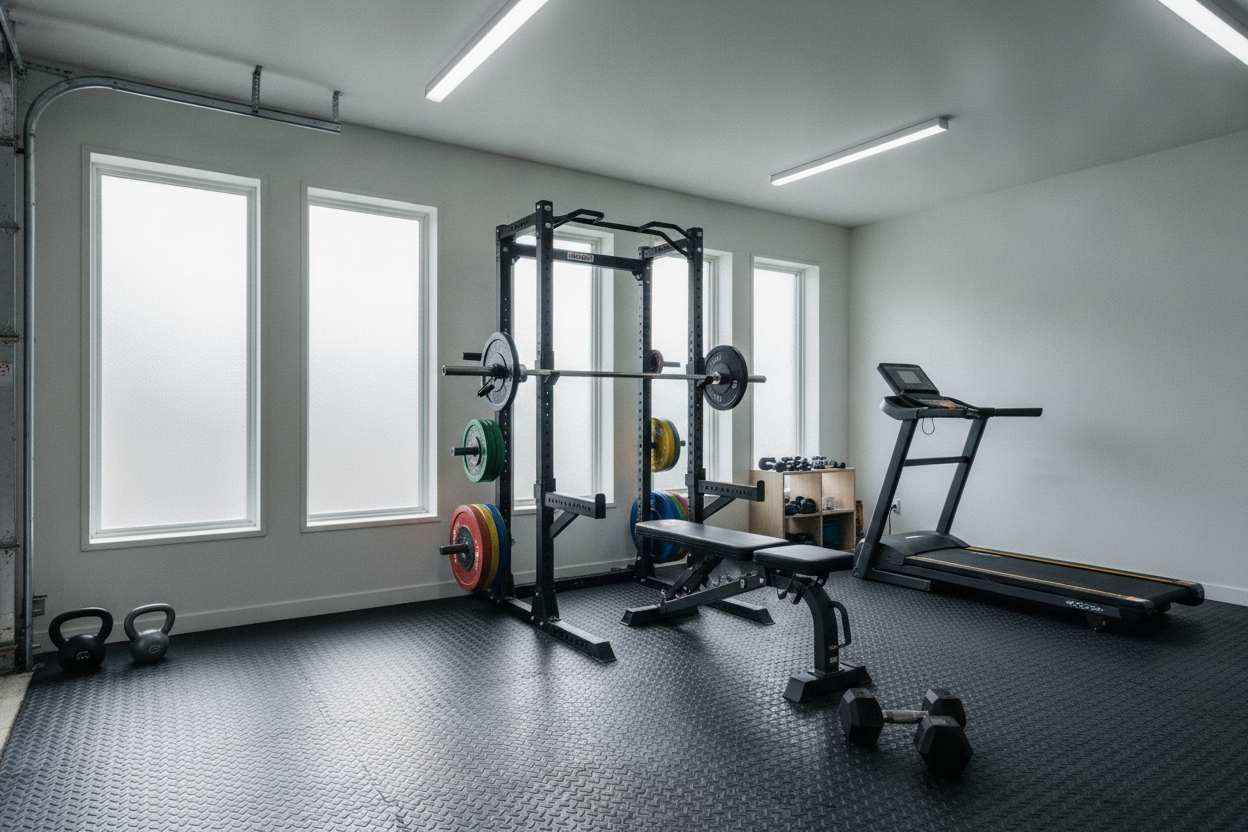
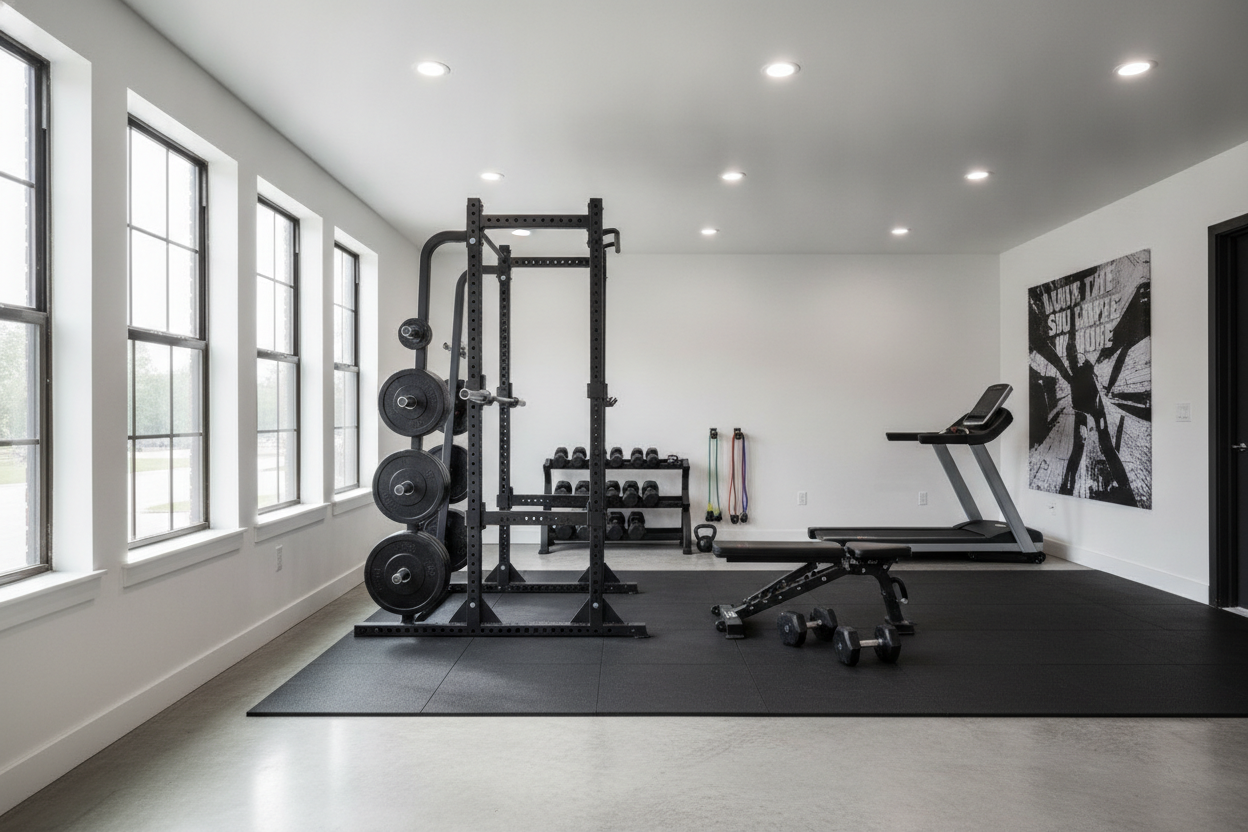
Not really. A power rack, a barbell, some plates, and a solid floor mat will get you 95% of the way there. You don't need fancy machines to build a great physique.
What if I miss a day?
That's the best part about this routine. Since every day is a full-body day, you just pick up where you left off. You never have to worry about 'missing leg day' and having to wait another week to fix it.