Total Body Workout With Weights: Why Most Routines Fail
If you are juggling a busy schedule and a cramped garage gym, isolated muscle days just do not make sense. You need maximum return on your time and equipment investment. A properly programmed total body workout with weights is the most efficient way to build strength, burn fat, and utilize your home gym gear without spending two hours a day moving plates around. This guide breaks down exactly how to structure your routine and what equipment actually matters to get the job done right.
Key Takeaways
- Focus on compound movements like squats, deadlifts, and presses to hit multiple muscle groups simultaneously.
- You do not need a massive commercial setup; adjustable dumbbells or a basic barbell rack are sufficient.
- Aim for three sessions per week to allow for adequate muscle recovery and consistent strength gains.
- Space-saving equipment like adjustable benches maximize your training footprint in small rooms.
Essential Equipment for Home Training
To execute a highly effective whole body workout with weights, you do not need endless rows of single-station machines. You need versatile, heavy-duty free weights that can transition quickly between exercises.
Dumbbells vs. Barbells
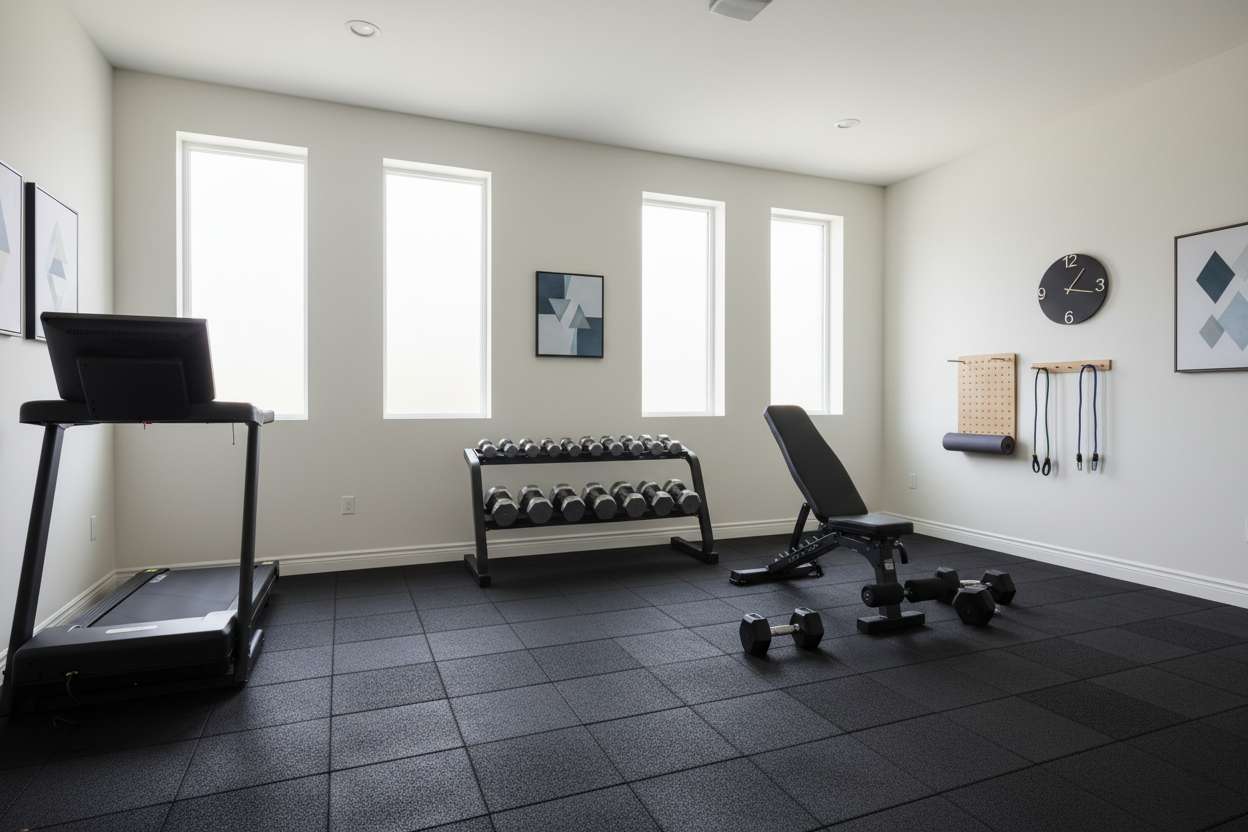
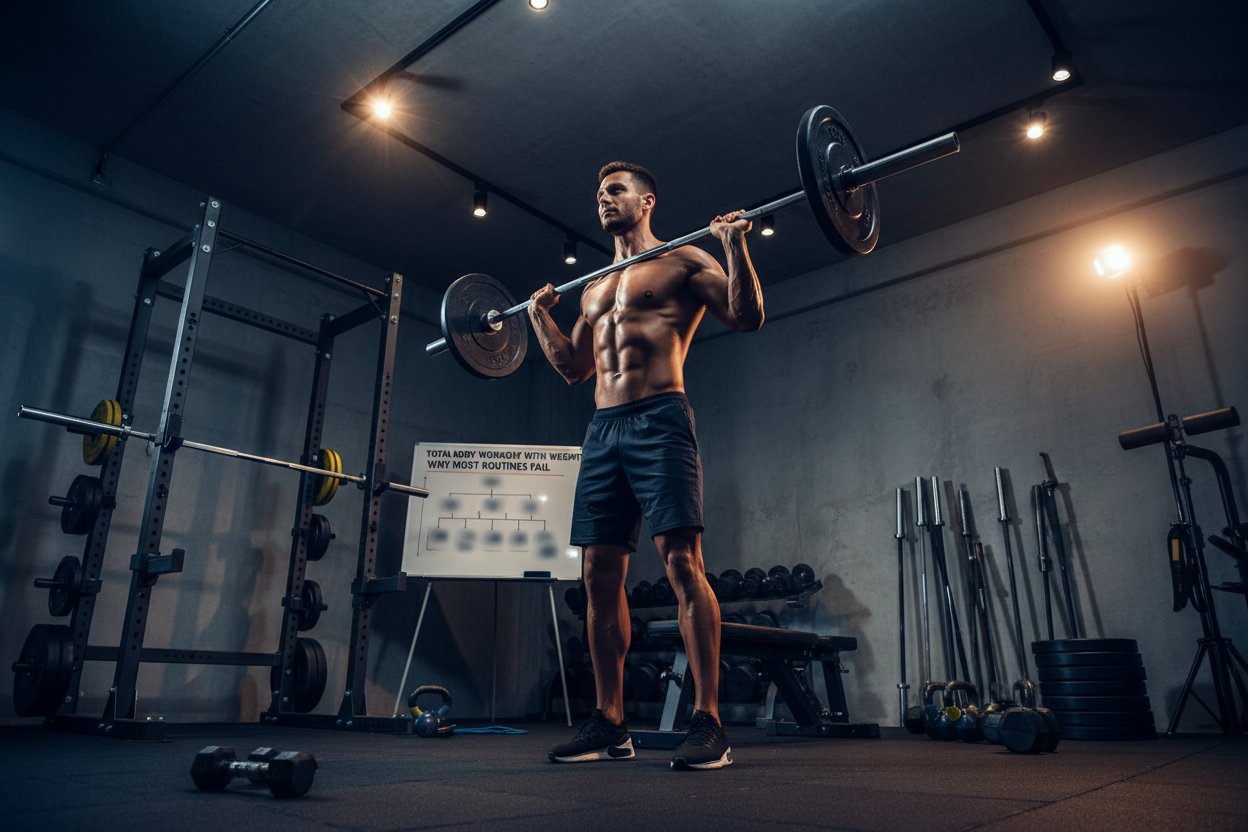
Barbells allow for the highest weight capacity, making them ideal for heavy squats and deadlifts if you have a power rack. However, if you are working with a 10x10 spare bedroom, a premium set of adjustable dumbbells (ranging from 5 to 80 lbs) is your best bet. They maximize floor space while still providing enough resistance for a challenging, full-body stimulus.
Structuring Your Routine
The biggest mistake home gym owners make is randomly selecting exercises. A structured approach ensures you hit every muscle group evenly without burning out your central nervous system.
The Push, Pull, Squat, Hinge Method
A true full-body session hits every major movement pattern. Pair a lower body push (like a Goblet Squat) with an upper body pull (like a Dumbbell Row). This keeps your heart rate elevated, ensures balanced muscular development, and gets you out of the gym in under 45 minutes.
From Our Gym: Honest Take
I have tested dozens of home gym setups, and I will be blunt: trying to do a high-volume total body session with cheap, spin-lock dumbbells is miserable. The collars loosen mid-set, and changing weights takes entirely too long. Upgrading to a quick-adjust dumbbell system completely changed my workflow. At 6 foot 2, I also realized that having a bench with a solid 1000-pound weight capacity and a grippy vinyl pad made a massive difference when transitioning from heavy chest presses to seated shoulder work. Do not skimp on your bench or your weight selection mechanism—it dictates the entire flow and safety of your workout.
Frequently Asked Questions
Is a whole body workout with weights good for beginners?
Absolutely. It allows beginners to practice fundamental movement patterns frequently, which builds neuromuscular efficiency much faster than hitting a muscle group only once a week.
How much space do I need for a free weight setup?
For a basic dumbbell and adjustable bench setup, a 6x8 foot area is plenty. If you are adding a half-rack for barbell work, plan for an 8x10 foot space with at least 84 inches of ceiling clearance.
How often should I train?
For most home gym owners, three alternating days a week (for example, Monday, Wednesday, and Friday) provides the perfect balance of training stimulus and recovery time.