How to Grow the Top Part of Your Glutes for That Shelf Look
You have been squatting heavy and deadlifting consistently, but your backside still looks somewhat flat from the side. This is a common frustration. Most compound movements target the lower and middle glute max, leaving the upper region underdeveloped. If you want to understand how to grow the top part of your glutes, you need to shift your focus from general mass to specific isolation mechanics.
Key Takeaways: Upper Glute Training
- Target the Gluteus Medius: This muscle sits higher on the hip and creates the visual "shelf" appearance.
- Bias Hip Abduction: Movements that move the leg away from the midline are essential for upper booty growth.
- Round Your Back: During hyperextensions, a rounded upper back shifts tension from the spine to the upper glutes.
- Volume Over Load: The upper glutes often respond better to higher repetition ranges and metabolic stress than heavy singles.
Understanding the "Shelf" Anatomy
To create that lifted look, you cannot just rely on squats. The glutes are composed of three main muscles. While the Gluteus Maximus is the largest, the Gluteus Medius is the primary driver for how to build the top of your bum.
The Medius sits on the outer surface of the pelvis. When this muscle hypertrophies (grows), it pushes the skin and fat outward and upward, creating the illusion of a higher waist-to-hip ratio. If you neglect this area, you might have a strong lower posterior chain but lack that specific upper fullness.
The Mechanics of Upper Booty Growth
To stimulate upper booty growth, you must understand fiber orientation. The upper fibers of the glutes function heavily in hip abduction (moving the leg out) and external rotation.
Standard squats primarily work the glutes in the lengthened position (at the bottom). To target the top shelf, you need exercises that shorten the muscle under load, often involving a peak contraction where you squeeze hard at the top of the movement.
Best Upper Glute Exercises with Weights
1. 45-Degree Glute Bias Hyperextension
This is arguably the king of upper glute building exercises. The standard gym class cue is to keep a flat back. Ignore that.
To target the glutes, tuck your chin to your chest and round your upper back (thoracic spine). As you come up, drive your hips into the pad and stop before your back arches. This prevents the lower back from taking over and isolates the upper fibers of the glute max.
2. Cable Kickbacks (Abduction Bias)
When looking at how to grow your upper booty, cables provide constant tension. Instead of kicking straight back, kick your leg out at a 30-degree angle. This hybrid movement hits both the max and the medius simultaneously.
Upper Booty Workout at Home
You don't always need heavy iron. Because the Glute Medius is a stabilizer, it responds well to high-volume burnout sets. Here is how to exercise top of glutes with minimal equipment.
1. Banded Cha-Cha
Place a resistance band around your ankles. Stand with knees slightly bent. Tap one foot back and to the side (45-degree angle), keeping all your weight on the stationary leg. This is a staple for exercises for upper glutes at home.
2. Side-Lying Hip Raises
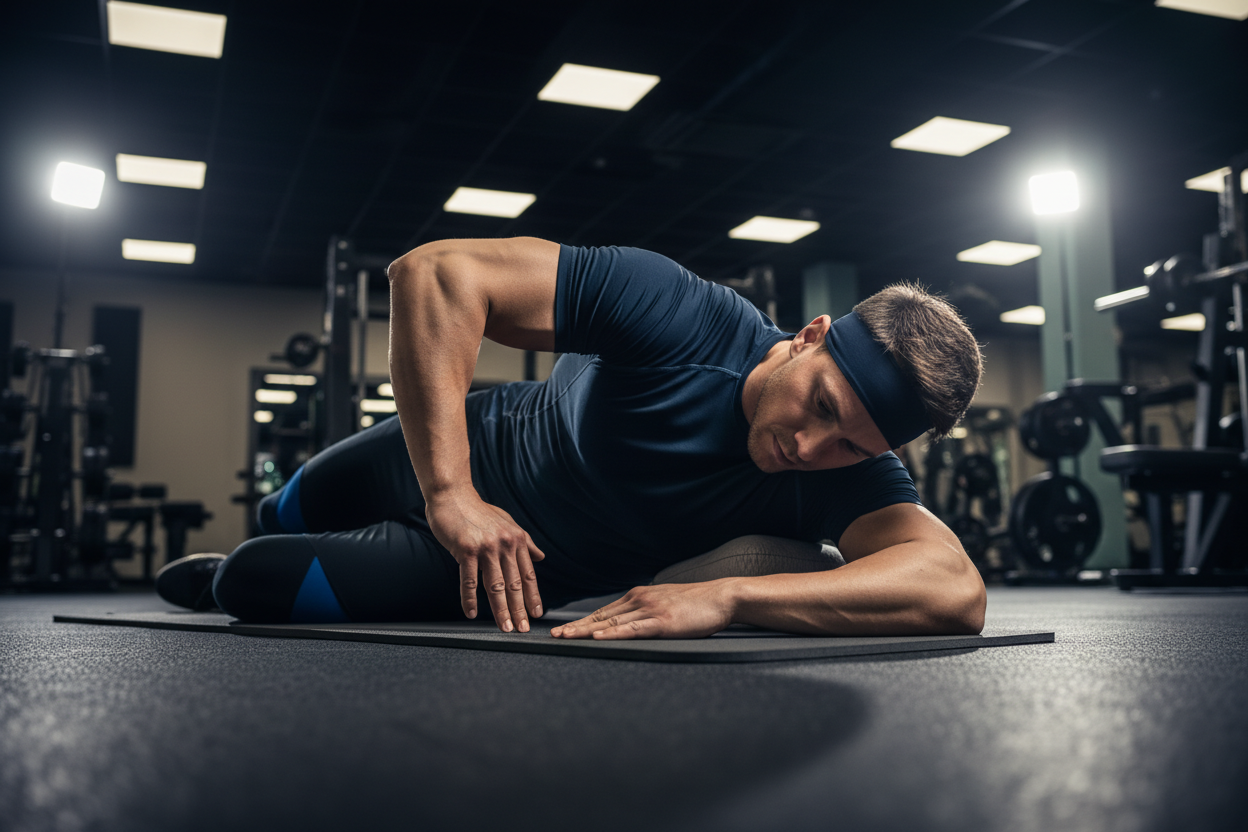
Lie on your side in a plank position on your knees. Lift your hips off the ground while simultaneously lifting your top leg into abduction. This is a compound movement that torches the side glute. It is highly effective if you are wondering how to tone the top of your bum without weights.
My Training Log: Real Talk
My Personal Experience with how to grow the top part of your glutes
I spent two years squatting three times a week, thinking that was enough. My legs got huge, but my glutes looked like a slope rather than a shelf. The game-changer for me wasn't a heavier weight; it was a specific, uncomfortable tweak on the back extension machine.
I remember the first time I really committed to the "ugly" form on the 45-degree hyperextension. I grabbed a 25lb plate, hugged it to my chest, and deliberately hunched over like a shrimp. It felt wrong. It looked like bad posture. But at the top of the rep, right where the waistband of my leggings usually digs in, I felt a cramp-like contraction I'd never felt before. It wasn't my lower back burning—it was pure upper glute. That specific, localized burn is the only metric that matters. If you don't feel that "cramp," you're just moving weight, not building the shelf.
Conclusion
Learning how to grow your top glutes requires patience and a departure from ego lifting. You must be willing to use lighter weights to feel the correct muscle working. Incorporate abduction and rounded-back extensions into your routine twice a week, eat enough protein to support repair, and the results will follow.
Frequently Asked Questions
Can you actually isolate the upper glutes?
Technically, you cannot completely isolate one part of a muscle from the rest. However, you can significantly bias the upper fibers by changing the angle of hip extension and incorporating abduction (moving the leg away from the body).
How long does it take to see upper glute growth?
With consistent training and a caloric surplus, most people notice visual changes in 8 to 12 weeks. How to exercise upper buttocks effectively involves progressive overload, so aim to add reps or weight every week.
Are squats enough to build the upper shelf?
Generally, no. Squats are fantastic for overall leg and lower glute development, but they do not fully shorten the glute muscle or heavily engage the gluteus medius. You need targeted accessory work to build the top shelf.