The Real Reason Your upper workouts Are Frying Your Elbows
I remember waking up six months ago feeling like my elbows were filled with rusted glass. I was hitting my upper workouts four times a week, following some high-volume split I saw on a bodybuilding forum. My garage was full of gear—racks, adjustable dumbbells, three different specialty bars—but my joints were screaming for a truce. I was doing everything right according to the magazines, yet I couldn't even pick up a coffee mug without a sharp twinge in my triceps tendon.
- Strip the junk: Most isolation moves are just 'filler' that adds inflammation, not muscle.
- Heavy compounds: Focus on three primary lifts to maximize mechanical tension.
- Surface matters: Foot drive on concrete is a recipe for power loss and injury.
- Recovery is king: If you can't grip a barbell without pain, you aren't growing.
The Garage Gym Junk Volume Trap
Most of us start our home gym journey by trying to replicate the best workout upper body routines we see in commercial glossy mags. We think we need three types of curls, four variations of lateral raises, and enough cable flyes to make a bird jealous. In a commercial gym, you have the luxury of fancy machines that stabilize your joints. In a garage, usually with slightly uneven concrete and basic benches, that high-volume approach turns into a 'junk volume' trap.
Junk volume is any set that produces fatigue without providing enough mechanical tension to trigger growth. When you're on your sixth exercise of the session, your nervous system is shot, and your form is trash. You aren't building a bigger chest; you're just irritating your bursa sacs. I've seen guys spend two hours in their gym hitting 'accessory' moves when they haven't even mastered a basic overhead press.
The goal should be to get in, hit the muscles with high intensity, and get out. If you're wondering what is a good upper body workout, it’s one that leaves you feeling powerful, not pulverized. You don't need a 90-minute session to get results. In fact, for most of us over the age of 30, 45 minutes of heavy, focused work is the sweet spot before the cortisol spike starts eating your gains.
Why Your Elbows Give Out Before Your Muscles Do
Tendonitis is the silent killer of the home lifter. We often train in colder environments (garages) and jump into heavy sets too fast. But the real culprit is the sheer repetition of isolation movements like skull crushers and French presses. These movements place an incredible amount of shear force on the elbow joint. When you stack those on top of heavy pressing, your tendons never get a chance to remodel.
The secret to a fit upper body workout is understanding that your connective tissue heals at a fraction of the speed of your muscles. Muscles have a massive blood supply; tendons don't. By slowing down your tempo and prioritizing recovery over 'the pump,' you allow those attachments to thicken and strengthen. I learned this the hard way after a summer of 'arm days' left me unable to bench for two months.
Stop rushing through your reps. A three-second eccentric (lowering phase) on a heavy press will do more for your muscle growth than ten sloppy reps of a cable extension. If your elbows are barking, it's a signal that your volume has outpaced your recovery capacity. Listen to them before they turn into a chronic issue that requires physical therapy and a bottle of ibuprofen just to get through a warm-up.
The 3-Lift Rule: Stripping It Down to the Studs
If you want to grow without the pain, you need to simplify. I follow the 3-Lift Rule: one heavy horizontal push, one heavy vertical pull, and one heavy horizontal pull. That’s it. This minimalist approach forces you to put all your energy into the movements that actually move the needle. It’s a stark contrast to the best upper body workout at gym facilities where people wander from machine to machine.
For your horizontal push, a heavy barbell bench or floor press is king. A solid chest workout doesn't need to be complicated. If you're pushing 225 lbs for reps with a 1.25-lb micro-loading strategy, your pecs have no choice but to grow. Pair that with a heavy weighted pull-up (vertical pull) and a chest-supported row or a heavy barbell row (horizontal pull). These three movements cover every major muscle group in your torso.
By limiting yourself to three lifts, you can afford to go heavier and maintain better form. You aren't saving energy for the 'finishers' that don't actually finish anything but your joints. When I switched to this, my bench press jumped 20 pounds in six weeks because I wasn't constantly fatigued from 'accessory' work. It turns out, doing the big stuff better is the fastest way to get big.
Why Your Base Dictates Your Pressing Power
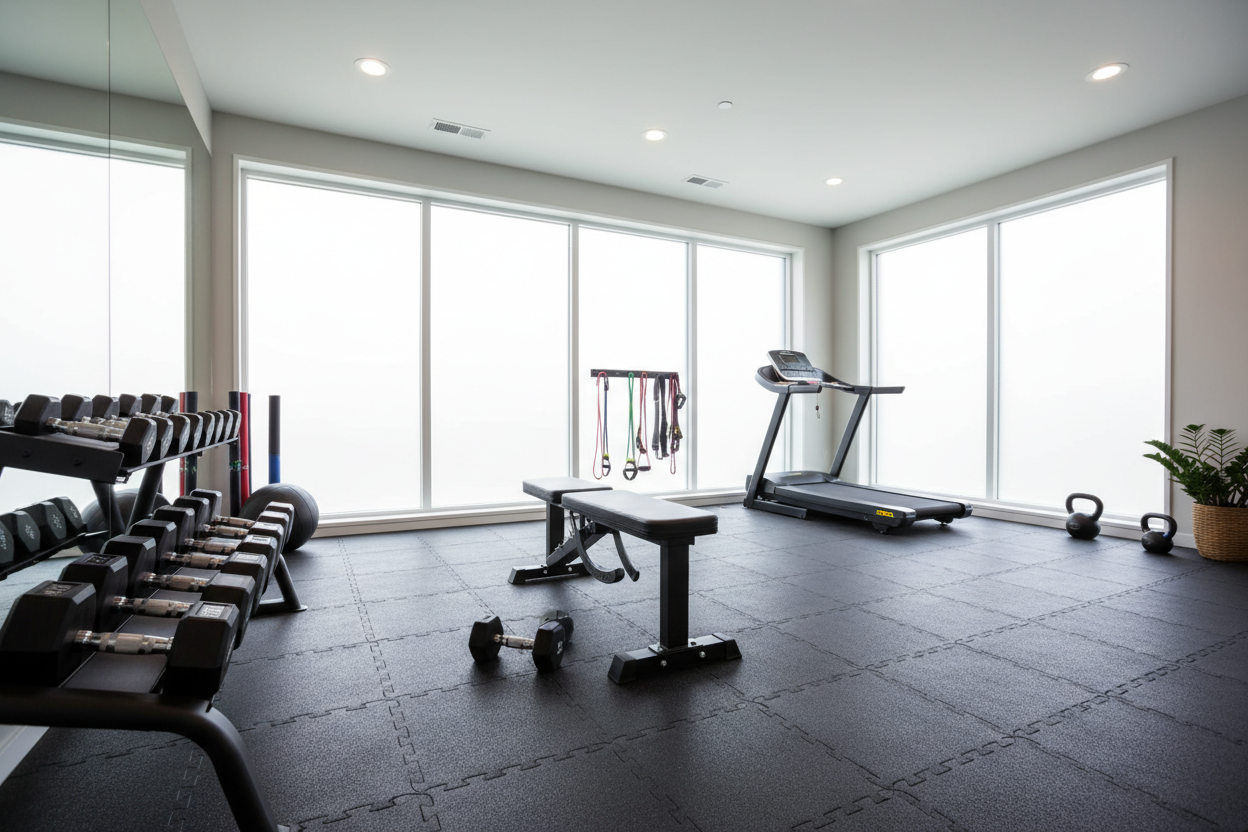
One thing garage lifters overlook is what's under their feet. We think about the bar and the plates, but we ignore the floor. If you're benching or rowing on bare concrete, you're losing force. Concrete is slippery, and it doesn't absorb the micro-vibrations of a heavy lift. To generate real power, you need to be able to 'screw' your feet into the ground and create a stable base.
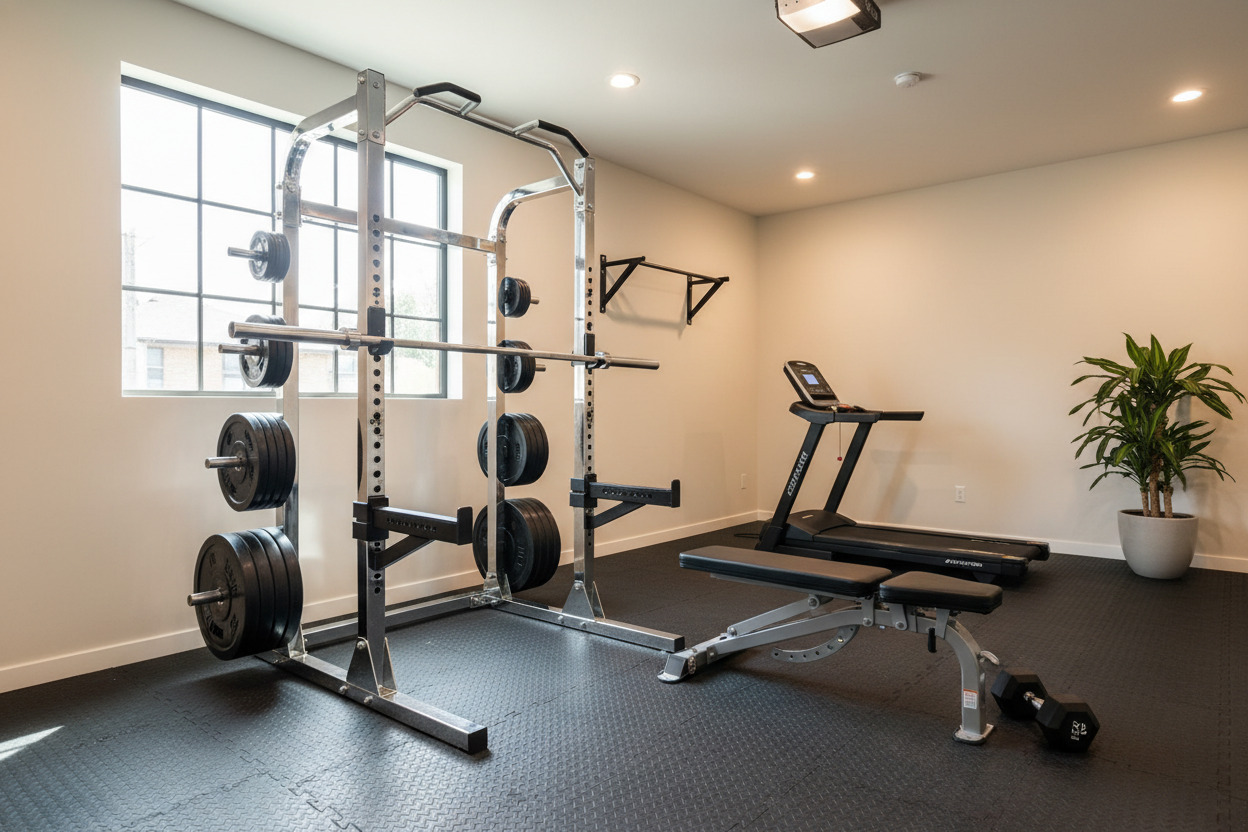
I highly recommend investing in a high-density gym flooring for home workout setup. I'm talking at least 3/4-inch thick. This isn't just about protecting your foundation from dropped weights; it’s about traction. When you're doing a heavy row, you need your feet locked in so your back can do the work, not your toes trying to find grip on dusty cement. A stable base allows for better leg drive in the bench press, which directly translates to more weight on the bar and less strain on your shoulders.
I once tried to max out my floor press on a cheap, thin yoga mat. My feet slipped halfway through the concentric phase, and I nearly dumped 275 lbs on my ribcage. Never again. If your floor is slick, your brain will subconsciously 'brake' your power output to keep you from falling. Give your body the stability it needs to actually express its full strength.
Putting Together Your Pain-Free Routine
So, how do you structure this? I like a 'Heavy/Light' split across the week. Monday might be your Heavy Push day (Bench Press), followed by a Vertical Pull. Thursday might be your Heavy Row day, followed by a lighter Overhead Press. This keeps the total volume low but the intensity high. These good upper body gym workouts are easily adapted to a home setting because they require minimal equipment—just a rack, a bar, and some plates.
Don't be afraid of the 'missing' exercises. Your biceps will grow from heavy rows and pull-ups. Your triceps will get massive from heavy pressing. If you absolutely feel the need to do curls, do them once a week at the very end of a session, and keep the weight light. The goal is to build a physique that is as functional as it is aesthetic, without the chronic pain that plagues so many 'lifestyle' lifters.
Consistency beats intensity every single time, but you can't be consistent if you're injured. By stripping your routine down to the essentials, you ensure that every rep counts. For more structured plans that fit into a busy home-life schedule, check out our Workout Hub. Stop chasing the pump and start chasing the progression on the big lifts. Your elbows will thank you, and your t-shirts will fit better than ever.
FAQ
What is a good upper body workout for home?
Focus on three main movements: a push (like a floor press), a pull (like a barbell row), and a vertical move (like a pull-up). Do 3-5 sets of each with high intensity, focusing on a slow eccentric phase to protect your joints.
How many times a week should I do upper workouts?
Two to three times is plenty if you are lifting heavy. Your central nervous system and your tendons need more time to recover than your muscles do. Quality always beats quantity in a garage gym environment.
Can I build big arms without curls and extensions?
Yes. Heavy rows and weighted pull-ups provide massive stimulus for the biceps, while heavy benching and overhead pressing tax the triceps. If you hit these hard, your arms will grow as a byproduct of getting stronger overall.