How low impact upper body exercises Saved My Wrecked Shoulders
I was staring at a 45-lb Ohio Bar, and my right shoulder felt like someone had driven a rusted nail into the labrum. I had been chasing a 315-lb bench for months, ignoring the 'click-clack' sound my joints made every morning. Eventually, the bill came due. I couldn't even brush my teeth without a sharp twinge, let alone press. I realized I needed low impact upper body exercises, but I didn't want to lose the mass I'd spent five years building.
- Low impact does not mean low intensity; it means high mechanical tension with low joint shear.
- Eliminating the 'rebound' at the bottom of lifts is the fastest way to heal tendonitis.
- Floor-based movements are your best friend for limiting problematic ranges of motion.
- Quality flooring is non-negotiable when you move your training to the dirt-level.
The Day I Couldn't Press an Empty Barbell
It’s a humbling moment when you have to ask your spouse to help you put on a t-shirt because your rotator cuff is screaming. I’d spent years redlining my central nervous system, thinking that if the bar wasn't bending, I wasn't growing. My elbows felt like they were filled with crushed glass, and my shoulders had the structural integrity of a wet paper towel.
The irony was that my legs were actually growing. I could still crush my quads and glutes on a lower body strength machine because those movements didn't require me to stabilize a heavy load through a compromised shoulder girdle. But my upper body? It was entirely out of commission. I had to face the reality: either I find a way to train around the pain, or I'd be the guy with 'big legs and a bird chest' for the rest of my life.
What 'Low Impact' Actually Means for Heavy Lifters
When most people hear 'low impact,' they think of water aerobics or those 2-pound pink vinyl dumbbells. That’s not what we’re doing here. In the context of a garage gym, low impact is about managing joint shear—the force that tries to slide your bones past each other rather than compressing them safely. Heavy barbell benching creates massive shear at the bottom of the movement. Your tendons end up doing the work your muscles should be doing.
By choosing movements that prioritize muscular tension over joint momentum, you can actually train harder. If I take the 'jerk' out of a row, I can load the lats more effectively because the muscle is doing 100% of the work from a dead stop. You aren't 'taking it easy.' You are being strategically violent with your muscles while being protective of your connective tissue. It's the difference between a scalpel and a sledgehammer.
Removing the Rebound Effect
The biggest culprit of joint pain is the stretch reflex—that 'bounce' you see people do at the bottom of a bench press or a pull-up. While it helps you move more weight, it puts a massive, sudden load on your tendons at their most vulnerable, lengthened position. Dead-stop training is the cure. By letting the weight settle for a full second at the bottom, you force the muscle to restart the movement from zero momentum. Your joints will thank you, and your raw strength will skyrocket.
4 Brutal (But Joint-Friendly) Lifts I Swear By
First up is the Floor Press. By lying on the ground, the floor acts as a physical stop for your elbows, preventing them from dipping too deep and putting your shoulders in that 'danger zone' of internal rotation. I use a pair of 52.5-lb adjustable dumbbells for these, focusing on a three-second descent and a hard squeeze at the top. It’s a triceps and chest builder that won't leave you reaching for the ibuprofen.
Next, heavy resistance band rows. Unlike cables or dumbbells, bands have a 'linear variable resistance.' The weight is lightest where your joints are most vulnerable and heaviest at the peak contraction. I also recommend slow-eccentric push-ups. Count to five on the way down, pause for two seconds with your chest an inch off the ground, and explode up. Finally, try neutral-grip pull-ups or chin-ups. Turning your palms toward each other takes the strain off the bicep tendon and puts it squarely on the lats and brachialis.
Programming a low impact upper body workout That Actually Works
You can't just throw these moves together and hope for the best. To build a low impact upper body workout that actually moves the needle, you need to focus on volume and time under tension (TUT). Since we aren't using 1-rep max loads, we need to chase the pump. I typically program these in the 8-15 rep range, making sure every rep looks identical. If the speed of the bar changes because you’re struggling, the set is over.
I usually run this upper body split twice a week. On the off-days, I don't just sit on the couch. I suggest that lifters pair this upper body routine with a 30 min low impact HIIT workout on off-days to keep the whole week joint-friendly while keeping the metabolic demand high. It’s about building a sustainable system, not just a one-off workout. You want to be the guy still lifting at 60, not the guy talking about what he 'used to' bench back in the day.
Stop Ignoring Your Foundation When Doing Floor Work
Here is where most garage gym owners fail: they try to do floor presses and modified push-ups directly on the bare concrete. I tried that for a week and traded my shoulder pain for bruised elbows and a stiff lower back. Concrete has zero give. If you’re moving your primary lifts to the floor, you need a surface that absorbs energy instead of reflecting it back into your bones.
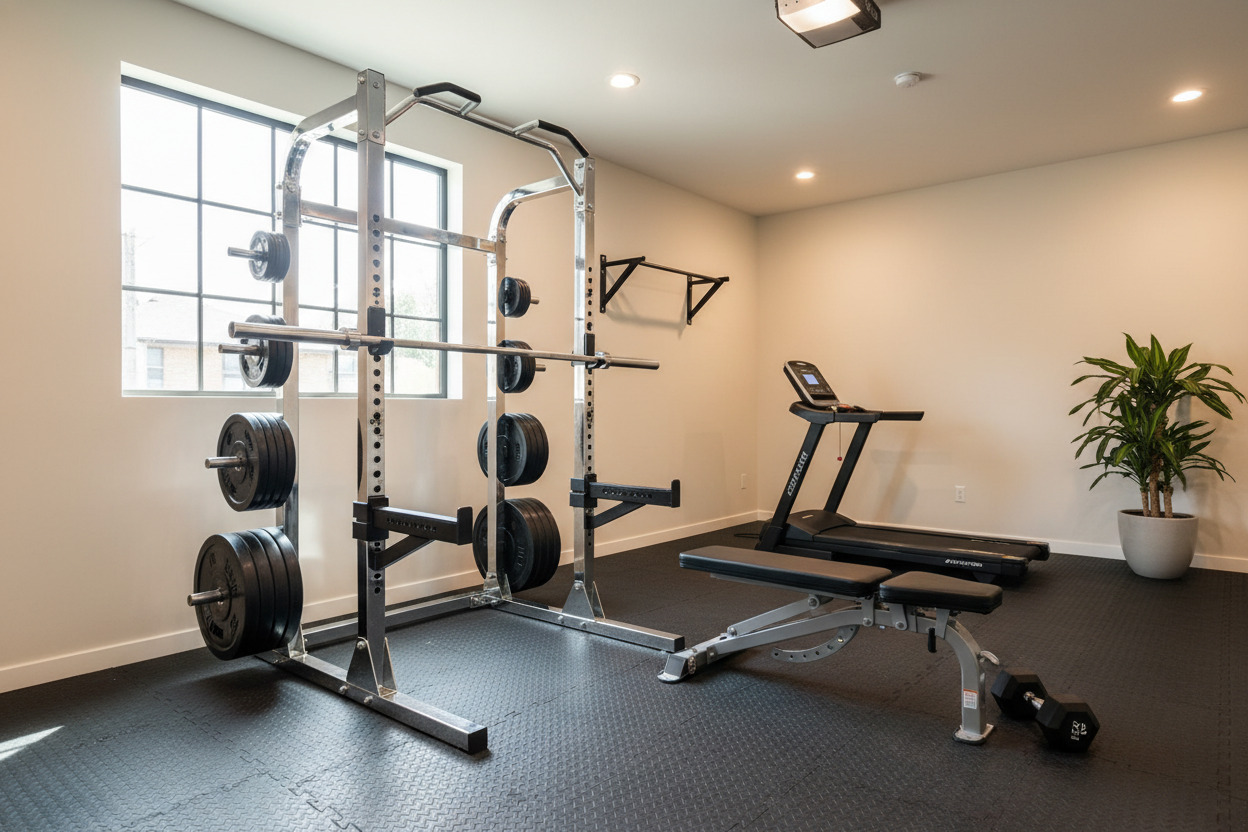
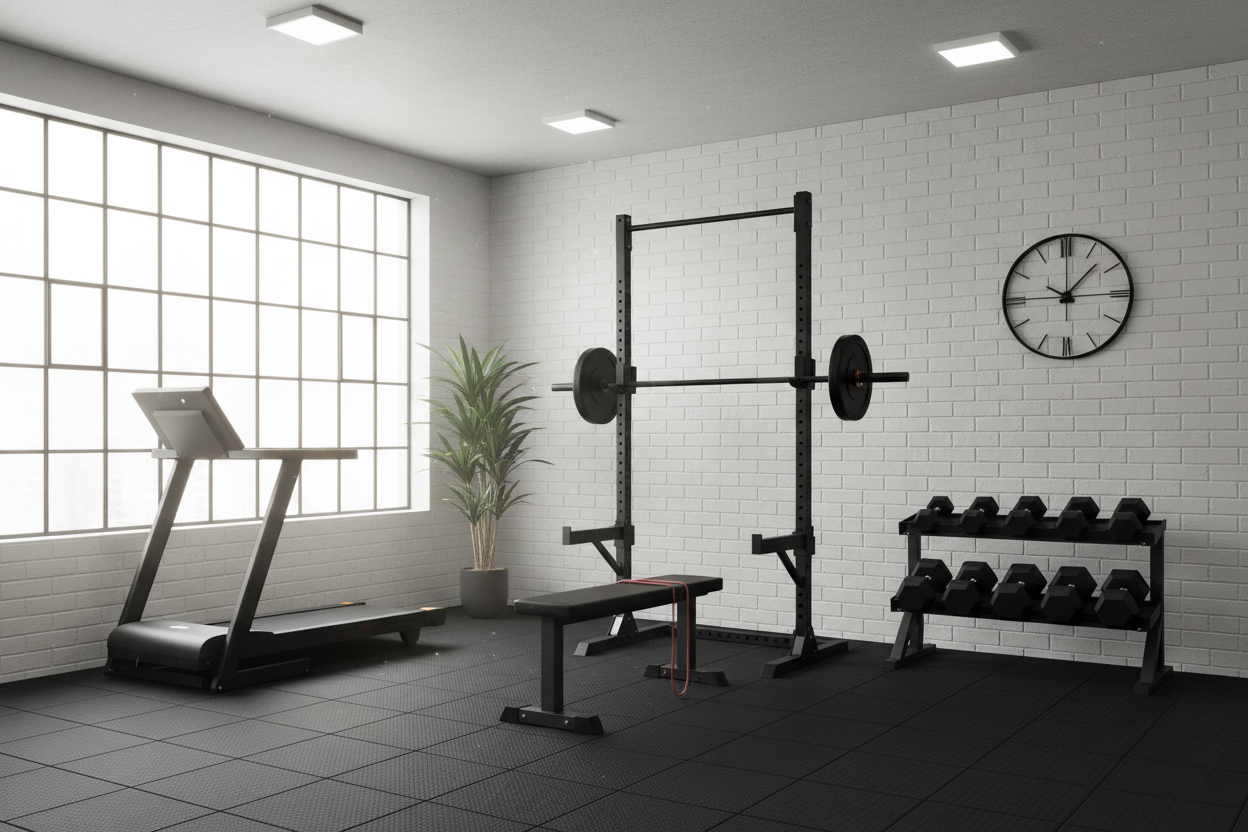
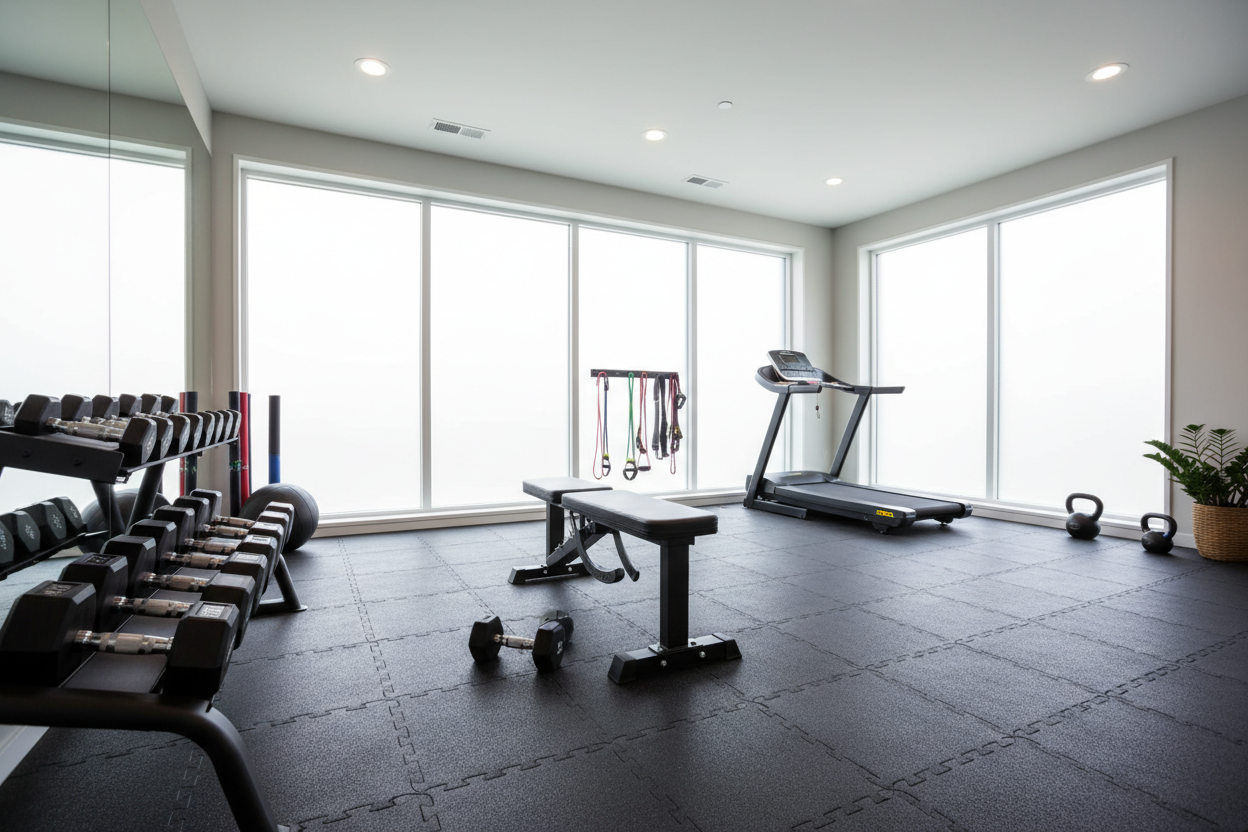
Having reliable gym flooring for home workout sessions is mandatory when transitioning to floor-based pressing and joint-friendly exercises. I’m talking about high-density rubber, at least 1/2 inch thick—ideally 3/4 inch if you're dropping heavy dumbbells. It provides the stability you need for a heavy press but the cushion your joints crave during those dead-stop pauses. Don't spend $500 on a fancy bar and $0 on the floor you’re standing on.
Low Impact Upper Body FAQ
Can I really build muscle without heavy benching?
Absolutely. Muscle fibers don't know how much the plate weighs; they only know how much tension they are under. By using slow eccentrics and dead-stops, you can create more muscle fiber recruitment with 60 lbs than most people do with 100 lbs of 'bounced' weight.
Will my 'real' strength drop if I switch to low impact?
Your ego might take a hit, but your functional strength won't. In fact, many lifters find that once their joints heal, their 'big' lifts actually go up because they're finally able to train consistently without taking weeks off for injury.
How do I know if a movement is 'low impact' enough?
The 'Pain Scale Test' is your guide. If a movement causes a sharp, stabbing pain (Level 3 or higher), it's out. If it causes a dull muscular ache or a 'burn,' you're good to go. Listen to your body, not your Instagram feed.